The benefits of running are well known. However, it is all too easy to over train, or run too far too soon, resulting in chronic injuries. In particular, knee pain from running.
Gradual onset running knee pain
For many injuries, the symptoms develop gradually as a niggle. You push through, telling yourself it’s not that bad. But ignore it at your peril because a small niggle often turns into a chronic injury.
Here are the top causes of running knee pain.
Patellofemoral pain syndrome
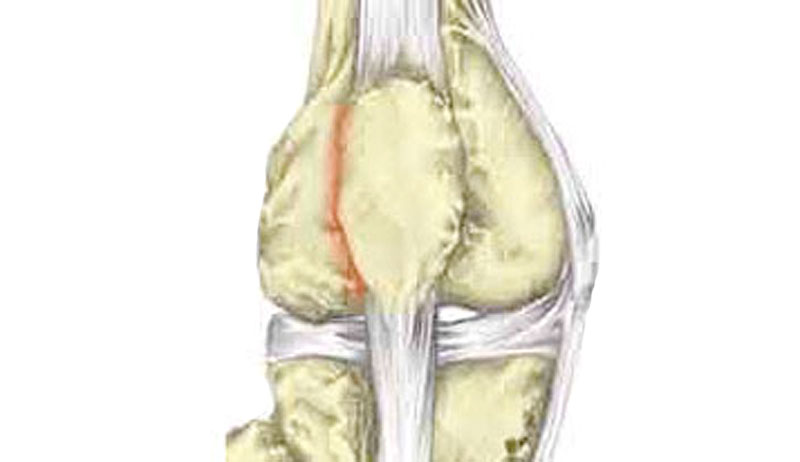
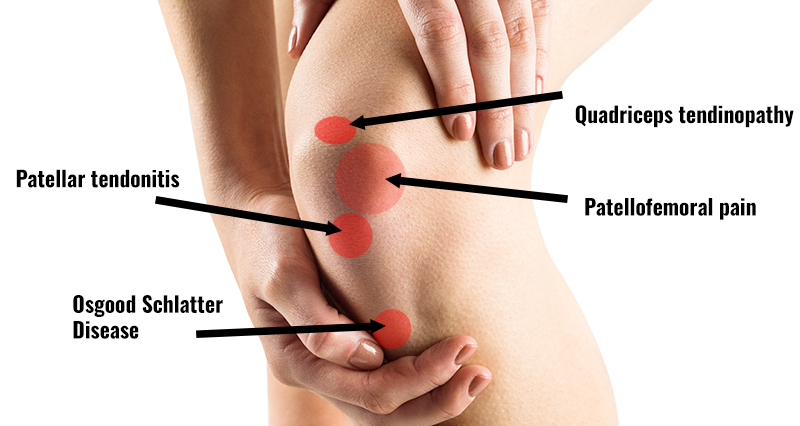
Patellofemoral pain syndrome is a general term used to describe pain at the front of the knee caused by the patella rubbing on the bone underneath. It is a common cause of knee pain from running. In fact, it is sometimes known as runner’s knee.
Symptoms include:
- Tenderness on the inside and/or under the patella
- Swelling around the patella
- Knee pain which is worse running up and down hills
- Pain in your knee after a period of sitting, especially following a long run
Your patella moves within a groove over the femur (thigh bone). Various factors such as overpronation or weak quadriceps muscles cause it to track out of alignment. Eventually rubbing of the patella on the bone underneath causes knee pain and swelling.
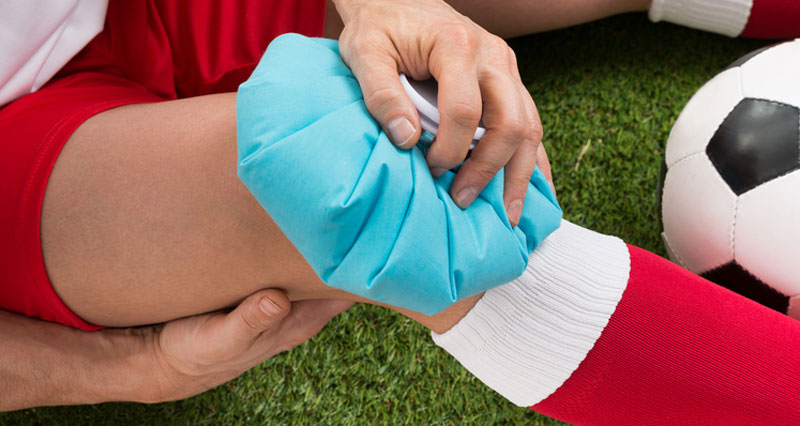
Treatment is to reduce pain and swelling as well as identify and correct potential causes. Rest! This may be complete rest, or you may get away with reducing your training to 50% of normal. Apply a cold therapy compression wrap every 2 hours until any swelling has gone. As your symptoms improve you can reduce it to 3 or 4 times per day.
Your physio may tape your patella to prevent it from rubbing on the sore spot on the bone underneath. Long term you need to correct any biomechanical problems such as overpronation or VMO muscle weakness or it is likely to return.
- Read more on Patellofemoral pain syndrome
Iliotibial band friction syndrome
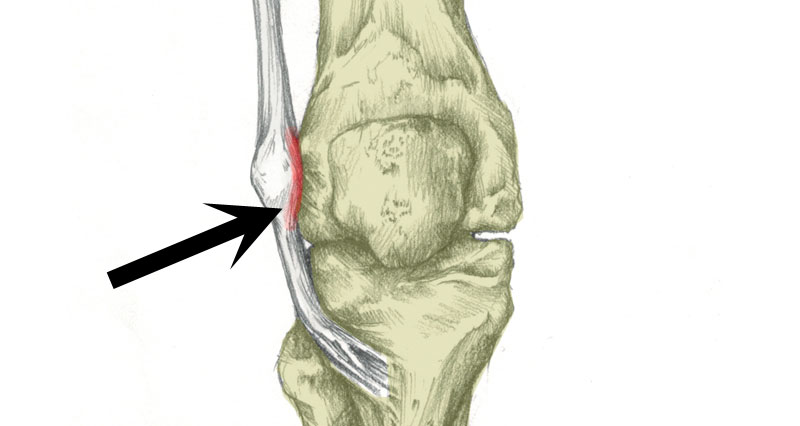
Iliotibial band friction syndrome causes gradual onset pain on the outside of your knee. It occurs as a result of the Iliotibial band (ITB) rubbing over the bone on the outer knee.
Symptoms include:
- Pain on the outside of the knee when running.
- Often symptoms develop at a specific point in a run, say after 20 minutes.
- It improves with rest but returns once training resumes.
The ITB is a long tendon running down the outside of your thigh. Various factors such as poor foot biomechanics, weak gluteal muscles, or simply overuse cause it to become inflamed as it rubs on the outside of your knee.
Treatment involves:
- Complete rest and cold therapy until symptoms resolve
- To prevent it from returning you should correct any foot biomechanics issue with orthotics
- Make sure you have the right running shoes for your feet
- Strengthen your gluteal muscles and use a foam roller or massage on the ITB itself to reduce tension.
Patella tendonitis/tendinopathy
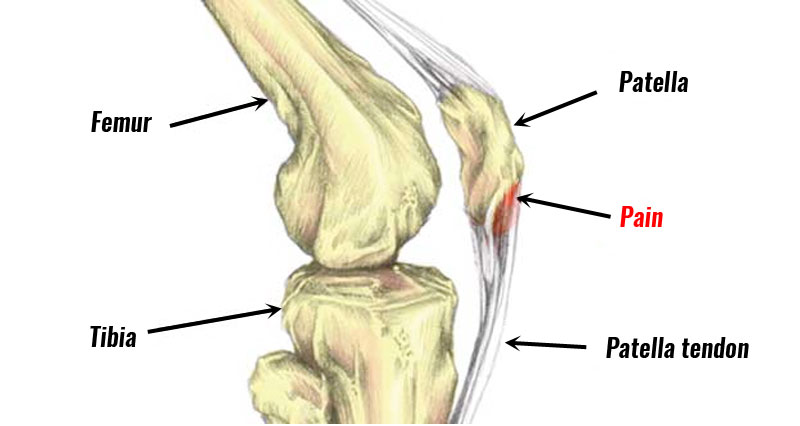
Patella tendonitis is also known as Jumper’s knee. It is an overuse injury affecting the patella tendon which joins your patella to the tibia (shin bone).
Symptom includes:
- Pain at the bottom of the patella (kneecap) which occurs gradually over time
- Tenderness when pressing in over the bottom of the patella
- Your patella tendon may appear larger or thicker than the uninjured knee
- Aching and stiffness after exercise
- In particular, knee pain from squatting, running and jumping activities
Treatment includes:
- Rest and apply cold therapy to reduce pain and inflammation
- However, by the time most runners seek help the injury is more degeneration of the tendon rather than acute inflammation
- A full rehabilitation program with an emphasis on isometric and eccentric leg press exercises
Osgood Schlatter Disease
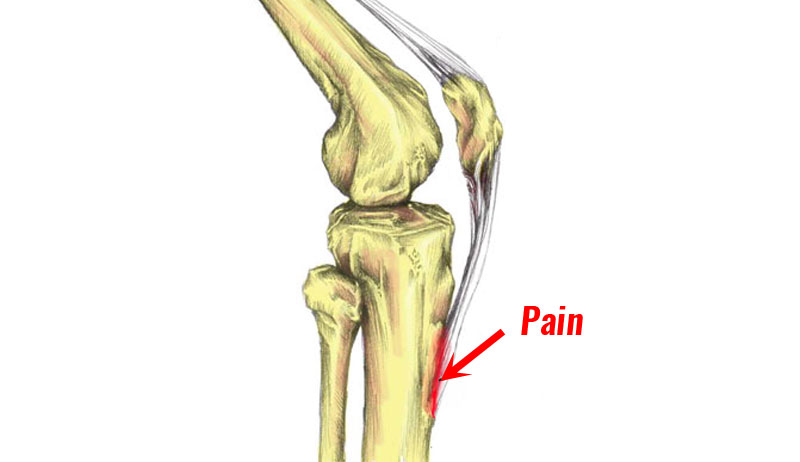
Osgood Schlatter Disease affects children between the ages of 12 to 15 years old, especially during a growth spurt. It is a painful reaction at the point where your patella tendon attaches to the tibia.
Symptoms include:
- Knee pain from running or other weight-bearing activities
- Pain is located at the bony part below your knee on the shin bone (tibial tuberosity)
- Symptoms ease with rest but return once you start training again.
Treatment includes:
- Rest and apply cold therapy to reduce painful symptoms
- Over the medium term, your aim is to manage the condition until you grow out of it
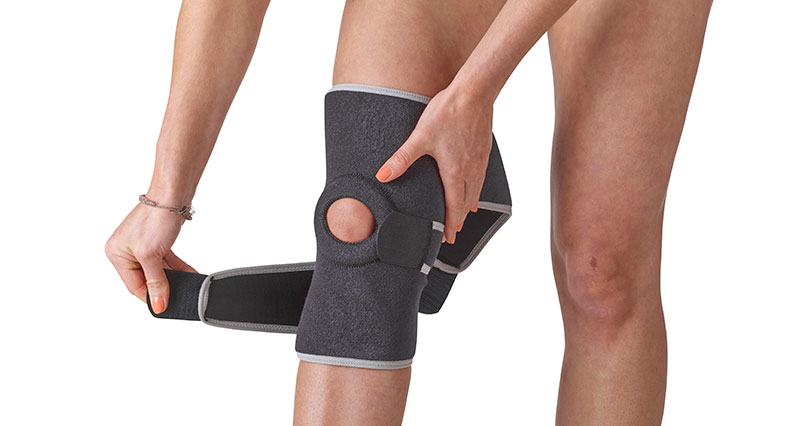
- Wear a patella tendon strap to help reduce the load on your tendon, especially when it is painful
Osteoarthritis & running knee pain
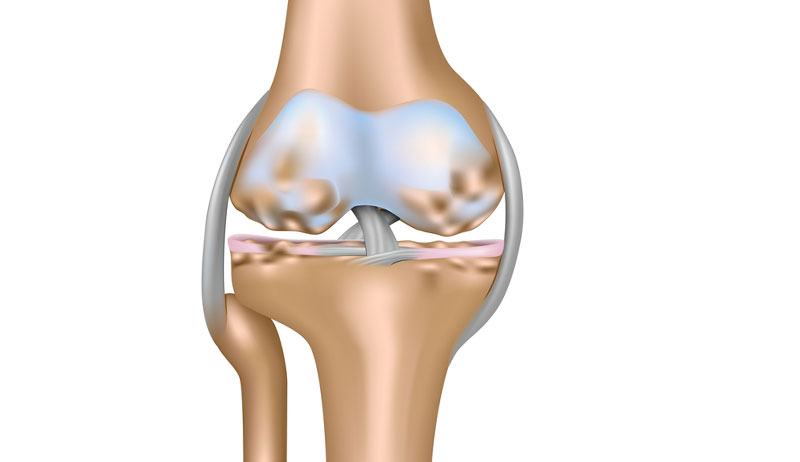
Osteoarthritis more often affects athletes in the latter stages of their careers. It is simply a wear and tear in the joint and is a common cause of running knee pain in older athletes.
Symptoms include:
- Deep aching pain in the knee or hip
- Pain is usually worse after exercise
- Joint stiffness which often reduces with movement
- Swelling
There is no cure for Osteoarthritis however, knee supports, medication hot & cold therapy, and mobility exercises can all help relieve symptoms. In severe cases, joint replacement surgery is indicated.
Running knee pain external links:
- Buy running knee supports at UPmedical.co.uk
- Buy Reflective & LED Running Gear at UPMedical.co.uk
- Best insoles for running
- Buy Men’s running shoes & Women’s running shoes at Sportlink.co.uk (UK)