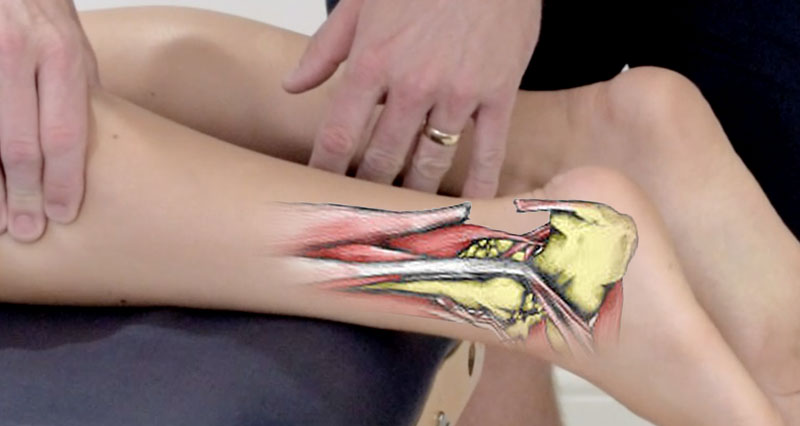
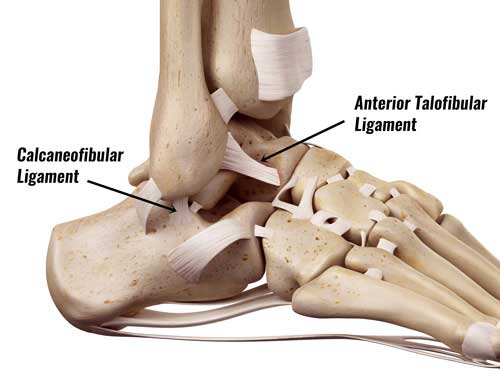
The anterior drawer test assess the integrity of the anterior talofibular ligament (ATFL) in the ankle. The ATFL is one of the primary stabilizing ligaments on the outside of the ankle joint. In particular, it helps prevent excessive forward (anterior) movement of the talus bone relative to the tibia and fibula.
Here’s how the anterior drawer test for the ankle is typically performed:
- Patient Positioning: The patient is usually lying down or seated with the knee flexed to about 90 degrees and the ankle positioned in a relaxed, neutral position (neither dorsiflexed nor plantarflexed).
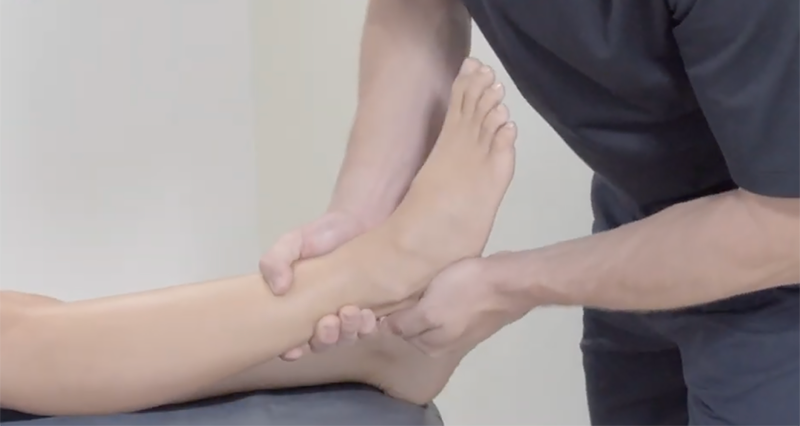
- Starting Position: The examiner stabilizes the lower leg (tibia) with one hand while grasping the foot with the other hand. The examiner’s thumbs are usually placed on the anterior aspect of the ankle joint, just above the talus bone.
- Initial Assessment: The examiner may first perform a visual inspection and manual palpation of the ankle to assess for any signs of swelling, tenderness, or deformity that may indicate ligamentous injury.
- Anterior Drawer Maneuver: With the ankle in a neutral position, the examiner applies a gentle anterior force to the heel with both hands while stabilizing the lower leg. This maneuver displaces the talus bone anteriorly, stressing the ATFL.
- Assessment of Movement: While applying the anterior force, the examiner observes the amount of anterior translation (movement) of the talus relative to the tibia. Normally, there should be minimal anterior translation, indicating a stable ATFL.
- Interpretation: A positive test result occurs when there is excessive anterior translation of the talus compared to the unaffected side or compared to what is considered normal. This may suggest laxity or injury to the ATFL, such as a sprain or tear.
The anterior drawer test is commonly used in the evaluation of acute ankle injuries, particularly those involving inversion (rolling the ankle outward), which can stretch or tear the ATFL. A positive test result, along with clinical findings and possibly imaging studies (e.g., X-rays, MRI), can help confirm the diagnosis of an ATFL injury and guide treatment decisions, which may include rest, ice, compression, elevation (RICE protocol), bracing, physical therapy, or in severe cases, surgical intervention.