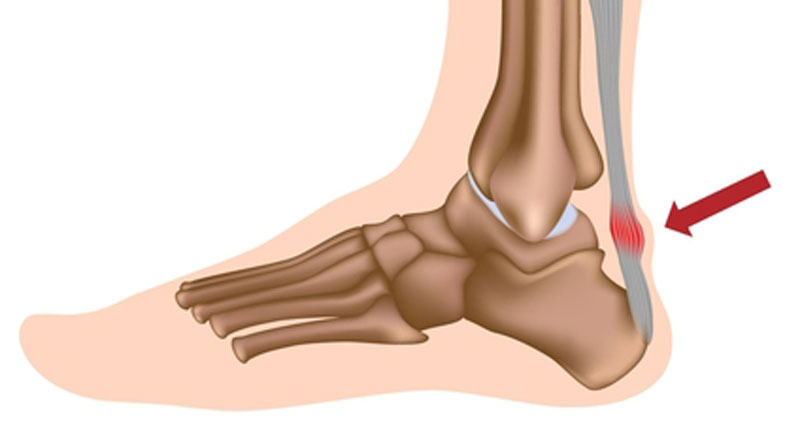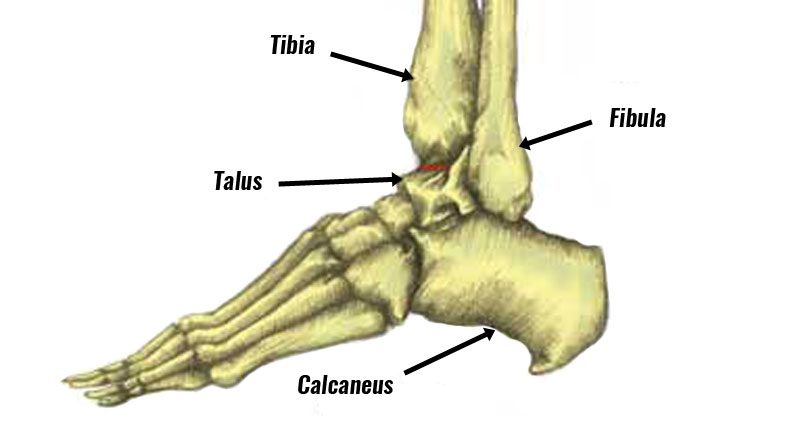
A dislocated ankle is a severe injury which usually happens in conjunction with a fracture or complete rupture of the lateral ankle ligaments. They are relatively rare as all the ligaments on one side of the ankle have to rupture (normally on the outer side) and medical help is needed immediately.
Signs & symptoms
- Symptoms of a dislocated ankle are usually pretty obvious with sudden intense pain and loss of normal function.
- There will be a visible deformity and the tibia and fibula bones in the lower leg may appear out of place.
- Any numbness or tingling in the foot would indicate possible nerve injury.
- If the foot is cold or goes a bluish-white colour then the blood supply is restricted.
What is a dislocated ankle?
In order for the ankle joint to dislocate, all ligaments on one side must rupture. This most regularly happens on the outside of the ankle, where there are three ligaments. One or two of these are commonly injured during an ankle sprain. A dislocated ankle can be a posterior, anterior or superior dislocation.

Dislocated ankles are uncommon, and where they exist they are usually associated with a fracture. This is due to the strength and complexity of the ankle, which makes it very difficult to dislocate the joint. When it does occur, it is usually due to an indirect trauma forcing the ankle to flex abnormally. The ankle can dislocate in any direction and in any of those directions it is extremely painful.
Treatment of a dislocated ankle
Initial first aid (if possible) for a dislocated ankle is to apply the P.R.I.C.E principles of protection, rest, ice, compression and elevation. If you suspect a severe ankle injury then seek urgent medical attention immediately.
An X-ray is taken before a doctor attempts to reduce (manipulate the bones back into place) a severely injured ankle. This is because it is important to identify any associated fractures.
After the X-ray has been analyzed, a medical professional will relocate the ankle. This could be done with physical manipulation, where they move the bones back into place with their hands.
However, surgery is usually required because an ankle fracture is usually present. Plates and screws will be used to restore the position of bones and stability of the ankle.
After treatment, the ankle may be placed in a cast for several weeks, or the patient may be required to use crutches. Either way, activities that place force or weight on the ankle should be avoided during this period.
Eventually, physical therapy ankle exercises can begin. Exercises are important to restore normal ankle mobility, strength and proprioception (coordination).