Here we explain how a sports injury professional or doctor might assess and diagnose the cause of Tennis elbow type pain.
Symptoms
Tennis elbow symptoms include:
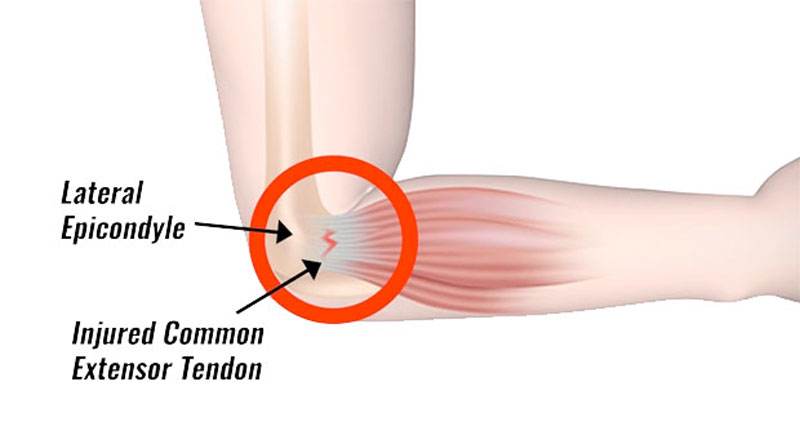
- Pain approximately 1 to 2 cm down from the bony protrusion (lateral epicondyle) on the outside of the elbow.
- Symptoms usually develop gradually over time but can flare up much worse from time to time.
- Weakness in the muscles around the forearm and wrist.
- Gripping objects, opening a door handle or shaking hands is painful.
Tennis elbow assessment tests
A professional therapist may perform a number of specific assessment tests to help diagnose lateral elbow pain.
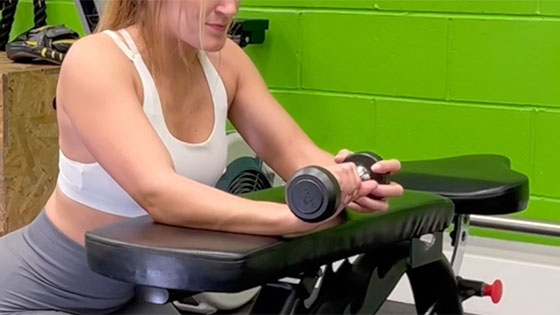
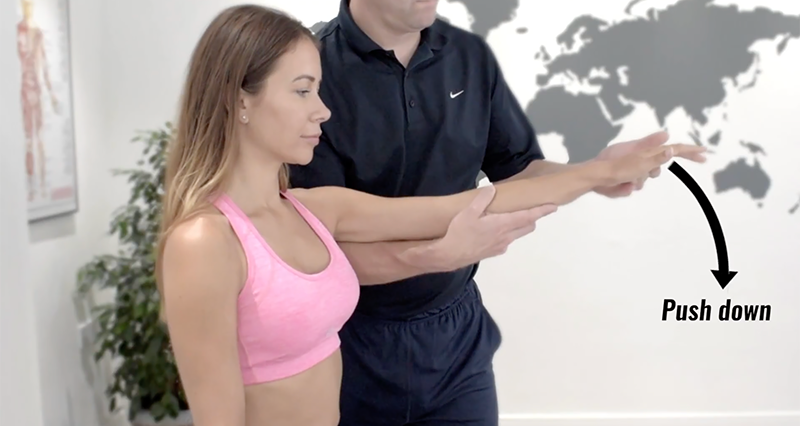
Resisted wrist extension
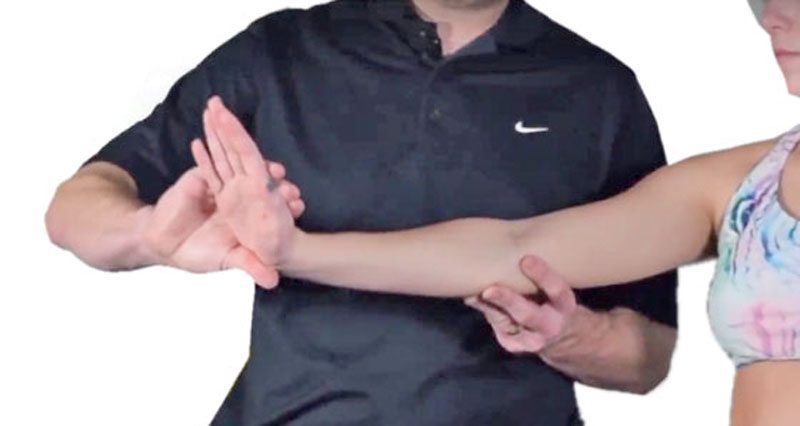
This involves attempting to extend the wrist (move upwards, palm down) against resistance. If your physio or doctor reproduces your symptoms then the test is positive.
Resisted middle finger extension
Resisted extension of just the middle finger. This is usually the most sensitive tennis elbow test1 and is positive if symptoms are reproduced.
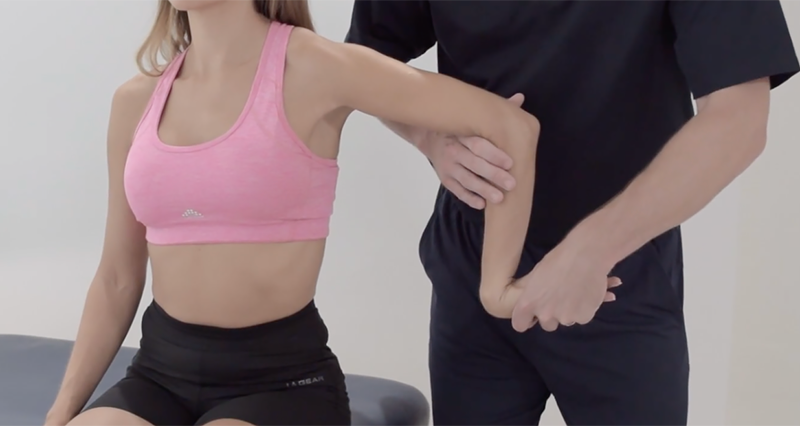
Mills manoeuver
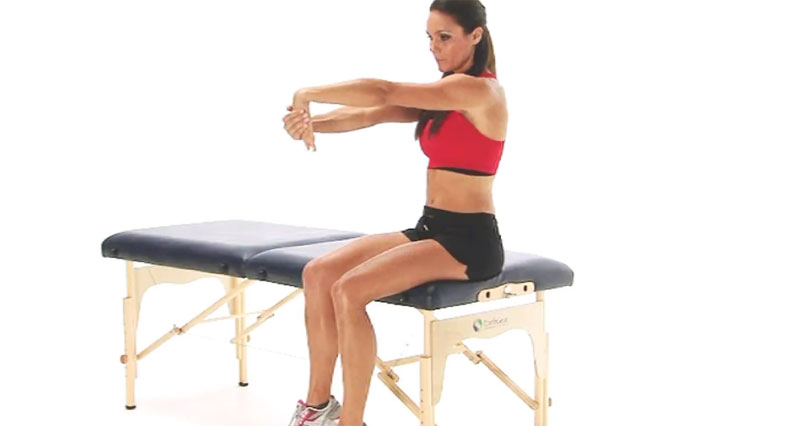
Other tests, such as the ‘Mills manoeuver’ and the ‘neural tension’ test may be performed to check for nerve involvement. These may indicate other injuries, such as the entrapment of the radial nerve, and certain neck injuries.
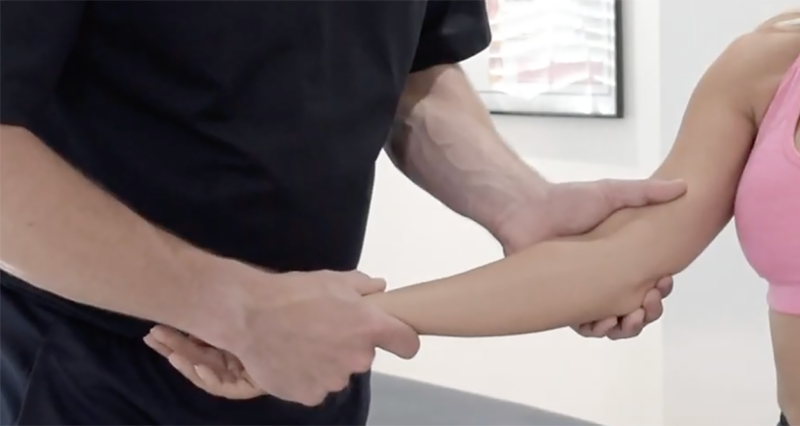
Palpate
Finally, they may feel (palpate) around the outside of the elbow to identify tender areas.