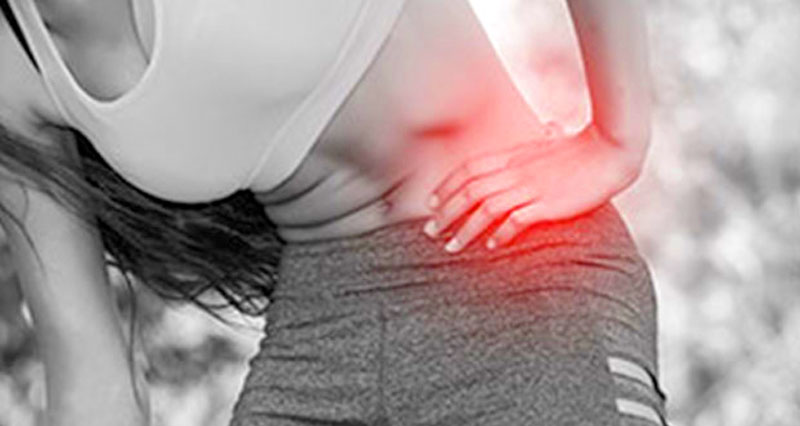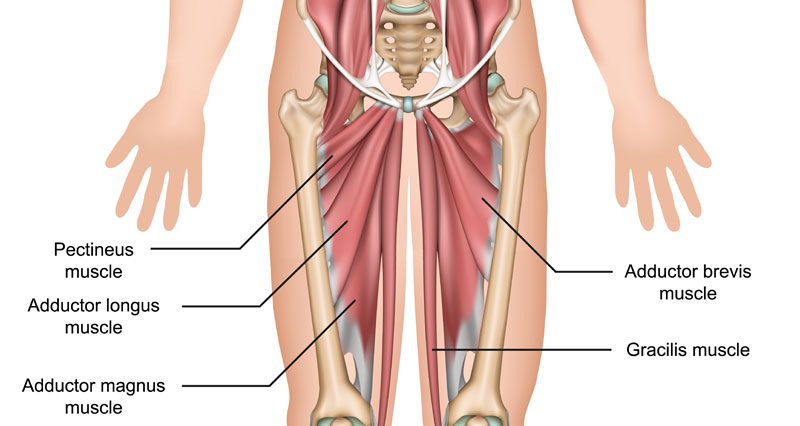
Groin inflammation or adductor tendonitis occurs when the adductor muscles in the groin become inflamed or degenerate through overuse.
Symptoms of groin inflammation
Symptoms include:
- Groin pain develops gradually over time. You cannot pinpoint a specific time of injury.
- Chronic, long-term groin pain may have developed following an acute groin strain that failed to heal properly.
- Pain will likely be more severe at the top of the groin where the muscle inserts into the pelvis bone.
- Symptoms may radiate downwards into the leg.
- Difficulty running, especially sprinting or changing direction.
Diagnosis
Specific tests a professional therapist might do include resisted adduction. This is where the patient attempts to adduct the leg (pull it inwards) against resistance applied by a therapist.
The squeeze test is where the patient squeezes the therapist’s fist between their legs. This may also reproduce symptoms as well as give the therapist an idea of any potential muscle weakness.
Other signs include pain in resisted hip flexion (raising the thigh).
What is adductor tendonitis?
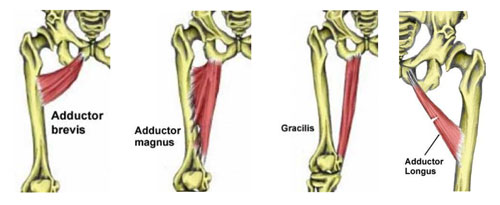
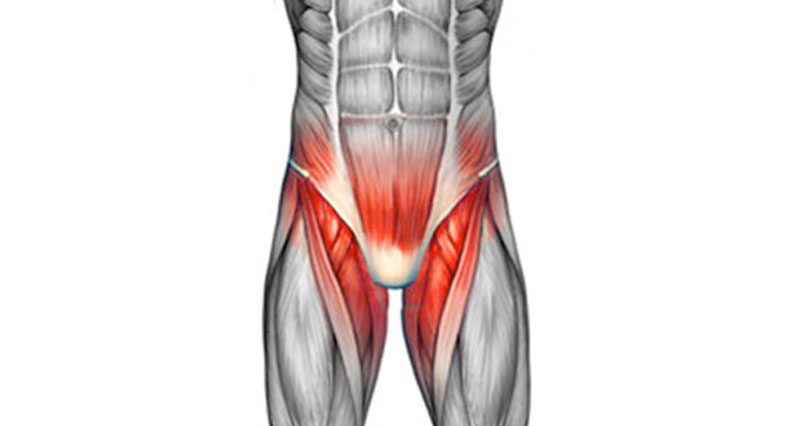
There are five adductor or groin muscles in total. The pectineus, adductor brevis, and adductor longus originate from the pelvis and insert into the thigh bone and so are called short adductors. The gracilis and adductor magnus originate from the pelvis and insert into the inner knee, crossing both joints and so are known as the long adductor muscles.
The main function of these muscles is to pull the legs together. from an abducted position, or in other words, they pull the leg in towards the centre line of the body. There are also weaker hip flexors (lifting the thigh up) along with the more powerful iliopsoas muscles. The adductor muscles play an important role in sprinting, playing football, horse riding, hurdling, and any sports involving fast, explosive changes of direction.
What causes groin inflammation?
Inflammation or more likely degeneration of the adductor tendons can occur through overuse or as a result of a previous injury such as a groin strain. The term adductor tendinopathy is probably a more accurate description of most injuries as it also describes the degeneration of the tendon as opposed to specific acute inflammation.
Acute inflammation is more likely to occur if the injury has flared up or is recent. But long-term chronic groin pain is most likely to be degeneration, without the presence of inflammatory cells.

A professional therapist will aim to identify whether the groin pain is adductor muscle, iliopsoas muscle, abdominal wall (hernia), or pubic bone-related as symptoms can often be similar or caused by a combination of issues.
Recognising early warning signs
Prevention is the best cure in this case so recognising adductor-related groin pain as soon as possible is important to prevent a long-term, chronic groin injury which will be more difficult to treat. Unfortunately, many athletes will continue to train with ‘niggling’ groin pain instead of resting. The following are early warning signs:
- Tightness or stiffness in the groin area either during exercise, after exercise, or the following morning, which is not relieved by stretching exercises.
- Loss of sprinting speed or the ability to accelerate.
- Reduced ability to kick a ball long distances.
- Discomfort in the groin area when decelerating.
Treatment for groin inflammation
Rest is an important part of treatment, however, rest alone is not usually enough. Symptoms are likely to return once normal training is resumed unless a full rehabilitation program including massage and exercises is completed. It is essential that all exercises and training activities are done pain-free at all times during the rehabilitation process.
What can the athlete do?
- Rest from activities that cause pain.
- Substitute other activities such as cycling, or complete rest until normal daily activities are pain-free.
- Apply cold therapy or ice for the first 24 to 48 hours to reduce pain and inflammation.
- When pain allows begin stretching and strengthening exercises before gradually returning to normal training levels.
- See a sports injury professional who can apply massage techniques and advise on rehabilitation.
What can a sports injury specialist or doctor do?
- A doctor may prescribe anti-inflammatory medication e.g. ibuprofen to reduce pain and inflammation. This may be effective in the early stages, but later after the acute phase, it may hinder recovery.
- A professional therapist may apply electrotherapy such as ultrasound or laser treatment to reduce symptoms. Ultrasound passes high-frequency sound waves into the tissues having a micro-massage and pain-relieving effect. The laser applies energy to the tissue via a low-energy laser beam.
- They may use deep tissue massage to the adductor muscles. Massage improves the overall condition of the muscle and in particular releases any tight knots, lumps, and bumps that may be increasing the loads through the tendon, or potential weak points where injury may occur in the future.
- Acupuncture may also be used to relax muscles and improve muscle tone.
Exercises for groin inflammation
Both stretching and strengthening exercises are important for recovering from groin inflammation. As this is an overuse injury, the emphasis is on rest, recovery, and gentle stretching exercises. All exercises should be done pain-free.
If any pain is felt either during, after, or the following day then stop exercises, rest, and take a step back before continuing. When pain allows, strengthening exercises should be done with the aim of gradually increasing the load through the injured muscle.
- Read more on groin exercises
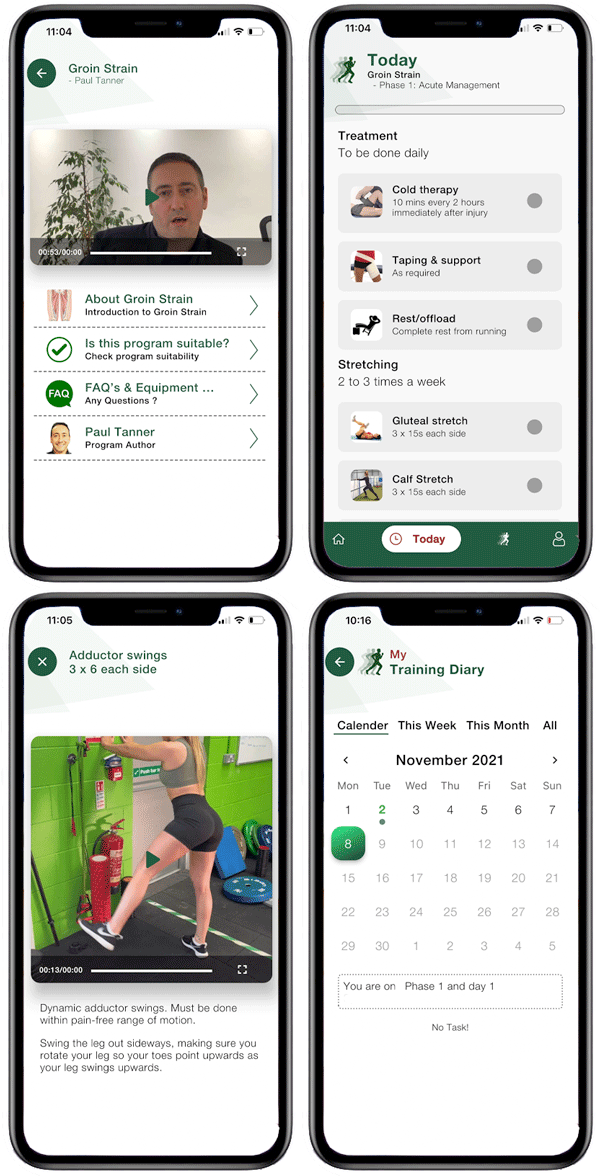
Groin Strain Rehab Program
Our step-by-step rehabilitation program takes you from initial injury to full fitness.
Start now for free: