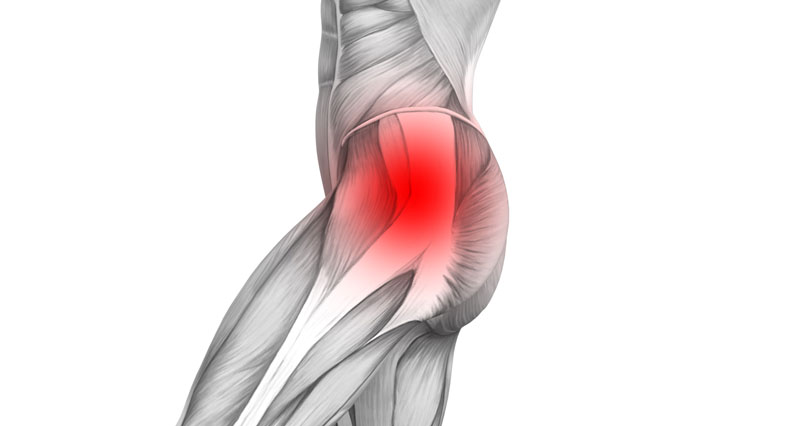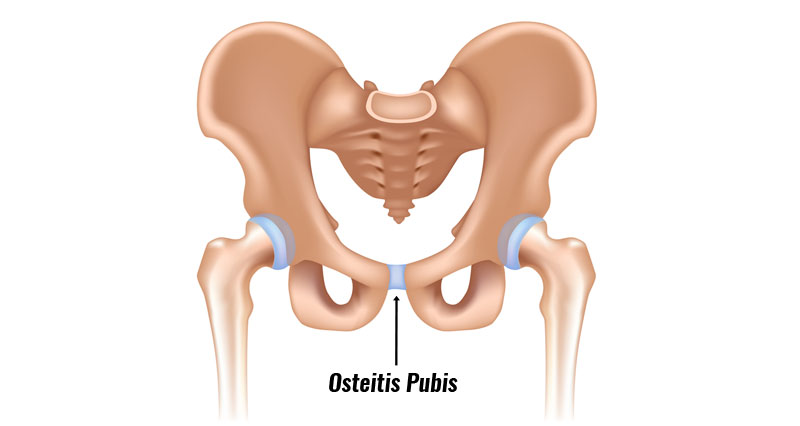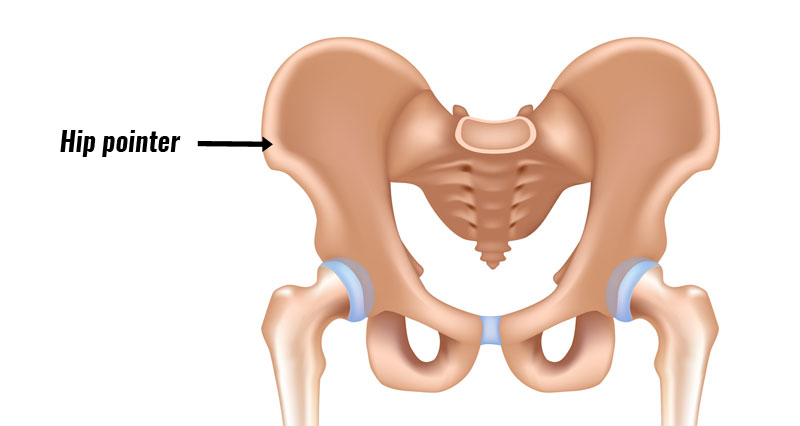
Hip bursitis, also known as Trochanteric bursitis is inflammation of a bursa or small sack of fluid on the outside of the hip. Most cases of hip bursitis are caused by overuse and poor biomechanics, although a direct impact like a fall could also cause it.
Hip bursitis symptoms
- Symptoms include pain on the outside of the hip which is worse during activities such as running, climbing stairs or getting out of a car.
- The pain will gradually get worse and the area on the outside of the hip is tender when pressing in.
- Pain may also radiate down the outside of the thigh.
What is bursitis of the hip?
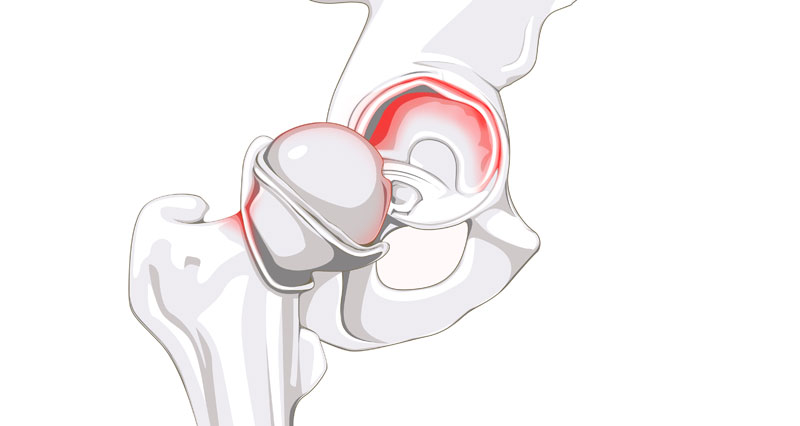
A bursa is a small sack of fluid which is usually positioned in between a bone and a muscle or tendon. The function of a bursa is to prevent friction between the bone and overlying soft tissue. There are several bursas around the hip joint, including:
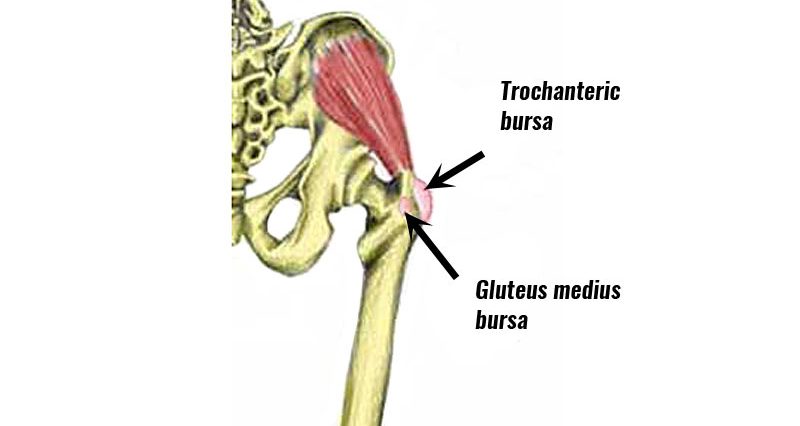
Trochanteric bursa – on the outside of the hip between the greater trochanter and the attachments of the gluteal muscles.
Gluteus medius bursa – a smaller bursa, between the gluteus medius muscle and the greater trochanter, just medial to the trochanteric bursa.

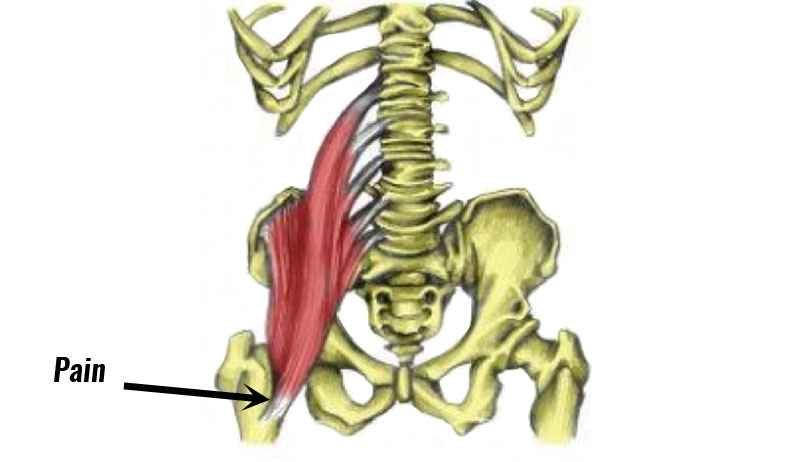
Iliopsoas bursa – between the iliopsoas muscle at the front of the hip joint and the underlying bone (bursitis in this area is also known as Iliopectineal bursitis).
Ischial bursa – Between the hamstring tendons and the base of the pelvis.
By far, the most common type of hip bursitis is from the trochanteric bursa. This can be injured in one of two ways, through a direct impact to the bursa, such as a fall onto the outer hip, which is known as traumatic bursitis, or through repetitive friction from the overlying muscles and tendons, usually during running. This repeated friction results in the bursa becoming inflamed and swollen. Every time the tendons then rub over the bursa, this causes pain.
Bursitis of the hip can be caused by a number of factors including a fall onto the side of the hip can cause traumatic bursitis. Most cases of bursitis are overuse injuries due to biomechanical abnormalities. If you overpronate then you are more susceptible to this injury as the knee falls inwards which increases the angle at the hip. Weakness in the hip abductors, especially gluteus medius has the same effect.
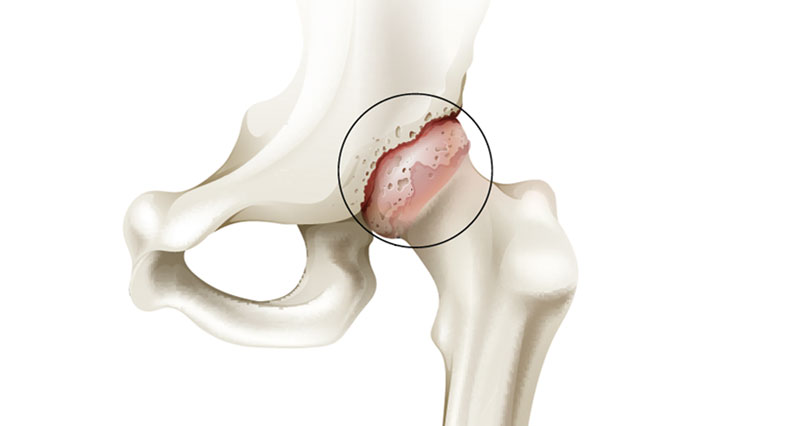
Tight structures surrounding the hip such as the iliotibial band, hip flexors, and hamstrings. A bone spur is a small excess growth of bone which can aggravate the bursa.
Hip bursitis treatment
What can the athlete do?
- Rest until there is no pain. Continuing to train will increase inflammation and prevent hip bursitis from healing.
- Apply ice to the area to reduce pain and inflammation. Cold can be applied for 10 minutes every hour and reduced to 3 or 4 times a day as the injury heals.
- Run only on flat, even surfaces to reduce the pressure on the bursa from uneven ground.
- See a sports injury professional.
What can a sports injury specialist do?
- Prescribe anti-inflammatory medication e.g. ibuprofen to reduce pain and inflammation. Do not take ibuprofen if you have asthma.
- A doctor may send you for an X-ray or MRI to confirm the injury is not a result of a bone spur.
- You may be referred for physical therapy to correct any muscle imbalances which may have contributed to the condition.
- Orthotic insoles for the feet may be prescribed to correct poor foot biomechanics.
- The use of ultrasound can help reduce pain and inflammation.
- A needle can be inserted into the bursa to drain off the fluid or aspirate it.
- Steroid injections may be prescribed in conjunction with rest.
- A surgeon may operate if it is a long-term injury which has not responded to conservative treatment.
Hip bursitis exercises
If muscles surrounding the hip joint are tight then these must be stretched to reduce pressure on the bursa. Stretches for the outer hip, gluteal muscles, hip flexors, and hamstrings are important. Strengthening exercises more commonly need to be done for the muscles on the outside of the hip rather than the adductor muscles or hamstrings.
Hip bursitis rehabilitation
The following guide is intended for information purposes only. We recommend seeking professional advice before attempting any rehabilitation.
The aim of rehabilitation of hip bursitis is to reduce pain and inflammation in the hip, identify possible causes and return to full fitness. The most common causes are overpronation of the feet, weak hip abductors and tight muscles, particularly buttock muscles.
Reducing pain and inflammation
Hip bursitis pain can be reduced by applying a cold pack to the hip. Cold can be applied for 10 minutes every hour initially, particularly if the injury is very painful. This will help reduce the inflammation in the bursa and other local tissues if necessary. A simple reusable ice pack is ideal but should never be applied directly to the skin in case it burns the skin. Always wrap in a wet tea towel or use an integrated cold wrap to avoid burning.
Rest is also an important element for reducing pain. Continuing to train with an inflamed bursa may make it worse and will most likely stop it from healing. A chronic or long-term injury is always more difficult to cure than a recent one so rest now to avoid being out for longer later.
Orthotic insoles
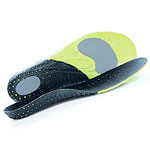
If overpronation or rolling in of the foot is a problem then this can be corrected with Orthotic insoles. See a podiatrist or other medical professional who specializes in foot biomechanics for an accurate diagnosis and the best results. Off-the-shelf orthotic insoles are also available and suitable for most patients
The orthotic will correct the motion of the foot providing a sound foundation for the rest of the body and preventing the lower leg from turning inwards which in turn causes the tip to twist when running and walking.
Hip bursitis stretching
If the muscles surrounding the hip joint are tight then gentle stretching exercises are recommended. Stretching should be performed regularly, on a daily basis and ideally up to 5 times a day for the maximum benefit.
Stretches should be held for 20-30 seconds and should be repeated twice each time. Take the stretch to the point where a gentle pull in the muscle is felt and held. Do not bounce or try and force the stretch as this could be counterproductive or damage the muscle. If, during your 30 seconds, the stretch fades away, move a little further into it until you can feel the pull again.
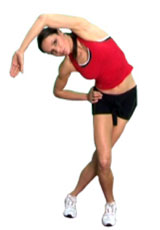
Outer hip stretch
- Stand facing a wall, table or couch (as shown), with the leg to be stretched crossed from behind the other.
- Balance yourself using your hand on the wall or table if necessary.
- Push your hips out in the opposite direction to the stretching leg, keeping the knees straight
Hamstring stretch
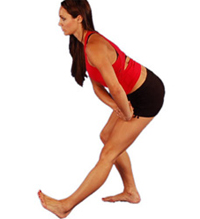
There are many ways to stretch the hamstrings. One simple method is in the sitting position.
- Lean forward into the stretch and hold.
- Different hamstring stretches will stretch different parts of the muscle.
- See hamstring stretching for more detailed descriptions of various hamstring stretch
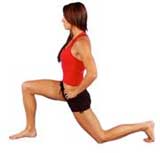
Hip flexor stretch
- Kneel with one knee on the floor and the other foot in front with the knee bent.
- Push your hips forward and keep the back upright
Stretching the glutes
- Lay on your stomach and bend one leg up under your stomach so the outside of the lower leg is on or near the floor.
- Or rest the outside of the leg on a couch as shown.
- Either method will obtain a stretch.
- Lean forwards to further rotate and flex the hip and increase the stretch
Strengthening exercise
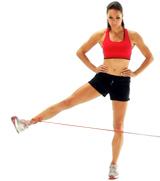
It is usually the outer hip muscles or hip abductors that need strengthening. There are a number of exercises for the hip abductors or muscles which move the leg out sideways away from the body. One simple one is using a resistance band.
- The band is tied to a fixed point and then around the foot.
- The athlete moves the straight leg away from the body against the resistance of the band and back.
- Aim for one set of 8 reps initially and do the exercises daily.
- Build up gradually as they become easier to 3 sets of 15 reps.