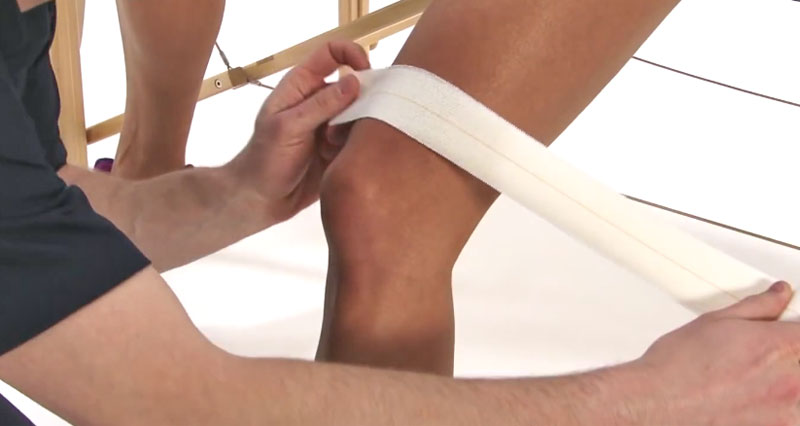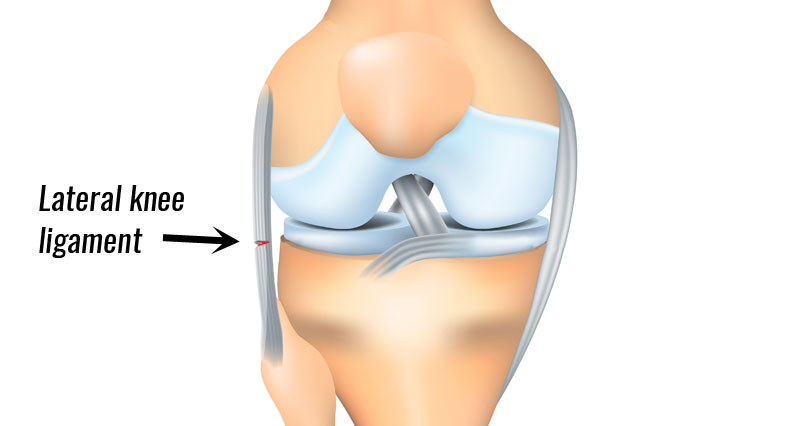
LCL sprain rehabilitation exercises begin as soon as the initial acute period passes. In particular, avoid lateral (sideways) stress on your knee when recovering from lateral collateral knee ligament sprains.
Strengthening
Strengthening exercises can also begin as soon as pain allows. The further you can get with strengthening exercises prior to surgery then the more likely you are to have a faster recovery post-operation.
Isometric quadriceps exercise
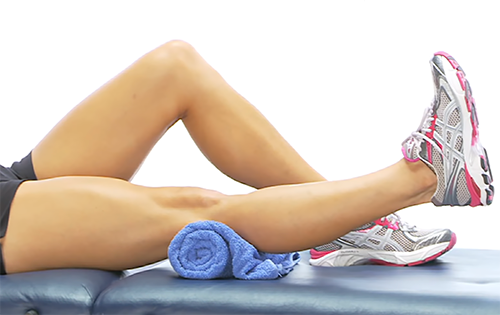
Teaching point:
- Contract the quadriceps muscles and hold for 5 to 10 seconds
- Relax for about 3 seconds and repeat 10 to 20 times
- It is especially important you feel the vastus medialis muscle on the inside of the knee working when doing this exercise
- Place your fingers on the muscle towards the inside of the leg above the knee (vastus medialis oblique (VMO) muscle)
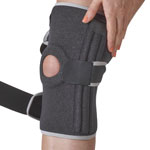
Isometric quads in standing
Perform this exercise daily from phase 3 onwards of the post-surgery rehabilitation program.
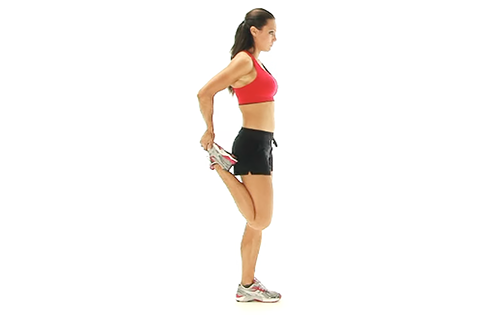
Teaching point:
- Hold the foot of the leg to be stretched and gently pull up behind
- Aim to keep the knees together and pull the leg up straight not twisted
- A stretch should be felt at the front of the leg (It should not be painful)
Static/isometric hamstring contractions
This exercise targets the inner and outer hamstring muscles at varying angles of flexion or knee bend.
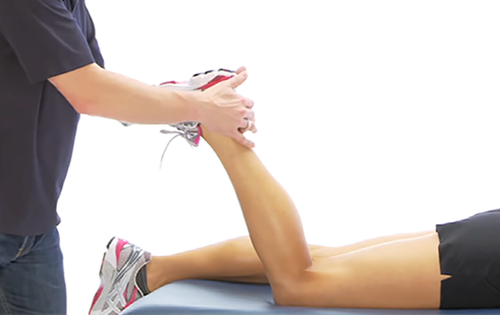
Teaching point:
- Lie on your front in the prone position
- The partner or therapist provides resistance as the athlete contracts the hamstring muscles, hold for 3 or 4 seconds then relaxes
- Change angle of knee flexion (bend) then repeat.
- Then, repeat the exercise with your foot first turned inwards, then outwards
Calf raises
This exercise will strengthen the calf muscles which consist of the gastrocnemius and soleus muscles.
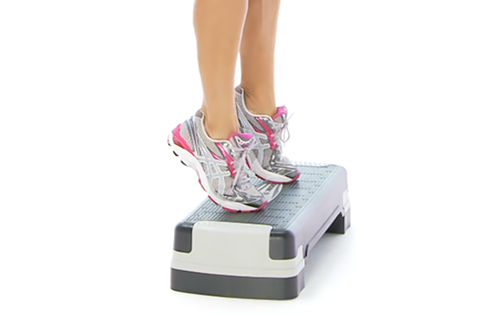
Teaching point:
- Rise up and down on your toes
- You should be able to progress quite quickly with this one but aim for 3 sets of 10 and build up steadily, a few each day
- Progress to single-leg calf raises as you get stronger
Hip extension
This exercise works the buttock muscles and hamstrings.
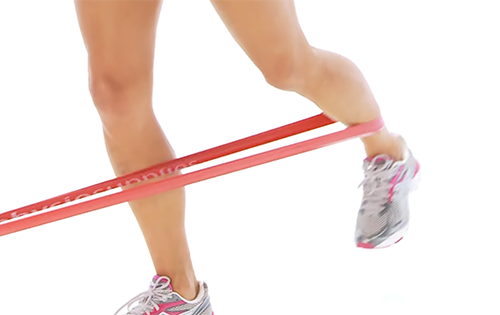
Teaching point:
- Stand with the band around one ankle and attached to a fixed point in front
- Use something to hold onto if you need to
- Keeping the leg straight extend the hip as far as comfortable and return to the start position
- Keep the hips square on facing forwards and perform the exercise in a slow and controlled manner
- You should feel it working the buttock muscles
Hamstring curls with band
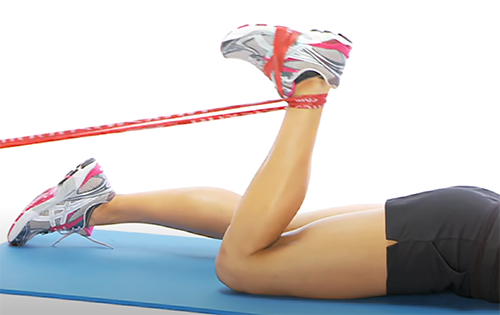
Teaching point:
- Lying on your front with the foot pointing down over the edge of the couch, the athlete fully bends the knee
- Add a resistance band or ankle weight to increase difficulty
Quarter squats
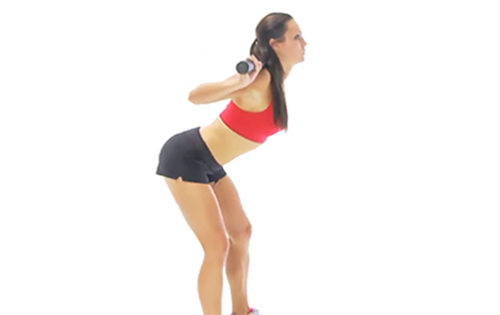
- Squat down to about a quarter of the way down and return to the starting position. Aim for 3 sets of 10 to 20 repetitions
- Progress this by going down to halfway (Phase 3 of rehabilitation) and then full squats (to horizontal) in the sports-specific stages
- Increase the intensity by adding weight
- Keep your core muscles firm when performing squats
Lunge
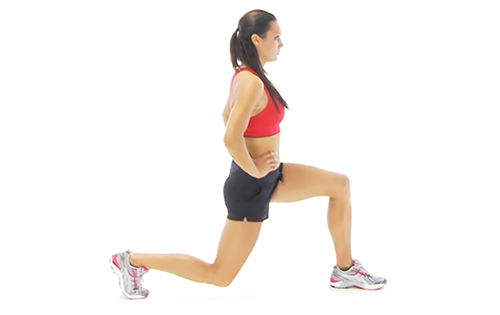
- Standing one leg in front of the other as shown
- Bend the front leg to lean forwards and return to standing
- Aim for 3 sets of 10 to 20 repetitions. Increase intensity by adding weight
Step-ups
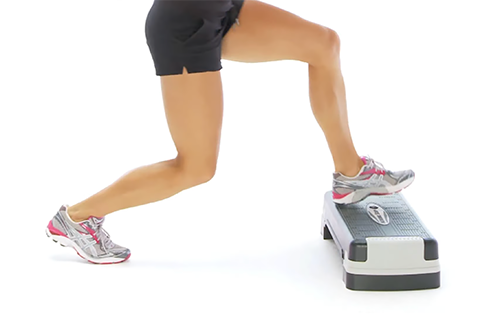
- Step up and down on a bench about 9 inches high
- Step up with the recovering leg and step down with the same leg
- Change round and do the same number of repetitions on the noninjured leg
Bridge exercises
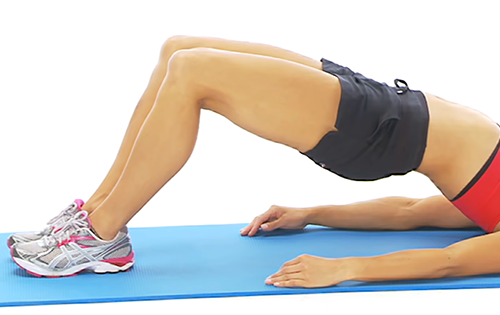
The bridge exercise can be used for glute and hamstring strengthening after injuries to the hip or knee.
- Lay on the floor on your back
- Bend your knees and place your feet flat on the floor, halfway towards your buttocks
- Lift the hips and thighs off the floor to form a straight line between your knees and shoulders
LCL sprain proprioception exercises
Proprioception is similar to balance but means the awareness of where your body (or body part) is in space. These exercises help in controlling the movement of the limb and preventing re-injury.
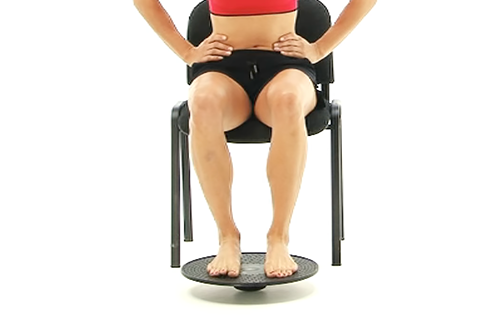
Teaching point:
- Whilst sitting down place the wobble board under the feet and slowly rotate it a number of times in each direction
- This is good for improving ankle range of motion and control
Stork balance
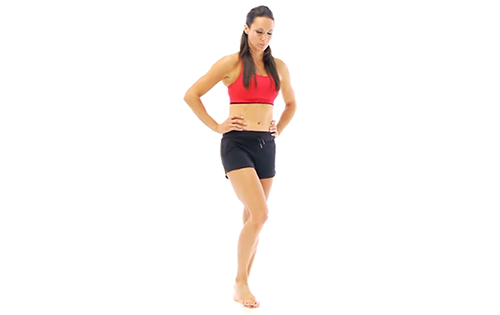
- Stand on the injured leg only for 30 second
- Once this is easy, close your eyes to increase the difficulty
- The next step is to balance on an unstable surface such as a trampette, wobble cushion, or half-foam roller
Functional exercises for LCL sprain
Plyometric exercises involve dynamic and sometimes explosive movements. They bridge the gap between basic LCL sprain strengthening exercises and returning to full training and eventually competition.
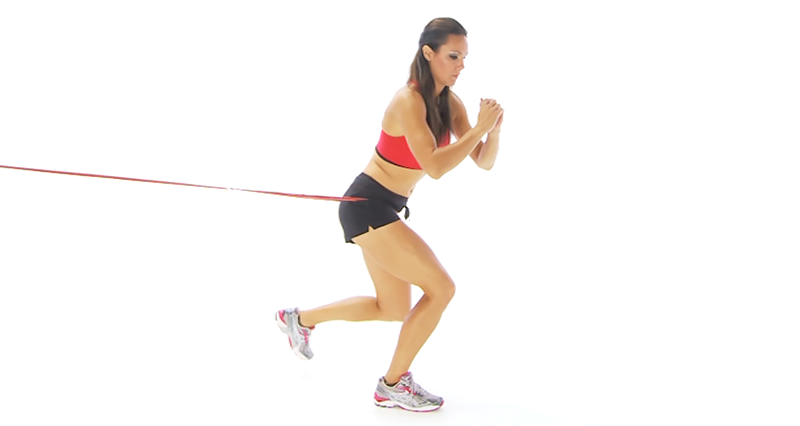
Resistance band jump
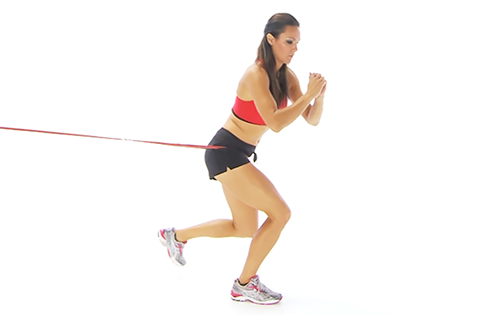
Teaching point:
- Wrap a resistance band around the waist, anchored or held behind the athlete
- Then perform side-to-side or forward and backward jumps
- The resistance from the band provides a challenge to the balance
The exercise can be made more difficult by increasing the thickness of the band or aiming to hop or jump further.
Hopping exercises for LCL sprain
Many variations on hopping exercises are available.
- Start with a small hop on the spot and gradually increase the height jumped
- Try hopping to the front, to the side, and backward
- Try hopping from one leg and landing on the other
Equipment such as hoops, agility ladders, and minim hurdles can all be used to add further challenges.
Step back
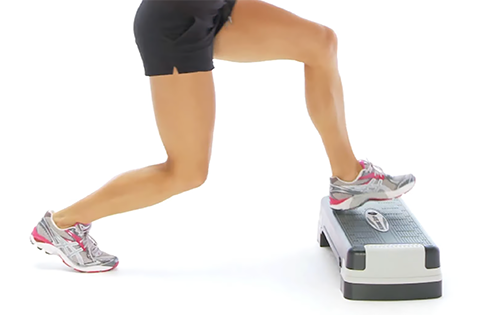
Teaching point:
- Stand on a small step
- Take one leg backwards, touch the foot on the floor and push off with the forefoot to move it back onto the step
- Alternate legs
This can be increased in difficulty by performing on a higher step or at a faster speed.
Box jumps
Numerous exercises can be created using a box or step to jump over.
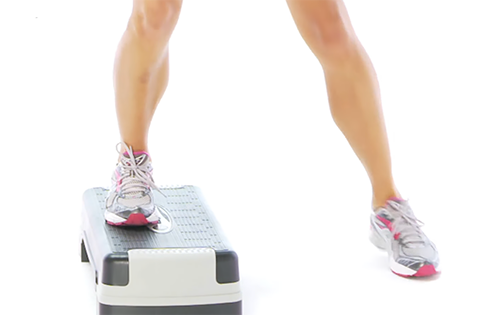
- To start jump sideways over the box, moving rapidly from one foot on one side, to the other foot on the other side
- This may also be performed front to back
- A further progression is high jumps over the box, firstly landing on two feet and progressing to one
Sports specific drills
Practice drills that are used in training for your particular sport. Start off doing them slowly and under control. Gradually pick up the pace and competition level until you’re back to full training mode.
For more examples of agility drills visit teachpe.com.