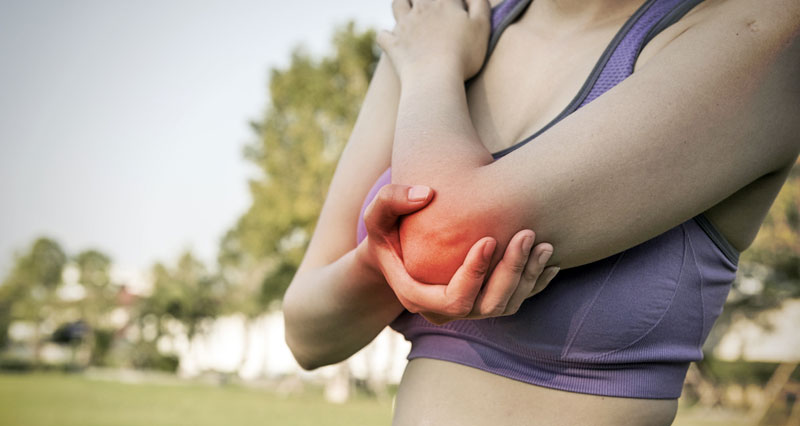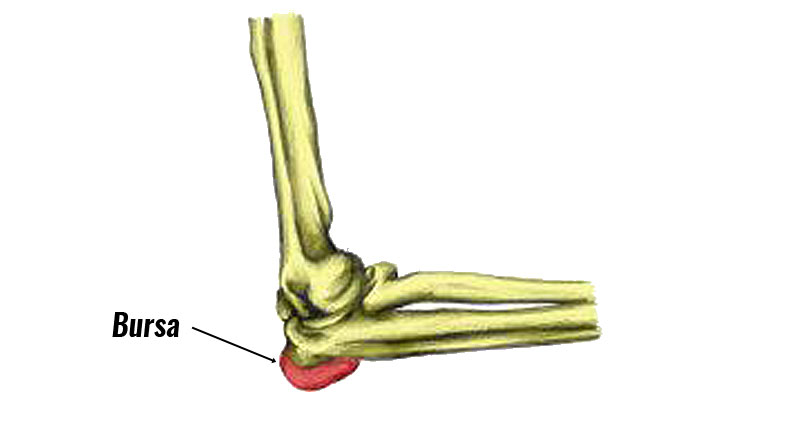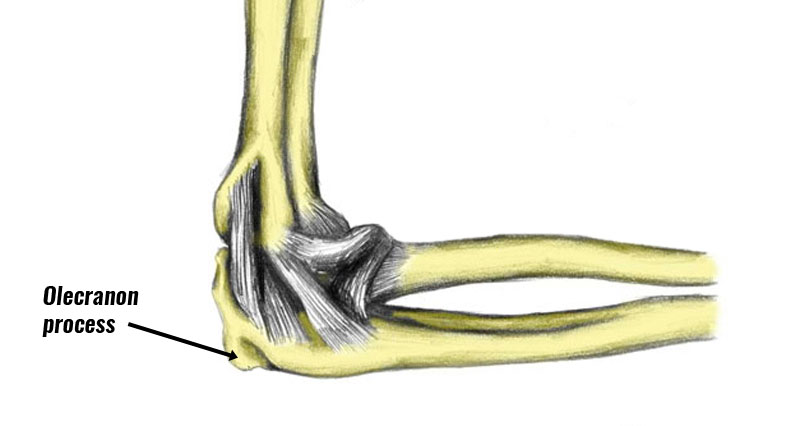
Osteochondritis Dissecans is the fragmentation of the cartilage and sometimes the underlying bone within a joint. It is more common in adolescents, especially those who do throwing sports.
Symptoms of Osteochondritis Dissecans in the elbow
Osteochondritis usually affects young athletes and has the following symptoms:
- Locking and clicking of the elbow.
- Swelling in the elbow joint may come and go.
- Loss of full function or movement.
- Intermittent pain.
- Pain is more noticeable after activity.
An X-ray or MRI may be taken to confirm the diagnosis.
What is Osteochondritis dissecans?
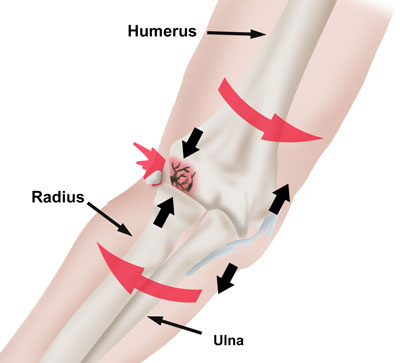
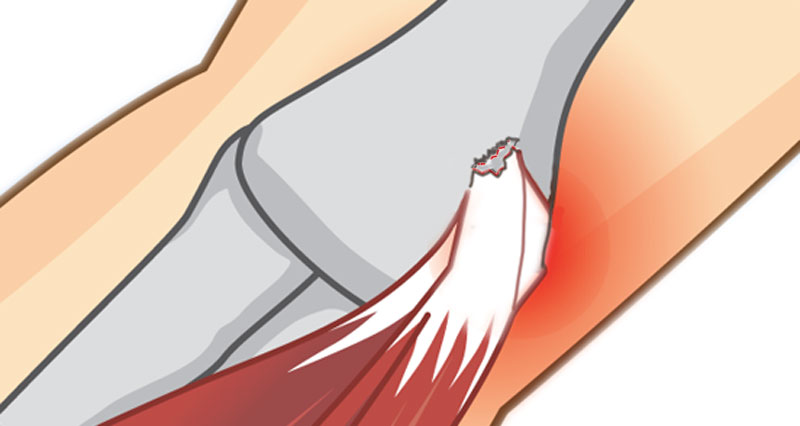
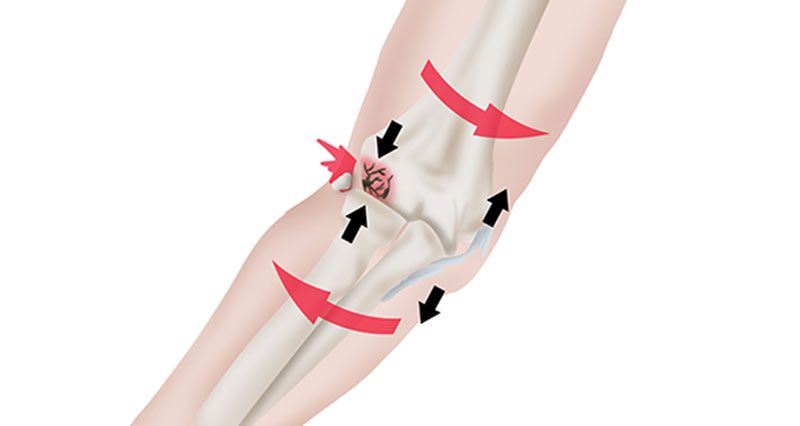
Osteochondritis dissecans is caused by the separation of a fragment of cartilage (usually some attached bone as well) from the joint surface. This occurs due to a disruption in the blood flow.
This most commonly occurs at the capitellum. The capitellum is the end of the humerus (upper arm bone).
The fragment is sometimes known as a loose body as it tends to float around within the elbow joint.
This condition may also be referred to as an Osteochondral Fracture.

The term Osteochondritis Dissecans is actually falling out of favour because the ‘itis’ at the end suggests inflammation. However, acute inflammation is now known not to be present in this injury.
Causes
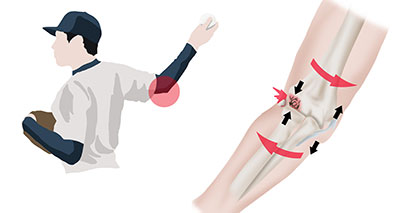
Osteochondritis dissecans occurs especially in young athletes involved in throwing sports such as Baseball or field athletic events like Javelin. This is even more likely if you have a poor throwing technique. For example, allowing your elbow to drop during the throw.
The reason for this is the valgus force (where the lower arm is forced outwards) on the elbow. In young athletes, the ends of their bones are not yet fully hardened. As a result, the joint is not strong enough to cope with the stresses and demands placed on it.
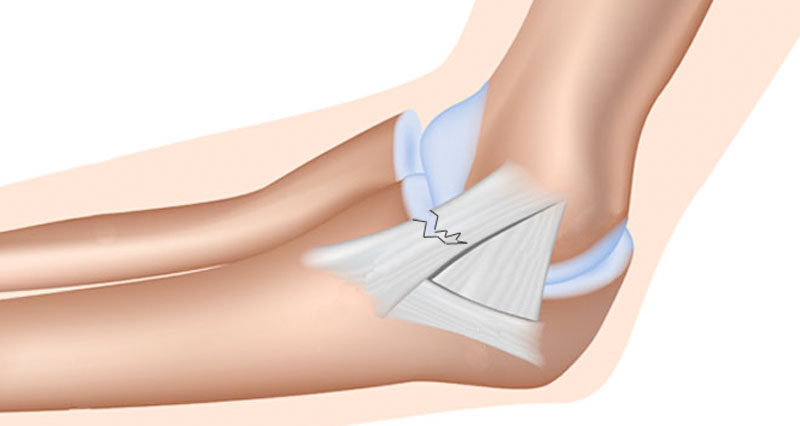
Previous injury to the medial ligament of the elbow may also result in this injury as it causes an increased angle and loading of the capitellum.
Treatment
Initial treatment involves rest, ice, compression and elevation to ease pain and swelling. Apply a cold therapy compression wrap for 10 minutes every 2 hours or so until symptoms ease.
Complete rest for a few days may be necessary. In any case, you should avoid throwing activities completely until your symptoms have gone.
However, if problems persist, then you should seek professional medical attention.
Will I need surgery?
The need for surgery depends on the amount of displacement of the fragment and the severity of the symptoms.
Surgery involves removing the bone fragment (known as debridement)
If surgery is not undertaken, treatment involves rest, range of motion exercises and avoidance of throwing activities until the pain has cleared.