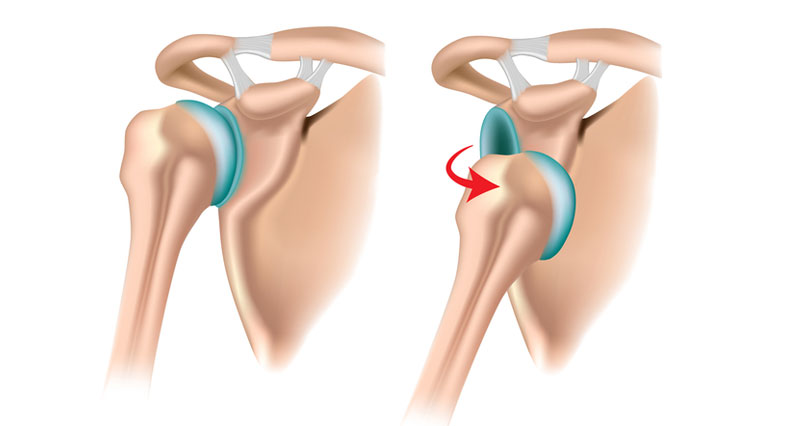
The following Dislocated Shoulder exercises form part of our full shoulder dislocation rehabilitation plan. They include postural exercises, mobility, strengthening, proprioception, and functional and cardiovascular exercises to maintain fitness.
If you have suffered a shoulder dislocation then seek medical attention and advice before attempting exercises.
Postural exercises for a dislocated shoulder
You can do these in the early stages of rehabilitation if they are pain-free. See our full Dislocation shoulder rehab program for step-by-step details of which exercises to do when, as well as treatment methods to apply.
Scapular setting
Sit in a slightly hunched position with your shoulders rounded forward. Pull your shoulders back and upwards, and squeeze your shoulder blades together at the back. Hold for 3 secs and relax.
Neck retraction
From a slouched position, come up into a good, upright posture. Then pull your head back over your shoulders so you make a ‘double chin’. Hold briefly then relax and repeat.
Mobility exercises for shoulder dislocation
These aim to gradually and safely increase the range of movement in your shoulder. However, only begin these when the initial acute phase has passed.
Pendulum exercises
In a bent-over position, try to keep your arm relaxed. The idea is to let the arm swing forwards and backwards as far as comfortable. These are good exercises to start getting some movement into your dislocated shoulder early on in the rehab program. Perform the exercise again but swinging side to side from adduction to adduction. Finally, try and draw circles with your arm as you rotate it one way and then the other.
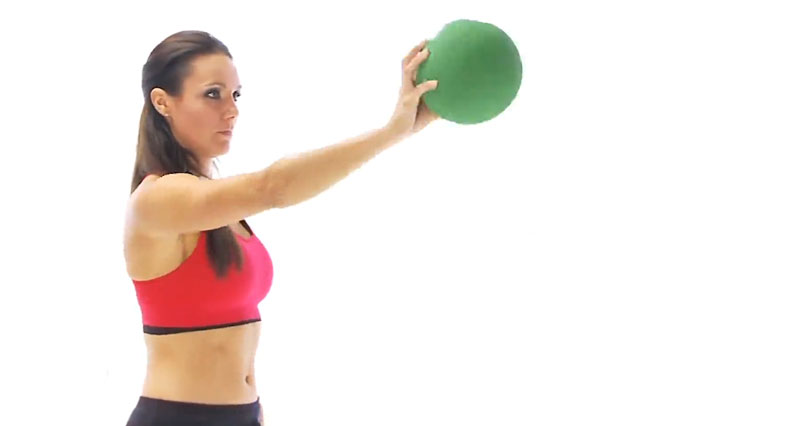
Gym ball flexion
Hold the ball and lift up over your head or as far as comfortable. The aim here is to give your shoulder a gentle stretch as you perform the exercise.
Abduction
Hold the gym ball and take it out to alternate sides. Use your good arm to assist the injured side on the way up. As you come up the other side, your injured arm helps the good arm to get a bit more of a stretch into the shoulders.
Supine internal and external rotation
This exercises increases the shoulder range of movement. Aim to get your hand flat to the floor on either side as you rotate your shoulder.
Wall mobility
Dislocated shoulder strengthening exercises
These exercises specifically strengthen the shoulder muscles. It is important you avoid abduction at the same time as external rotation (moving your arm up and out sideways) in the earlier stages. This is because your shoulder is weakest and most susceptible to dislocating in this position. As the program progresses they become increasingly more advanced and difficult.
Shoulder flexion
Using a resistance band, keep your arm straight as you lift it up at the front and as high as you can. Begin with light resistance and increase as your strength improves throughout the program.
Shoulder extension
Using a resistance band secured in front, start with your arms just forwards of your hips and keep them straight, and pull backwards to finish just behind your hips.
Internal rotation for a dislocated shoulder
This is a particularly important exercise for anyone who has suffered a dislocated shoulder. Start with your arm out to the side, and bring it into your abdomen at the centre. Keep the movement controlled at all times. Move closer to where the band is secured if it feels difficult towards the outer range.
External rotation
Start with your arm across your stomach then rotate it out to the side. Make sure it is comfortable throughout the range. If you can only go part way out then stick with that. Avoid moving your shoulder too far into external rotation too early as it may be susceptible to dislocating.
Adduction with band
Secure the band up high and out to the side. Bring your arm back down towards your side in a brisk movement. Then slowly return to the starting point as you release tension and allow your arm to come back up to the side. Strong pull down, slow release up.
Abduction with band
Download the App to access our step-by-step Dislocated Shoulder Rehab Program created by professional Sports Physiotherapist Paul Tanner: iPhone & Android
Proprioception exercises for a dislocated shoulder
These exercises are important for restoring coordination. Proprioception is your body’s awareness of what your limbs are doing in space. Dislocated shoulder proprioception exercises are about your shoulder relearning where it is relative to the rest of your body. They are very important for shoulder rehab, not only for recovery but also to help mitigate the risk of future injury.
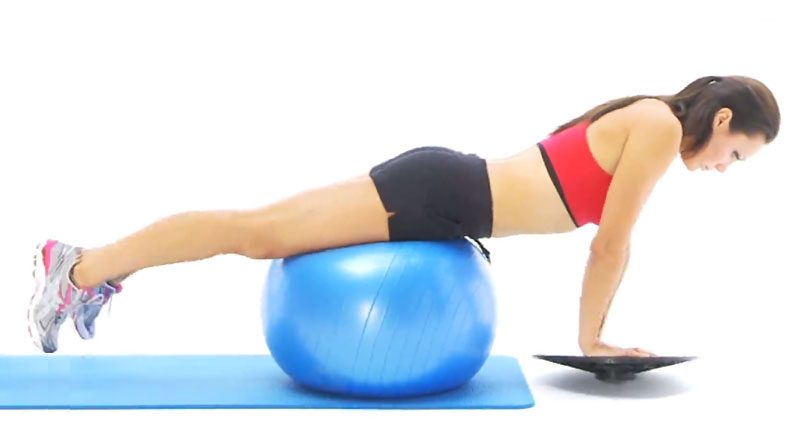
4 points kneeling over the ball
The aim of this dislocated shoulder exercise is to introduce you to putting a little bit of weight on the shoulder. it also works your scapula (shoulder blade) muscles. Progress by doing shoulder taps and touching your opposite shoulder with your hands alternately. You can also perform mini press-ups from this position. The further your hips are over the gym ball, the harder the exercise is.