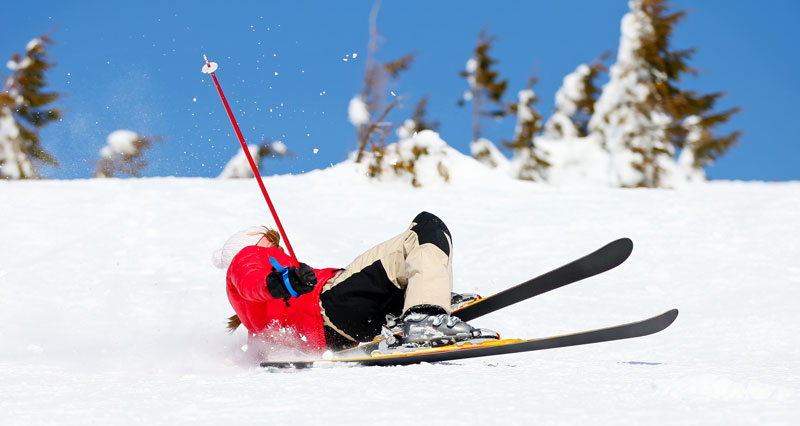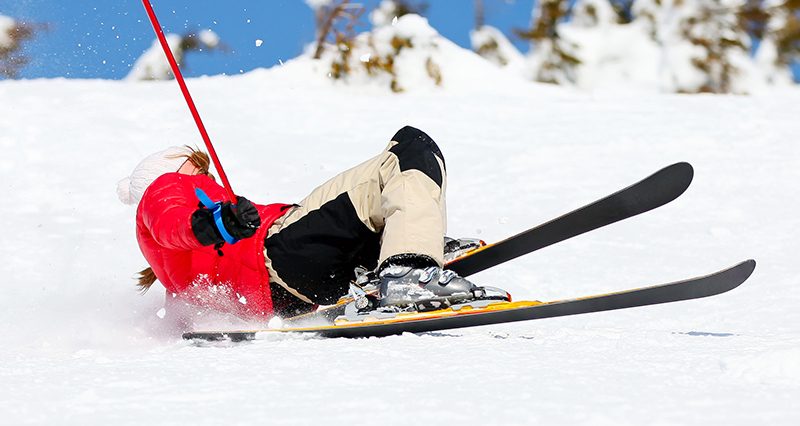
Common wrist injuries from skiing include sprains, strains and fractures as well as gradual onset nerve impingment and tendon injuries. Common wrist injuries while skiing often result from falls, collisions, or improper technique.
If you suffer a wrist injury, especially a fracture, then it is important to seek professional medical assistance as soon as possible. If left untreated, some wrist injuries can cause permenant damage and loss of function. Here are some common wrist injuries associated with skiing:
Wrist Sprains
A wrist sprain occurs when the ligaments that connect bone to bone and support the wrist joint are stretched or torn. A wrist strain however, is an injury to a tendon which joints muscle to bone. Both have similar symptoms and are usually treated the same way. Wrist sprains are often the result of falling, especially when skiers try to break their fall.
Symptoms vary depending on the extent and the location of the sprain and include the following:
- Sudden pain in the wrist at the time of injury
- In more severe sprains, you may feel a tearing or popping
- Pain when trying to move your wrist
- A tender spot over the damaged ligament
- Mild swelling could be visible and bruising might develop in more severe injuries
It is important to get all but the mildest of suspected wrist sprains assessed. Even a minor sprained wrist can result in prolonged and recurring pain and disability.
Fractures
Wrist fractures involve a break or crack in one or more of the bones in the wrist. Most common is a fracture to the end of the radius or ulna (forearm bones). However, any of the bones in the wrist may fracture when skiing. Again, they are often caused by falling onto an outstretched hand. Symptoms include severe pain, swelling, deformity, and difficulty moving the wrist. Common wrist fractures include Scaphoid, Colles, Hook of Hamate, Triquetrum, Bennetts and Rolando fractures.
TFCC (Triangular Fibrocartilage Complex) Injuries
The TFCC is a cartilage structure in the wrist that stabilizes the joint. Twisting or forceful impact on the wrist often leads to TFCC injuries. Symptoms of a TFCC tear include:
- Wrist pain on the little pinky finger side
- Tenderness over the back of the wrist
- Pain worsens when bending the wrist sideways (little finger towards the forearm, called ulnar deviation)
- Swelling
- Reduced grip strength
- Sometimes a clicking sound or feeling when moving the wrist
Read more on TFCC tear.
Carpal Tunnel Syndrome
Carpal tunnel syndrome. is compression of the median nerve in the wrist. Symptom include numbness, tingling, and weakness in the hand, felt particularly in the thumb, index, and middle fingers. It is a gradual onset injury caused by repetitive or prolonged wrist movements. If you ski a lot then you may be more susceptible to carpal tunnel syndrome.
De Quervain’s Tenosynovitis
De Quervain’s Tenosynovitis is Inflammation of the tendons on the thumb side of the wrist. Repetitive thumb and wrist movements, which can occur during skiing, may contribute to this condition. Symptoms consist of pain and swelling at the base of the thumb, along with difficulty gripping or pinching.
Other impact Injuries
Contusions, abrasions, or lacerations result from direct impact or contact with objects while skiing.