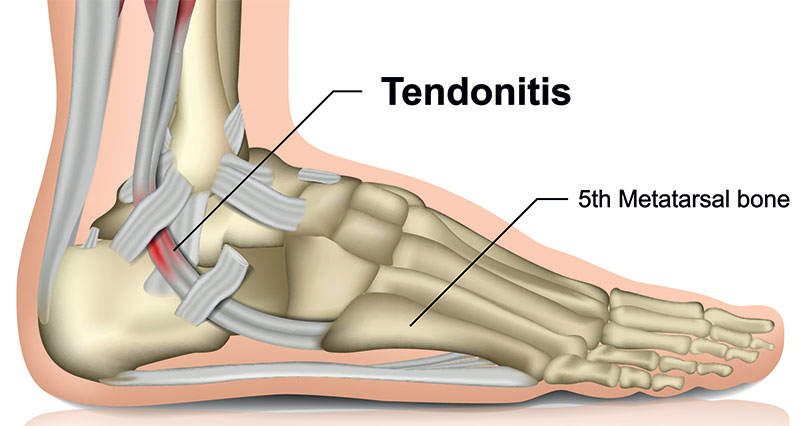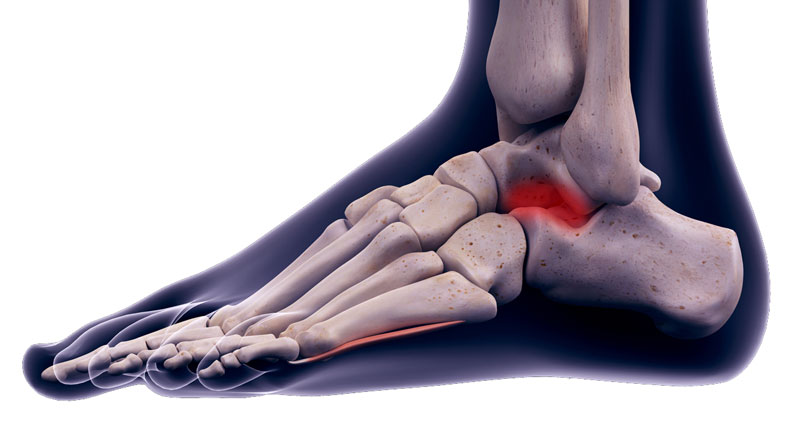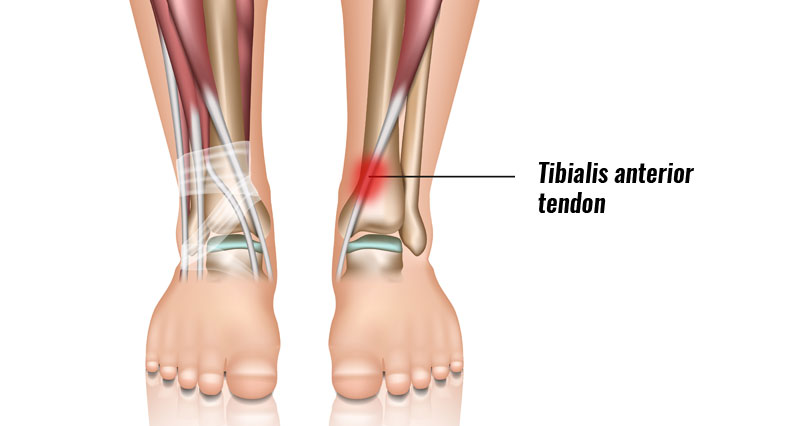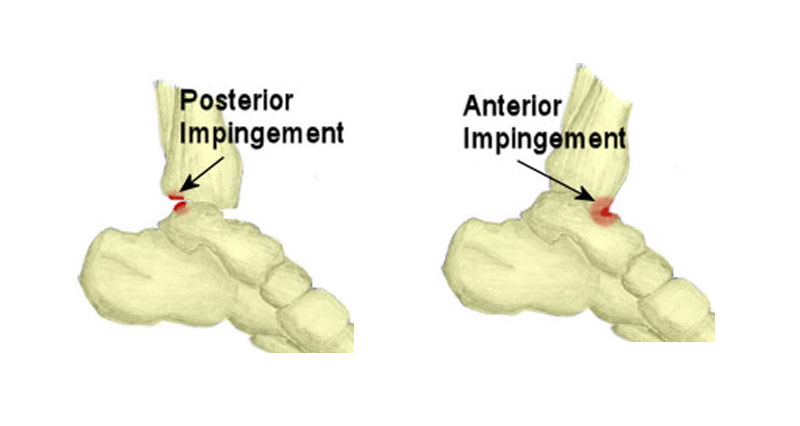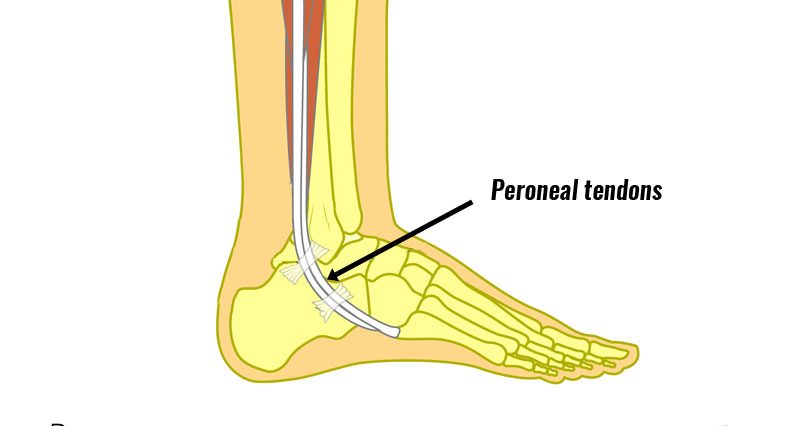
Peroneal tendon dislocation causes pain on the outside of the ankle. Repeated dislocation or slipping of the peroneal tendons over the outside of the ankle causes friction, pain, and inflammation.
Symptoms
Symptoms include:
- Pain and tenderness on the outside of the ankle where the tendon passes behind the lateral malleolus.
- Swelling and bruising over the outside of the ankle
- Pain when the soles of the feet are turned outwards and upwards (overpronation).
What is Peroneal tendon dislocation?
The Peroneal muscles are found on the outside of the lower leg. There are two muscles; the peroneus brevis and the peroneus longus. The long tendons of these muscles pass behind the lateral malleolus (a bony protrusion) and attach to the foot.
If the tissue that holds the tendons in place is torn then the tendons can slip forward over the lateral malleolus. Repeated dislocations can result in friction and inflammation of the tendon.
Peroneal tendon dislocation is common in athletes who have unstable ankles. Or those who have suffered repeated ankle sprains. Often a contributing factor to this is tight peroneal muscles, especially where there is tension in the muscle belly. Deep tissue massage is an excellent way of identifying and releasing this.
Treatment of peroneal tendon dislocation
What can the athlete do?
PRICE principles apply; protection, rest, ice, compression and elevation. Rest is important to allow the swelling and inflammation to go down. Continuing to train with a peroneal tendon dislocation will prevent the injury from healing and could lead to it becoming chronic and more difficult to treat.
Ice can be applied for 10 minutes every hour initially for the first 24 to 48 hours, reducing as symptoms reduce to 2 to 3 times a day. Do not apply ice directly to the skin. Commercially available hot and cold packs are often more convenient than pure ice.
Compression in the form of a tube grip bandage or ankle taping technique can provide support taking the strain off the tendon and helping reduce swelling. Elevating the foot will help and swelling drain away but this is likely to be minimal.
Zinc Ocide Sports Tape
Once the initial pain, inflammation, and swelling have gone then gentle stretching exercises can begin. Calf muscle stretches and stretching exercises specifically for the peroneal muscles are important. Learning how to apply self-massage to the peroneal muscle may help reduce tension in the muscle.
Using a calf stretcher is an excellent way of stretching the calf and peroneal muscles more deeply than just stretching against a wall.
What can a sports injury specialist or doctor do?
A professional therapist can correctly diagnose the injury and advice on treatment and rehabilitation. Electrotherapy such as ultrasound or laser treatment may help with pain and swelling.
Sports massage for the calf muscles and in particular peroneal muscles on the outside of the lower leg can reduce tension and help with stretching the muscle. Partner-assisted stretching and muscle energy techniques may help with stretching the muscles.
Buy Ankle Supports
- In severe cases, a doctor may apply a plaster cast for 3 to 4 weeks to completely immobilize the ankle, especially if the injury is fairly recent. Surgery is also an option if the peroneal dislocation is particularly severe and the tissue that holds the tendon in place requires repairing.
References & further reading
- Google scholar – research papers