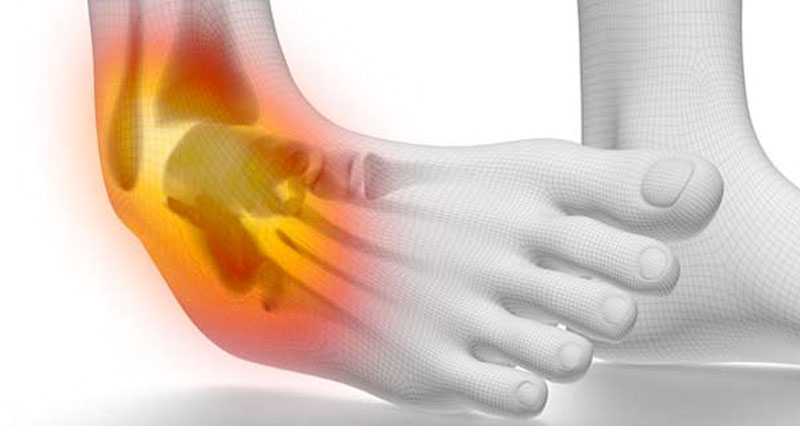
Lateral ankle pain is a pain on the outside of the ankle. Here we explain the common and not-so-common causes of pain on the outside of the ankle. Acute injuries are sudden onset and include sprains, strains and fractures. Chronic injuries develop gradually over time, often from overuse.
When should I see a doctor?
Seek urgent medical attention if:
- You cannot put weight on the ankle.
- There is significant deformity.
- Pain is severe following an injury.
- You have numbness or loss of sensation in the foot.
- Symptoms are worsening rather than improving.
Also, see your doctor or physio for a medical assessment if:
- Pain persists for more than 2-4 weeks.
- You have recurrent ankle sprains.
- Your ankle feels unstable or keeps giving way.
- Night pain or unexplained swelling develops.
Acute ankle pain (sudden onset)
Acute ankle injuries include sprains, strains, and fractures.
Sprained ankle
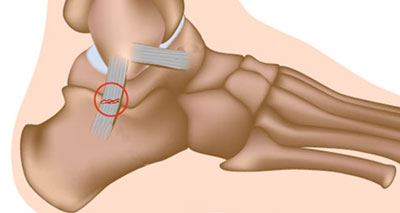
The most common ankle injury is a sprained ankle. Symptoms consist of:
- Sudden pain and swelling at the time of injury.
- Your foot inverts or rolls out, stretching or tearing the ligaments and tendons on the outside of your ankle.
- Complications of ankle sprains can also occur, causing lateral ankle pain long after your injury occurred.
- More on Ankle sprains
- Go to Ankle sprain rehabilitation program
Ankle fracture (broken ankle)
An ankle fracture is a break to one or more of the bones that form the ankle joint. Fractures usually occur following a severe twisting injury, fall or direct impact and can sometimes be mistaken for a severe ankle sprain. Symptoms include:
- Sudden severe pain at the time of injury.
- Rapid swelling and bruising around the ankle.
- Pain when putting weight on the injured foot.
- Tenderness when pressing directly on the bone.
- In more severe cases, the ankle may appear deformed.
Read more on Ankle fractures
Peroneal tendon dislocation
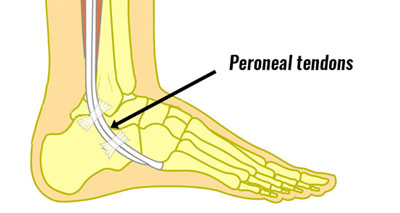
Peroneal tendon dislocation occurs when one or both of the peroneal tendons slip out of position from behind the bony bump on the outside of the ankle (lateral malleolus). Symptoms include:
- Sudden pain on the outside of the ankle following an injury.
- A snapping or popping sensation as the tendons move out of place.
- Swelling and tenderness behind the lateral malleolus.
- Symptoms are often mistaken for a severe ankle sprain.
- Your ankle may feel unstable or as though something is moving when you turn your foot outwards.
Read more on Peroneal tendon dislocation
Do I need an ankle X-ray?
This tool uses the Ottawa Ankle Rules. It cannot diagnose a fracture, but may help decide whether an ankle X-ray is recommended after an injury.
Chronic ankle pain (gradual onset)
Chronic lateral ankle pain develops gradually over time or persists following an ankle injury. Common causes include tendon injuries, ankle instability, impingement, and stress fractures.
Peroneal tendinopathy (tendonitis)
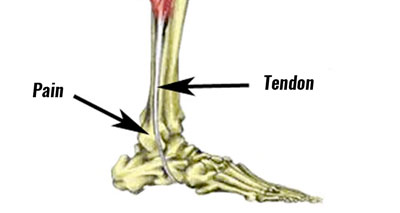
Peroneal tendonitis/tendinopathy is inflammation of the peroneal tendons which run behind the bony bit on the outside of the ankle (lateral malleolus). Symptoms include:
- Pain and swelling on the outside of the ankle.
- In particular, behind and underneath the bony part on the outside, called the lateral malleolus.
- Symptoms are worse with exercises and improve with rest.
- Your ankle will feel tender and painful when pressing in along the line the peroneal tendons pass.
- Read more on Peroneal tendinopathy
Sinus tarsi syndrome

The sinus tarsi is a small bony canal that runs into the ankle under the talus ankle bone. Damage to the sinus tarsi can be caused by overuse or an ankle sprain. Symptoms typically include:
- Ankle pain that may be difficult to pinpoint but somewhere just in front of the bony bit, or lateral malleolus on the outside of the ankle.
- Tenderness will be felt at the opening of the sinus tarsi which is located on the outside of the ankle.
- The patient may have pain or difficulty running on a bend. For example, running around a left-hand bend running track if your left foot is injured.
- Inverting your ankle or moving it into a position where it is turned inwards may recreate symptoms.
- More on Sinus tarsi syndrome

Ankle impingement
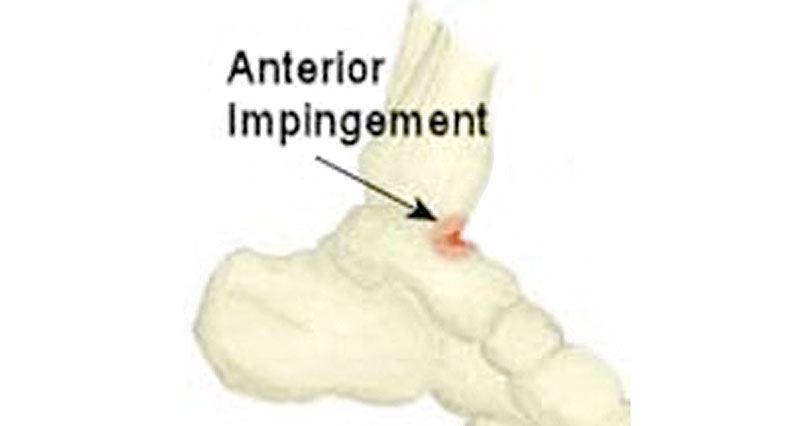
Ankle impingement occurs when soft tissues within the ankle get pinched between the bones. It can occur at the front of the ankle (anterior impingement) or at the back (posterior impingement).
- Symptoms of anterior impingement are sometimes also felt on the outside of the ankle.
- Impingement may develop following a sprained ankle that fails to heal properly.
- Your ankle may seem weak.
- If a partner or therapist passively moves your ankle into dorsiflexion (foot pointing upwards), this is likely to recreate symptoms.
- More on Ankle impingement
Fibula stress fracture
A fibula stress fracture is a small crack in the fibula (the smaller of the two lower leg bones) caused by repetitive stress rather than a single traumatic injury. It is most common in runners and athletes who have recently increased their training volume or intensity. Symptoms include:
- Gradually worsening pain on the outside of the ankle or lower leg.
- Pain which increases during running, jumping, or weight-bearing activities.
- Localised tenderness when pressing directly over the fibula.
- Symptoms improve with rest but return when activity resumes.
- Mild swelling may be present, although significant swelling is uncommon.
Read more on Fibula stress fracture
Stress Fracture of the talus
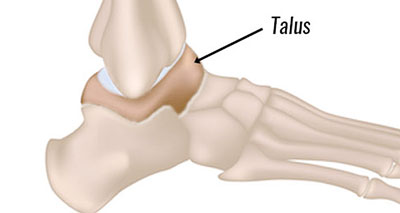
The talus bone is the bone at the top of the ankle which the tibia or shin bone sits on. Stress fractures of the talus are sometimes seen in footballers and track and field athletes. Symptoms include:
- Pain on the outside of the ankle which will have come on gradually.
- The pain will get worse with exercise, particularly running, and ease with rest.
- Bone scans and CT scans can confirm the diagnosis as a stress fracture is unlikely to show up on an X-ray until healing has begun.
- More on Talar stress fracture
Chronic ankle instability
Chronic ankle instability develops when ankle ligaments fail to heal properly following repeated sprains. Symptoms include:
- Recurrent ankle sprains.
- A feeling that the ankle gives way.
- Pain and swelling after activity.
- Reduced confidence when running, jumping, or changing direction.
Do not miss
Injuries which should always be considered when diagnosing pain on the outside of the ankle include:
- Fibula stress fracture
- Cuboid syndrome
- Complex regional pain syndrome
Ankle rehabilitation programs
Ankle Sprain Rehabilitation Program
Our step-by-step rehabilitation program takes you from initial injury to full fitness.
Start now!