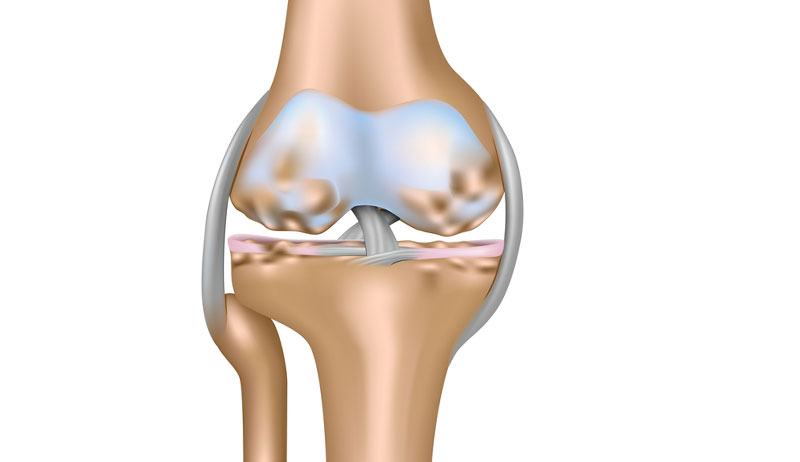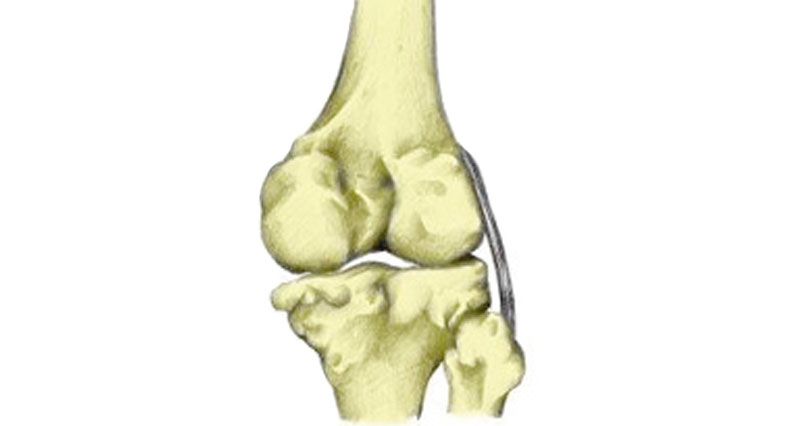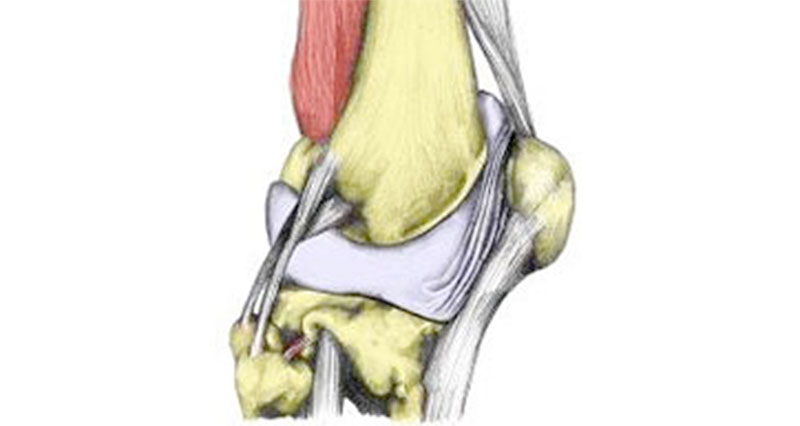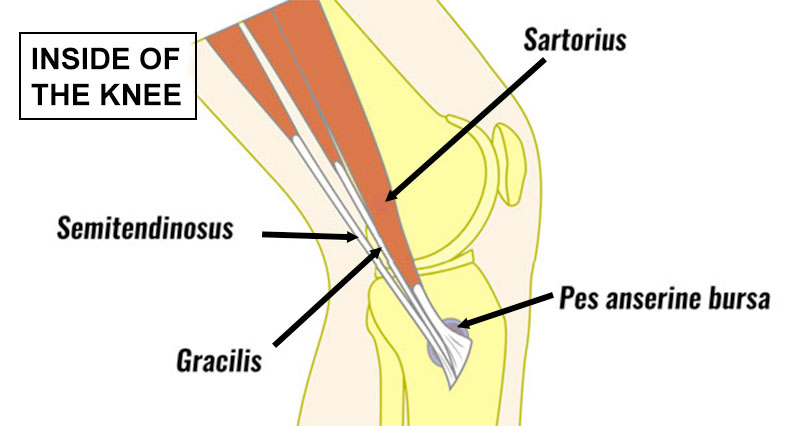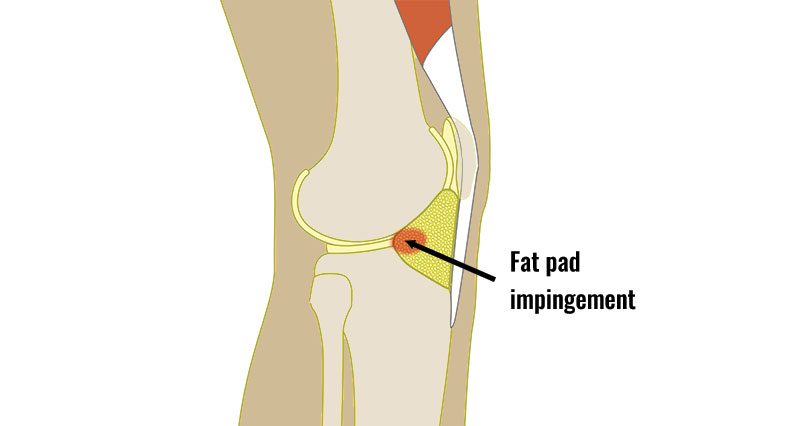
Fat pad impingement occurs when the infrapatellar fat pad or ‘Hoffa’s pad’ becomes impinged between the patella (kneecap) and femoral condyle (thigh bone). It usually occurs from a severe impact on the knee.
Medically reviewed by Dr Chaminda Goonetilleke, 10th Dec. 2021
Signs & symptoms
Patients with fat pad impingement often have a history of being able to over-straighten their knee (called knee hyperextension or genu recurvatum). Symptoms include:
- Pain at the front of your knee, specifically around the bottom, and underneath the kneecap.
- In some cases, the bottom of your kneecap tilts outwards from swelling underneath
- A positive result for Hoffa’s test.
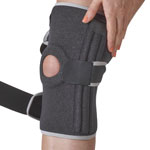
Hoffa’s test for knee fat pad impingement:
- Lie on your back with your knee bent
- Your physio/doctor presses both thumbs along either side of your patellar tendon, just below the patella
- Then simply straighten your leg
- The test is positive for fat pad impingement if you feel pain, and/or apprehension when performing it
What is a fat pad impingement of the knee?
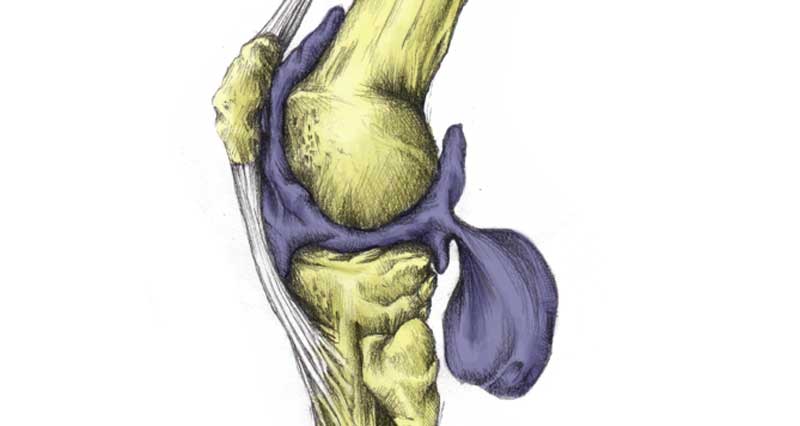
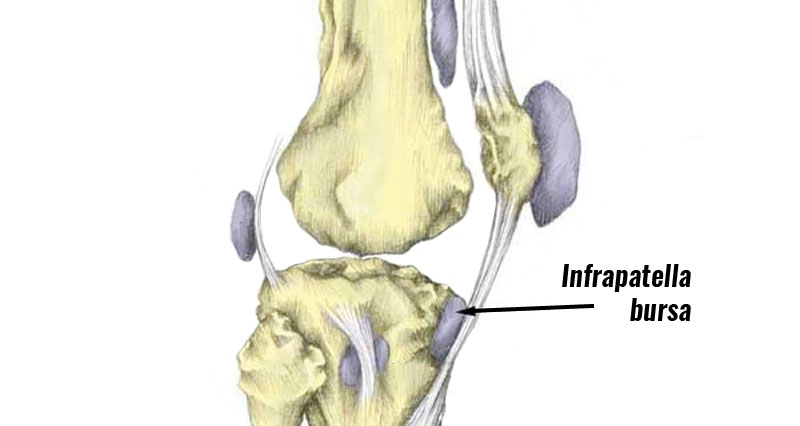
The infrapatellar fat pad (sometimes known as Hoffa’s pad) is a soft tissue that lies beneath your patella (kneecap). It separates the patella from the femoral condyle (end of your thigh bone).
It acts as a shock absorber, thus protecting the underlying structures. For example, if you were to suffer a direct blow to the patella.

If you happen to have a more severe, direct impact on your kneecap, the fat pad can become impinged (pinched). It gets stuck between the femoral condyle and the patella. As the fat pad is one of the most sensitive structures in the knee, this injury is known to be extremely painful.
Fat pad impingement is normally a long-term, chronic condition. This is because it is aggravated by repetitive knee extension (straightening your knee). Hence, over time the fat pad comes under constant irritation and may become inflamed.
Treatment
Treatment of fat pad impingement is normally done by conservative methods and not surgery.
Rest
Rest and avoid aggravating activities. Continuing to train on a painful knee will not give it a chance to heal.
If you can swim or cycle without any pain during, after, or the following day then continue to do so. Otherwise, complete rest may be needed for a few days.
Cold therapy
Apply Ice or cold therapy for 10 minutes every hour initially, to reduce pain and inflammation. As your symptoms improve you can reduce the time between applications.
Do not apply ice or cold packs directly to the skin. It may cause ice burns. Instead, wrap in a wet tea towel, or better still, use a commercially available hot and cold wrap. These are more convenient and apply compression as well.
Electrotherapy
Your doctor/physio may use electrotherapies such as ultrasound and TENS to help reduce pain and inflammation, especially if you have swelling.
Exercises
Muscle-strengthening exercises to maintain the strength and fitness of the surrounding muscle groups should be done as pain allows.
Patella taping
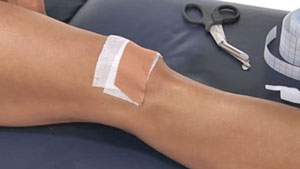
Patella taping can be very highly effective in treating fat pad impingement. One method is to tape the upper surface of your patella. As a result, this allows more space for the fat pad underneath.
Injection
The fat pad can be injected with a steroid to reduce any inflammation and alleviate pain.
Surgery
If conservative treatment does not work then surgery may be advised. This may involve the complete or partial removal of the fat pad itself.