Myositis ossificans occurs as a complication of not treating a contusion correctly. It involves a small growth of bone within the muscle and usually occurs a while after the original injury.
Medically reviewed by Dr Chaminda Goonetilleke, 9th Feb. 2022.
Myositis ossificans symptoms
Symptoms of Myositis ossificans develop some time after a contusion or blow to a muscle and consist of:
- Gradual onset pain in the muscle, particularly during exercise.
- Restricted range of movement in the injured leg.
- You may feel a hard lump deep in the muscle.
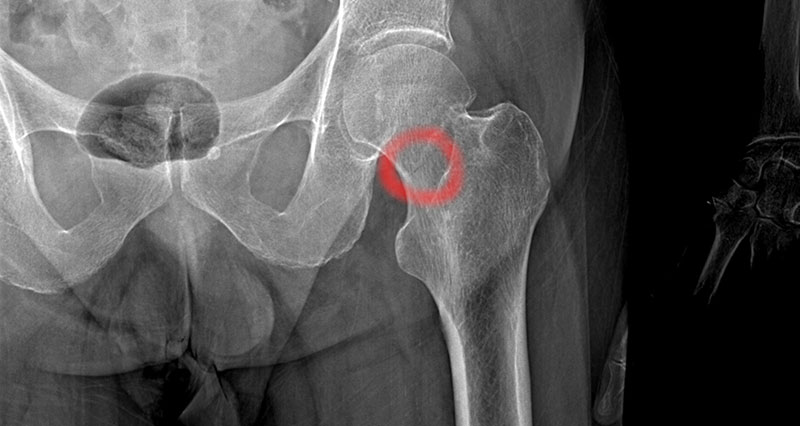
- An X-ray can confirm the diagnosis by showing bone growth within the muscle. Sometimes, this growth may be mistaken for a tumour.
What is Myositis Ossificans?
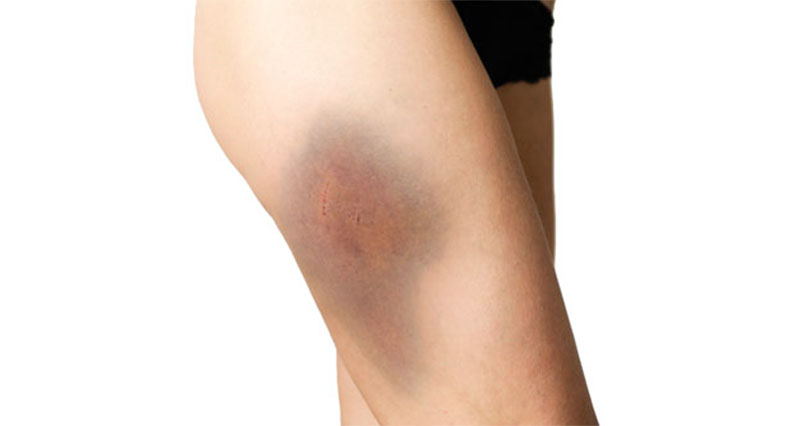
Myositis ossificans is a small bone growth within the muscle, which occurs as a complication of a severe contusion. A contusion is an injury to muscle caused by direct impact or trauma.
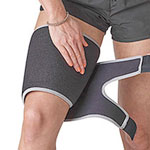
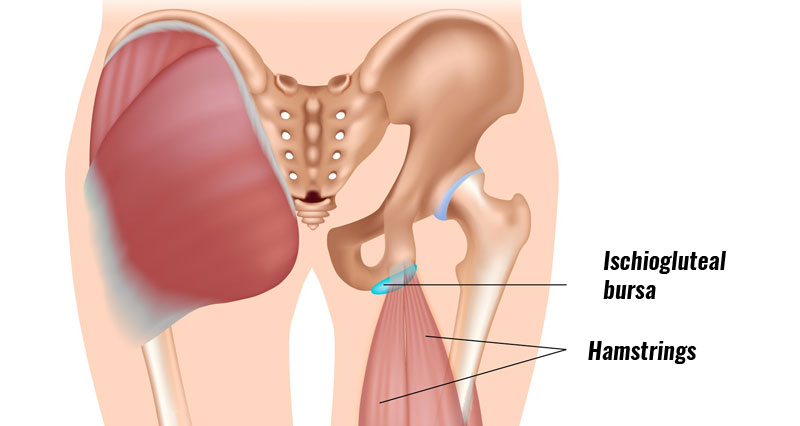
Impact on the muscle crushes it against bone, also causing damage to the sheath (periosteum) surrounding the bone. If it is neglected then your body mistakenly sends new bone cells to repair the damage. As a result, a small part of the muscle calcifies and turns to bone.
The bone grows 2 to 4 weeks after the initial injury and is mature bone within 3 to 6 months.
Causes
Common causes include failing to apply cold therapy and compression immediately after the injury or applying heat too soon.

Ice will help reduce pain, inflammation, and swelling and encourage the injured muscle to heal.
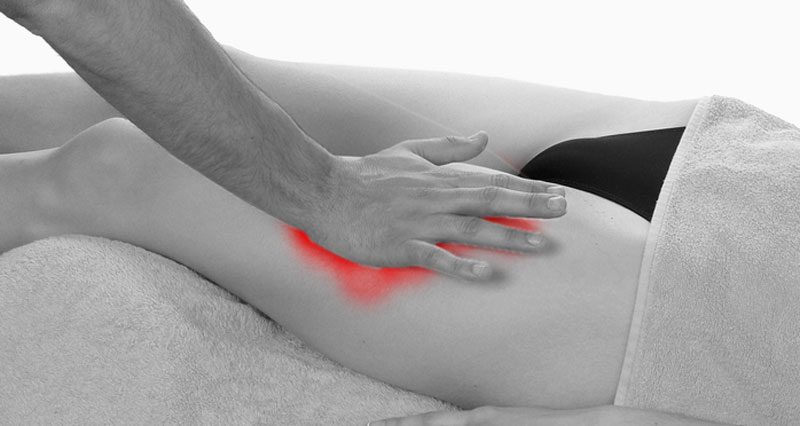
Having intensive physiotherapy or massage too soon after the injury. This may increase internal bleeding and prevent healing.
Returning too soon to training after exercise is also a cause of myositis ossificans.
Treatment
If you suspect you have myositis ossificans then seek professional advice from a sports injury specialist or doctor as soon as possible.
Conservative treatment (without surgery) is usually recommended first. Rest is most important. It may be necessary to immobilise the affected limb for 3 or 4 weeks. This may give your body time to reabsorb the calcification.
An X-ray of the muscle can be done to see when it is safe to start rehabilitation and strengthening exercises.
In particularly severe cases surgery can be performed to remove the bone growth.