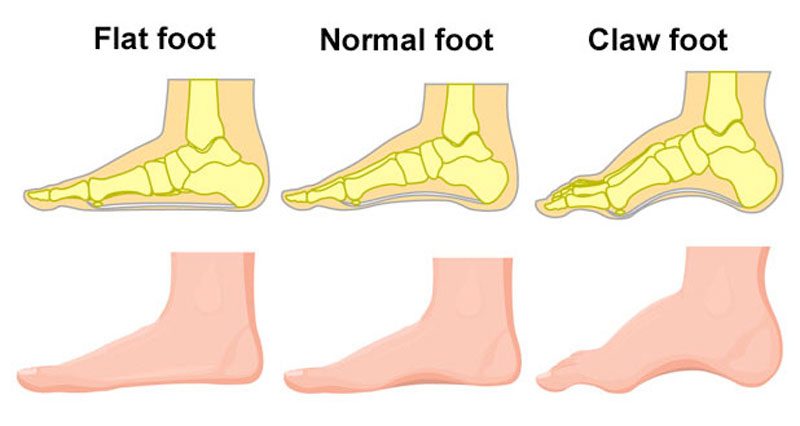
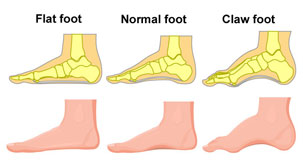
Flat feet (pes planus), also known as fallen arches, occur when the arch of the foot collapses and the sole sits flat on the ground. This common condition can affect walking and running, and may lead to foot, ankle or lower leg pain.
Medically reviewed by Dr Chaminda Goonetilleke, 20th Jan. 2022
Signs & symptoms
Most people with flat feet have no symptoms and do not report problems. However, some develop related issues due to this foot type, including:
Rigid flatfoot, where the arch of the foot is very rigid, even when not weight-bearing, may cause pain in the arch of the foot with stiffness. The feet may get tired easily and be tender.
What are flat feet?
You can usually identify a flat foot by observing the foot. The appearance of a flat foot is normal in infants, partly due to increased fat in the area and because the arch has not yet fully developed. However, in teenagers and older people, it is less common and can cause problems.
Flat feet differ from pronation and overpronation. Pronation is a normal foot movement that happens just after the heel contacts the ground during walking. The foot rolls inwards and the arch lowers, allowing it to adapt to the surface and absorb shock.
Over-pronation is where too much pronation occurs, or it occurs too rapidly. This places additional stress on the ankle, knee, hip and lower back.
What causes flat feet?
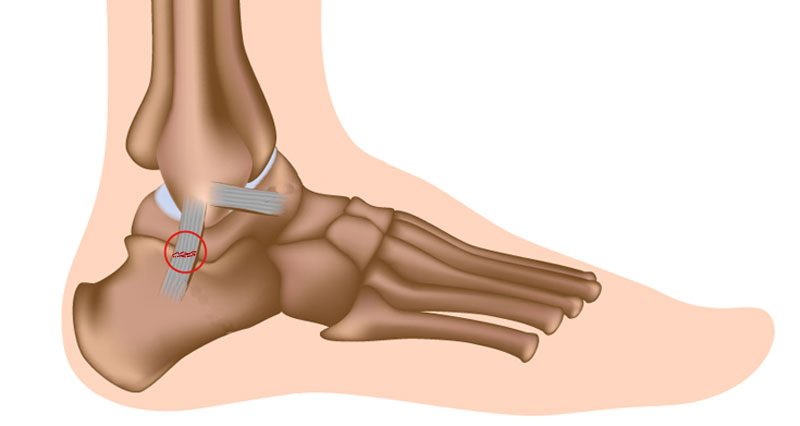
Pes planus may develop from childhood or may only occur later in adult life. Adult acquired flatfoot’ usually develops following an injury or prolonged stress to the foot. An example includes Posterior Tibial Tendon Dysfunction (PTTD), which is a dysfunction of one of the muscles which support the arch of the foot.
Genetic disorders may cause it along with, foot injury, obesity, rapid leg growth, too much exercise and traumatic injury to the arch of the foot.
Treatment for flat feet
If having flat feet does not cause any pain then you do not need any immediate treatment. However, those who run or spend long periods on their feet should ensure they wear supportive shoes or use arch support insoles to help prevent future injuries.
If the pain is present, orthotic shoe inserts are useful, or special shoes can be commissioned.
In severe cases where the flatfoot deformity is rigid, surgeons may perform surgery to fuse some of the joints and create more of an arch. This should be considered a last resort.
External links