Plantar Fasciitis
Probably the most common cause of pain under the heel which may radiate into the arch. Symptoms develop gradually over time and are worse first thing in the morning.

The most common cause of heel pain in the morning is Plantar fasciitis. A Heel spur also causes morning heel pain and is related to plantar fasciitis. However, they are not the same thing. They often occur together, but they can also exist independently.
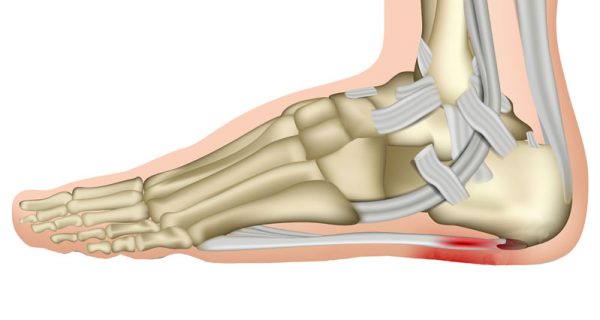
Plantar fasciitis is a inflammation (or degeneration) of the plantar fascia, a thick band of tissue runing along the bottom of the foot. It connects the heel bone to the toes and supports the arch of the foot.
If you find you have a painful heel in the morning then the most likely cause is Plantar fasciitis. Symptoms consist of pain and tenderness on the bottom of the heel, which sometimes extends into the arch of the foot. Pain is often worse first thing in the morning or after prolonged periods of rest. However, it improves with activity but may return with prolonged standing or walking.
A heel spur is a bony outgrowth or calcium deposit that forms on the underside of the heel bone (calcaneus). Heel spurs are often associated with plantar fasciitis but can also occur on their own.
Heel spurs on their own usually don’t cause pain. The pain associated with a heel spur is due to irritation or inflammation of the plantar fascia. This is why heel spurs are often found in conjunction with plantar fasciitis.
Probably the most common cause of pain under the heel which may radiate into the arch. Symptoms develop gradually over time and are worse first thing in the morning.

A heel spur is a hooked bony growth protruding from under the heel bone (calcaneus). It has identical symptoms and is often found to co-exist