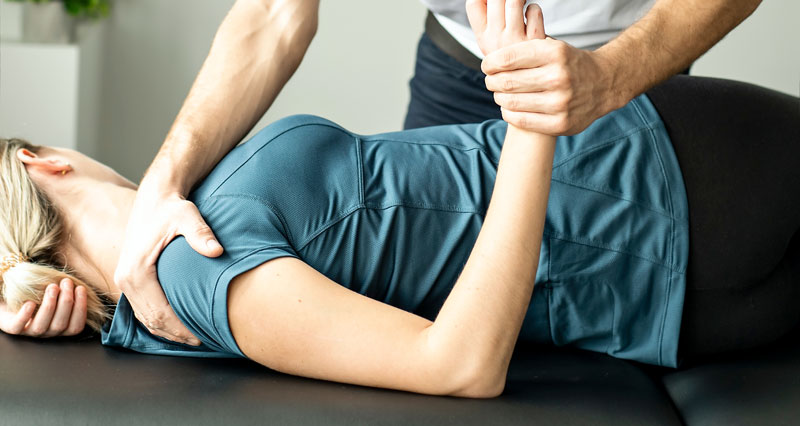
Rotator cuff exercises are essential for recovering from a shoulder injury and restoring full function. Whether you have a rotator cuff strain or tear, the right exercises help reduce pain, improve mobility, and rebuild strength.
This guide explains the most effective rotator cuff exercises, including mobility, stretching, strengthening, and sport-specific movements. These form part of a structured rehabilitation programme and can also help prevent future shoulder injuries.
Rehabilitation should follow a structured progression based on pain, strength, and control. See our rotator cuff rehabilitation program for a step-by-step plan.
Early-stage rotator cuff mobility exercises
These early exercises help restore movement after a rotator cuff injury and should begin as soon as pain allows.
The aim is to regain full, pain-free mobility in the shoulder joint. In some cases, mobility may already be good, depending on the severity of the injury.
Perform mobility exercises at least once per day, and up to two or three times daily if tolerated. Avoid any exercise that causes pain and stay within a comfortable range of movement.
Pendulum exercises
Pendulum exercises help improve mobility in the shoulder joint.
Teaching points:
If the injury is mild and the shoulder has not been immobile for long, you may progress through these exercises quickly and move on to stretching exercises
- Gently swing your arm in a circular motion
- Gradually increase the size of the movement to improve range of motion
- Keep the arm relaxed and use momentum rather than muscle effort
Pole/wand exercises
A pole, wand, or broom handle can be used to assist movement in the injured shoulder.
Teaching points:
- This exercise can be performed in different positions. Repeat several times per day and gradually increase the range of movement
- Hold the stick slightly wider than shoulder-width
- Use your unaffected arm to lift the injured shoulder as far as is comfortable. Stop if you feel pain
- Keep the injured arm relaxed so it does not actively assist the movement
Rotator cuff stretching exercises
Stretching exercises follow mobility work and should begin as soon as pain allows. After a rotator cuff strain, the injured muscle often tightens or goes into spasm, so restoring flexibility is important.
Choose stretching exercises that feel effective and perform them regularly throughout the day. Keep all movements pain-free.
Front of the shoulder against a wall

Teaching point:
- Place one forearm against a fixed point (such as a doorway), with your elbow and shoulder at 90 degrees.
- Gently turn your body away to stretch the front of the shoulder and chest.
- Again, hold the position for 20 seconds and repeat it 3 times.
- You should feel a gentle stretch in the front of the shoulder but not pain.
Back of the shoulder stretch
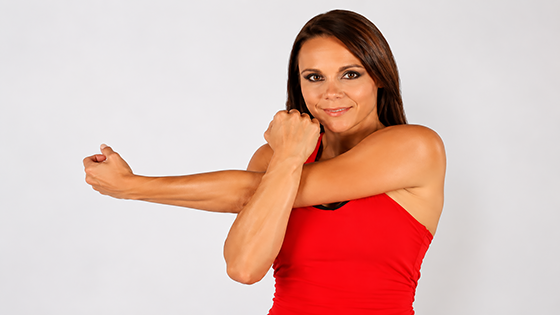
Teaching point:
- Place one arm across your chest and pull it in using the other arm.
- You should feel a gentle stretch at the back of the shoulder.
- Hold for 20 seconds. Repeat 3 times.
Muscle energy technique
Teaching point:
- The therapist rotates the shoulder to the limit of comfortable movement (without pain), usually into medial or lateral rotation.
- You then push gently against the therapist at around 20% of your maximum effort.
- Hold this contraction for 10 seconds.
- As you relax, the therapist applies a gentle stretch to increase the range of motion.
- Repeat 3–5 times.
Rotator cuff strengthening exercises
Strengthening exercises usually begin with isometric (static) work. They then progress to dynamic exercises using resistance bands or dumbbells, before moving on to sport-specific or functional movements.
Isometric shoulder rotator cuff exercises
Static (isometric) exercises are often the first rotator cuff exercises used, as they do not involve movement.
Teaching point:
Push against a stationary object, such as a wall or door frame, or against resistance from another person. Because there is no movement, these exercises can begin early, often within 3–7 days, provided they are pain-free.
If an exercise causes pain, stop. Perform exercises in a range of shoulder positions to build strength and control across the full movement range.
Scapular squeeze exercise
The aim is to strengthen the muscles that stabilise the scapula (shoulder blades) during the early stages of rehabilitation.
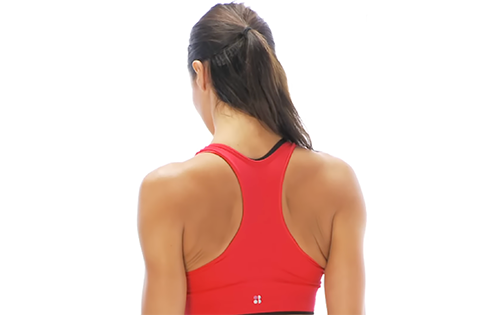
Teaching point:
- Sit upright with your elbows by your side.
- Squeeze your shoulder blades together and hold for 5–10 seconds.
- Keep the elbows down and avoid shrugging the shoulders.
Dynamic rotator cuff exercises
Dynamic exercises involve movement and are performed using resistance bands or dumbbells. They can be done in a range of positions and easily progressed as strength improves.
Lateral rotation in standing
Teaching point:
Use a resistance band to strengthen the shoulder’s external rotator muscles.
- Attach the band to a fixed point.
- Keep your elbow close to your side and rotate the shoulder so your arm moves outwards.
- Move through a comfortable, pain-free range of motion.
- You should feel the exercise working at the back of the shoulder after a few repetitions.
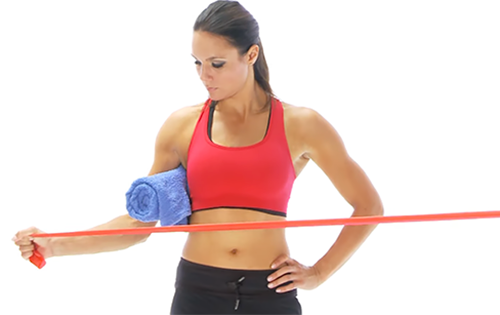
Lateral rotation rotator cuff exercise
Teaching point:
- Lie face down with your arm hanging over the side of a bench or massage table.
- Slowly lift the dumbbell by rotating the shoulder upwards.
- Move through as much range of motion as comfortably possible while keeping the movement slow and controlled.
- You should feel the exercise working at the back of the shoulder.
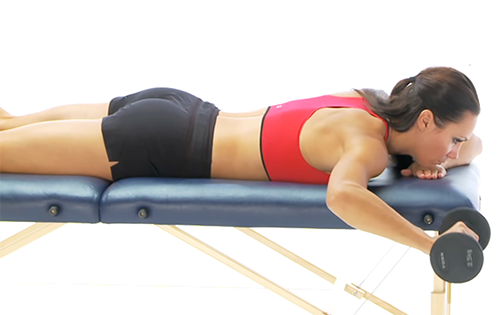
Lateral rotation in abduction
Teaching point:
- Slowly return to the starting position and repeat.
- Stand holding the resistance band with your elbow bent to 90 degrees and your arm raised out to the side.
- Keep the elbow level with the shoulder throughout the movement.
- Rotate the shoulder backwards against the resistance of the band.
- Maintain a controlled movement and avoid letting the arm drift forward or backwards.
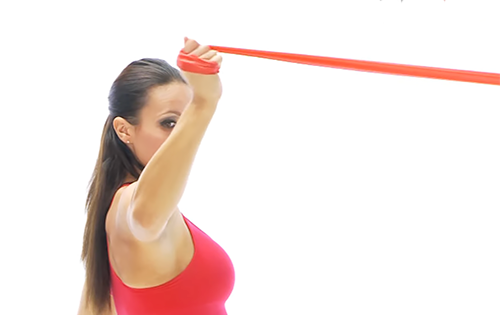
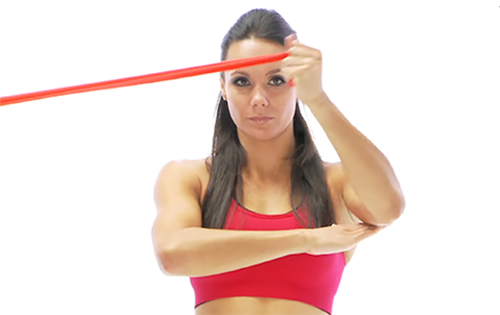
Standing 90/90 external rotation
Teaching point:
- Anchor the resistance band in front of you and hold the other end in one hand.
- Raise your arm so the shoulder is abducted to 90 degrees and the elbow is bent.
- Rotate the shoulder so the forearm moves upwards.
- Slowly return to the starting position in a controlled manner.
- Keep the shoulder stable and avoid arching the lower back during the exercise.
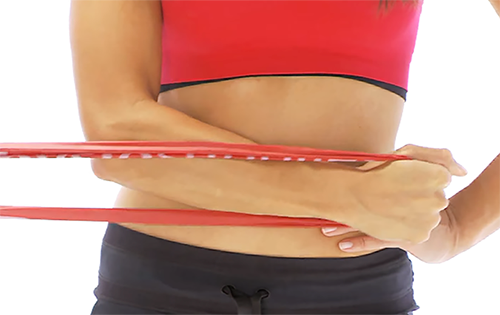
Internal rotation in standing
Teaching point:
- Attach the resistance band to a fixed point beside you.
- Hold the other end of the band with your elbow bent and your upper arm close to your side.
- Keeping your elbow tucked into your side, pull your hand towards your stomach.
- Move through a comfortable, pain-free range of motion.
- Slowly return to the starting position and repeat.
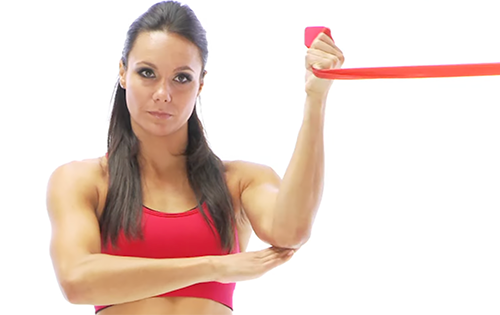
Standing 90/90 internal rotation
Teaching point:
- Raise your arm to shoulder height with your elbow bent to 90 degrees.
- Rotate your shoulder so your forearm moves forward towards a horizontal position.
- Keep the movement slow and controlled throughout.
- Slowly return to the starting position and repeat.
- As your strength improves, the supporting hand can gradually be removed.
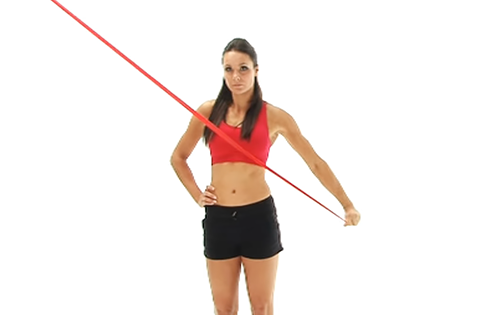
Diagonal plane exercises
Teaching point:
- Hold one end of a resistance band with your arm raised above shoulder height.
- Pull your arm diagonally down across your body towards the opposite hip.
- Keep the movement smooth and controlled throughout.
- Maintain good shoulder and trunk stability during the exercise.
- Slowly return to the starting position and repeat.
Functional & sports-specific rotator cuff exercises
Functional exercises are used during the later stages of rehabilitation to bridge the gap between basic rehabilitation exercises and a full return to sport.
Ball throwing
Many sports involve throwing or racket movements, including baseball, cricket, tennis, badminton, and squash. Shoulder rehabilitation for these athletes should include throwing drills. This allows you to gradually rebuild speed, power, coordination, and confidence before returning to full competition.
Teaching point:
- Begin by gently throwing a small, light ball, such as a tennis ball, underarm against a wall or with a partner.
- Gradually increase the speed, force, and distance of your throws.
- Progress to using a slightly heavier ball, such as a netball.
- Return to a tennis ball before progressing to overhead throws.
- Start close to the wall and gradually increase the distance and intensity.
- Use both hands together initially if needed.
- Progress gradually over several sessions towards single-handed throws at full power.
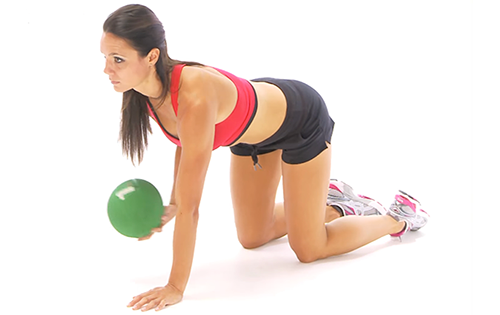
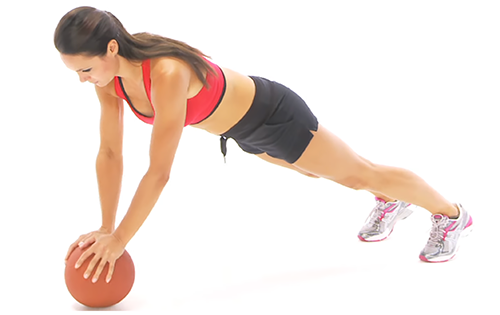
Medicine ball rotator cuff exercises
Medicine ball exercises can help improve the shoulder’s plyometric strength, power, and dynamic stability.
Resistance band movements
Resistance band exercises can help you replicate the movements used in your sport or everyday activities.
Teaching point:
- Attach one end of a resistance band to a secure fixed point.
- Hold the other end in your hand.
- Perform controlled movements that mimic your sport, such as a tennis serve, forehand, or backhand.
- Start gently and gradually increase the speed and intensity over several sessions.
- The same approach can be used for movements such as a golf swing or baseball pitch.
- Keep all movements smooth and controlled throughout the exercise.
References & further reading
- Namdari S, Baldwin K, Ahn A et al. Performance after rotator cuff tear and operative treatment: a case-control study of major league baseball pitchers. J Athl Train 2011;46(3):296–302.
- Kuhn JE, Dunn WR, Sanders R et al. Effectiveness of physical therapy in treating atraumatic full-thickness rotator cuff tears: a multicenter prospective cohort study. J Shoulder Elbow Surg 2013;22(10):1371–9.
- Ainsworth R, Lewis JS. Exercise therapy for the conservative management of full-thickness tears of the rotator cuff: a systematic review. Br J Sports Med 2007;41(4):200–10.
- Levy O, Mullett H, Roberts S et al. The role of anterior deltoid re-education in patients with massive irreparable degenerative rotator cuff tears. J Shoulder Elbow Surg 2008;17(6):863–70.