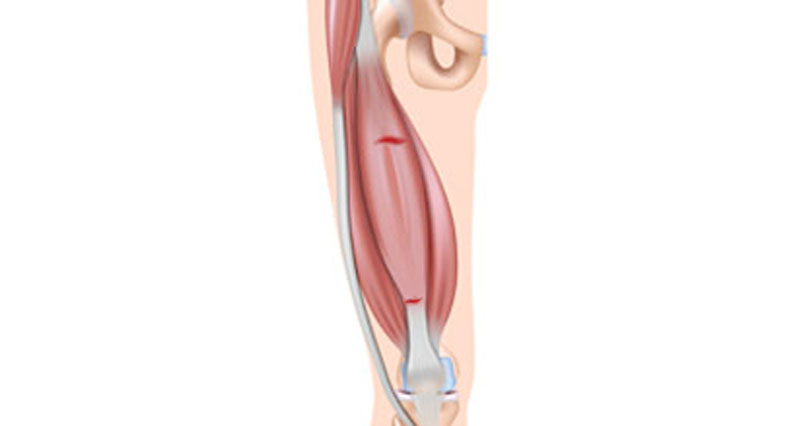
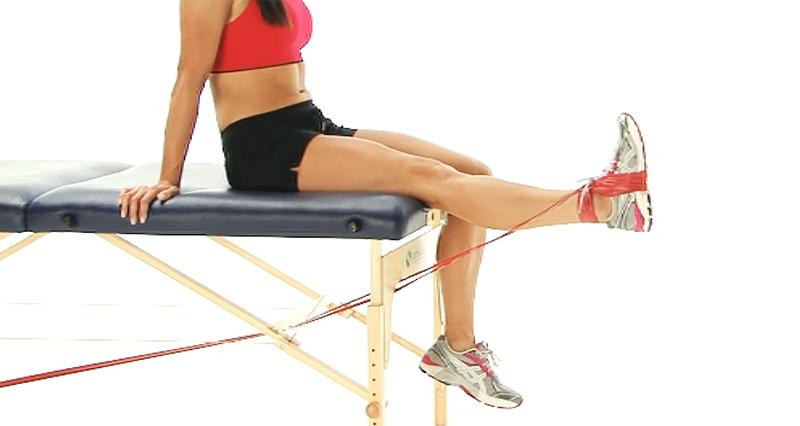
The following thigh massage techniques form part of our thigh strain rehabilitation program. They are most suitable during the mid to late stages of recovery, as well as for general injury prevention.
The following is for information purposes. We always recommend seeking professional advice before attempting self-treatment.
Before beginning massage therapy, your therapist will check for massage contraindications. If any apply, thigh massage may not be suitable and could cause further injury.
When to apply thigh massage?
If you have not had a thigh muscle strain and are using massage as part of your normal fitness routine, or to help prevent injury, you can begin straight away.
However, if you are recovering from a thigh or quadriceps strain, only begin massage once the acute stage has passed. In cases of a thigh contusion caused by direct trauma, extra caution is needed. Starting too early can cause further damage and may lead to myositis ossifications (where bone forms within the muscle).
Use only very light, superficial pressure initially and see how you react after and the following day. Later, as your injury heals, techniques become gradually deeper.
Why is massage beneficial?
Massage helps break down scar tissue that forms after a thigh muscle strain. It also helps relax tight muscles and improve blood flow to the area. As a result, it supports the healing process and may increase flexibility.
Initially, light massage can be applied daily. However, as techniques become deeper, more recovery time between sessions is usually needed.
Thigh massage contraindications
Massage contraindications are conditions where massage may be harmful or unsafe. The following are particularly relevant to a thigh muscle strain:
Open wounds – Any cuts, lacerations or grazes. Wait until the skin has fully healed and a stable scar has formed, which is usually one to two weeks.
Muscle ruptures (acute stage) – During the acute stage, soft tissue may still be bleeding. Massage can increase bleeding and tissue damage, which delays recovery. After the initial 48 to 72 hours, massage may be introduced cautiously depending on the severity of the injury.
Tendon ruptures – The same applies to tendon injuries. Complete ruptures are not suitable for massage and typically require surgical treatment.
Contusions – These are impact injuries that cause bleeding within the muscle. Massage too soon after a thigh contusion can cause further damage and may lead to myositis ossificans (bone forming within the muscle).
Burns, chilblains and broken bones – Massage in these cases will cause pain and further damage and should be avoided.
Myositis ossificans – This can develop after a severe contusion or muscle rupture, where the muscle begins to calcify. Massage will worsen the condition.
Other conditions include:
- Periostitis – Inflammation of the tissue surrounding the bone
- Rheumatoid arthritis and gout
- Bursitis
- Infections
- Thrombosis
- Haemophilia
- Tumours
Thigh massage techniques
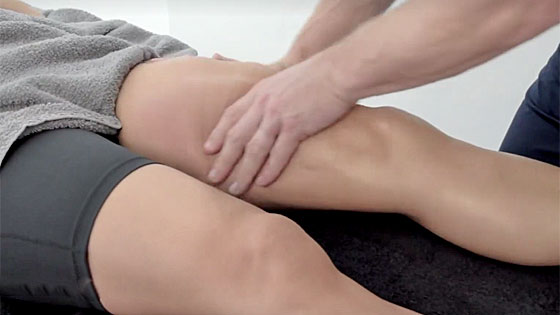
Massage usually begins with light stroking techniques called effleurage. This helps warm the area and increase blood flow through the muscle. Next, kneading techniques known as petrissage work deeper to manipulate and stretch the muscle tissue, both lengthways and across the fibres.
Cross friction and circular friction involve applying deeper pressure to a specific area. These thigh massage techniques help reduce muscle tension and assist with realigning scar tissue following a thigh muscle strain.
Trigger point techniques involve applying sustained pressure to tight knots or lumps within the muscle. As the tissue begins to relax, pressure is gradually increased. This helps release trigger points and improve overall muscle function.
External links:
- Shop massage therapy at UPMedical.co.uk
- Massage Guns & Vibrating Foam Rollers at UPMedical.co.uk
- J3Therapy.co.uk – Julie Kean, sports massage therapist & page editor.