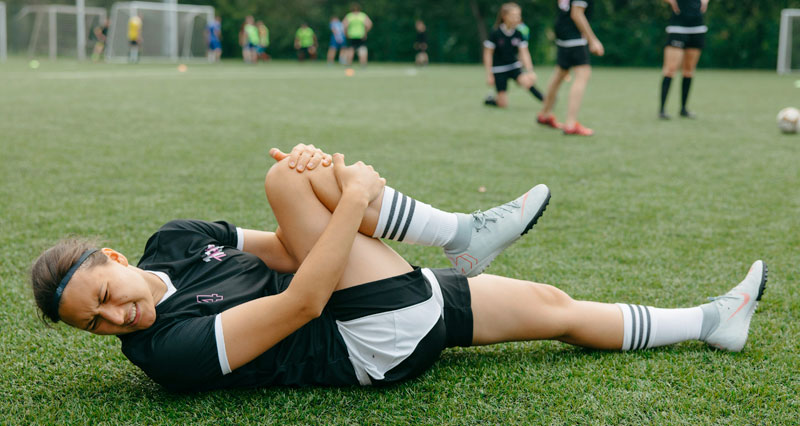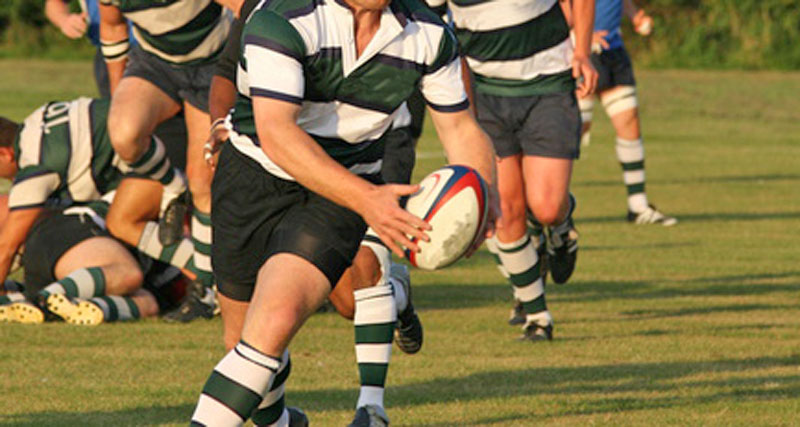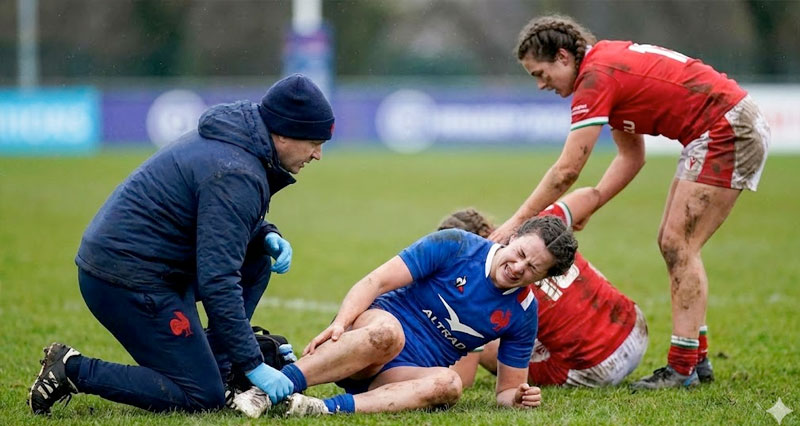
Recent research suggests that female rugby players experience higher injury rates than males, particularly in the tackle. A two-year prospective cohort study of Canadian high-school Rugby Union players tracked 361 females and 429 males. The findings showed that females had a significantly higher incidence of injury during matches (62% higher) and in training (twice as high). They also recorded a 70% higher rate of concussion in matches. Tackle-related injuries were 75% more common, and females were twice as likely to be injured while tackling.
This highlights the need for gender-specific injury and concussion prevention strategies in youth rugby.
Common Injuries in Women’s Rugby
Although overall injury patterns appear similar across men’s and women’s rugby, several injuries occur more frequently in female players. These trends are important for coaches, parents, and players to recognise because they shape how training loads, contact skills, and recovery plans should be managed.
Lower limb injuries are among the most common. Ankle sprains, knee sprains, calf strains, and hamstring strains happen regularly due to running demands, sudden direction changes, and tackling. ACL sprains and tears are also seen more often in female players, especially during cutting movements or awkward landings.
Concussion remains one of the most frequently reported injuries. Studies show female athletes experience higher concussion rates in both youth and adult rugby. Differences in tackle exposure, neck strength, and reporting behaviour may contribute, but the outcome remains the same: players need clear recognition and recovery pathways.
Shoulder injuries are also prevalent. Sprains, AC joint irritation, and rotator cuff strains often occur during contact, particularly when a player reaches out with an arm to absorb impact or break a fall.
Contusions and soft-tissue trauma are common because of repeated contact during tackles and rucks. Bruising to the thigh, hip, and upper arm is routinely seen across all levels of the women’s game.
Hand and wrist injuries frequently happen during ball handling, scrums, and when players land awkwardly. Typical examples include finger sprains, thumb sprains, and minor fractures.
Overuse injuries can also affect female players. Shin splints, patellofemoral pain, and Achilles tendon discomfort may develop during periods of heavy training, especially early in the season.
Why This Matters
As female participation in rugby continues to rise, understanding injury trends becomes increasingly important. Recognising these common injuries supports safer training, better coaching techniques, and earlier access to appropriate rehabilitation.
Isla J Shill, Stephen W West, Stacy Sick, Kathryn J Schneider, J Preston Wiley, Brent E Hagel, Amanda M Black, Carolyn A Emery. doi: 10.1136/bjsports-2023-106929. Sport Injury Prevention Research Centre, Faculty of Kinesiology, University of Calgary, Calgary, Canada.