Inflammation of the Sacroiliac joint causes pain in the lower back and buttocks, usually on one side only. Here we explain the symptoms, causes, and treatment for Sacroiliac joint pain.
Symptoms of Sacroiliac joint pain
Symptoms of Sacroiliac joint pain consist of:
- Pain at the bottom of the spine, usually located on one side. Sometimes described as a band of pain across the lower back.
- Pain ranges from a dull ache to a sharp pain that restricts movement.
- Symptoms may radiate into your buttocks, low back, groin, and occasionally testicles.
- Difficulty turning over in bed, putting on shoes and socks, and pain climbing in and out of the car.
- Stiffness in the lower back when getting up after sitting for long periods or getting up from bed in the morning.
- Tenderness on palpating (pressing in on) the ligaments which surround the joint.
Read more on Sacroiliac joint pain diagnosis.

What is Sacroiliac joint pain?
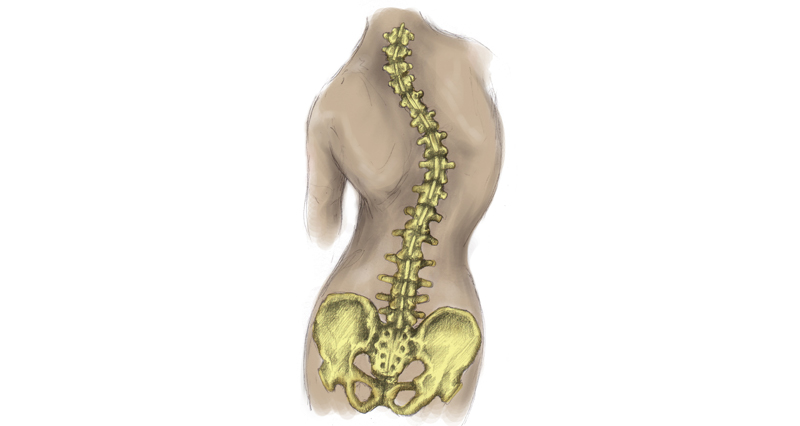
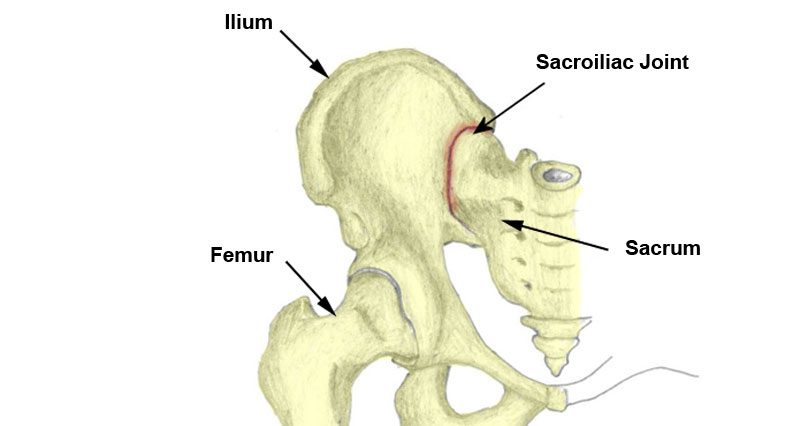
The Sacroiliac joints (SIJ) are located at the very bottom of the back, on either side of the spine. They help make up the rear part of the pelvic girdle. They join the sacrum and the Ilia.
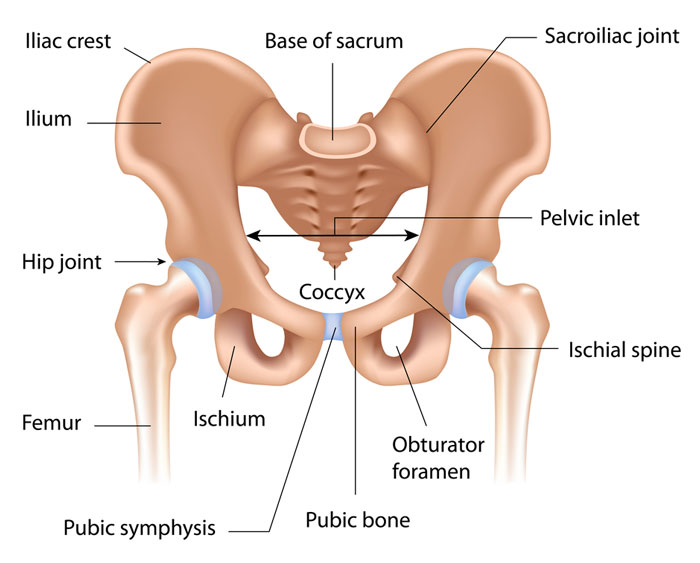
SIJ dysfunction is a term that is commonly used when talking about sacroiliac injuries. This dysfunction refers to either hypo or hypermobility (low or high respectively). In other words, the joint can become ‘locked’ or be too mobile.
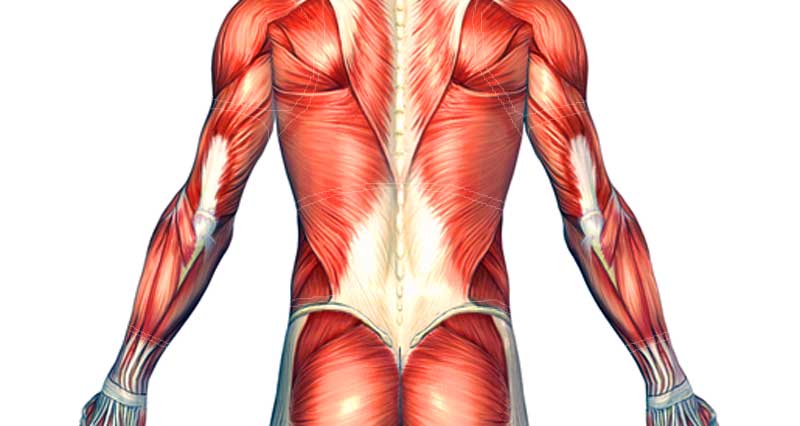
This can then lead to problems with surrounding structures such as ligaments (e.g. Iliolumbar ligament) and muscles, which means SIJ problems can cause a wide range of symptoms throughout the lower back and buttocks, or even the thigh or groin.
The function of the SI joints is to allow torsional or twisting movements when we move our legs. The legs act like long levers and without the sacroiliac joints and the pubic symphysis (at the front of the pelvis) which allow these small movements, the pelvis would be at higher risk of a fracture.
What causes Sacroiliac joint pain?
There are four categories of Sacroiliac joint pain; traumatic, biomechanical, hormonal, and inflammatory joint disease.
Traumatic
Sudden impact or trauma which ‘jolts’ the joint causes traumatic injuries. For instance, landing on the buttocks. This kind of injury usually causes damage to the ligaments which support the joint.
Biomechanical
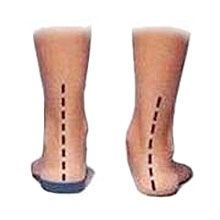
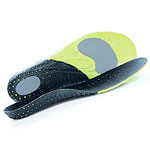
Pain due to biomechanical injuries will usually come on over a period of time and often with increased activity or a change in occupation/sport, etc. The most common biomechanical problems include leg length discrepancy, overpronation, twisted pelvis, and muscle imbalances.
Hormonal
Hormonal changes, most notably during pregnancy can cause sacroiliac pain. In preparation for giving birth, the ligaments of the pelvis especially increase in laxity.
Combining this with an increase in weight and putting extra strain on the spine may lead to mechanical changes which can result in pain.
Inflammatory Joint Disease
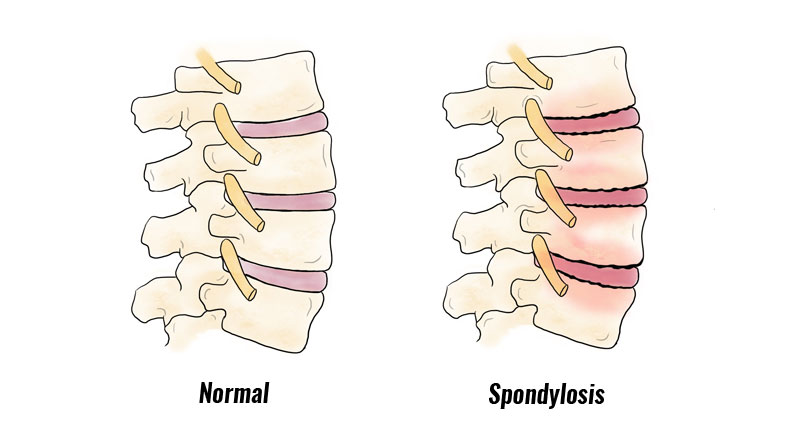
Spondyloarthropathies are inflammatory conditions which affect the spine. These include Ankylosing Spondylitis which is the most common inflammatory condition to cause SI joint pain.
Treatment of sacroiliac joint pain
Treatment involves reducing pain and inflammation, whilst restoring normal joint function.
Rest
Rest from any activities which cause pain, particularly running.
Sacroiliac support belt
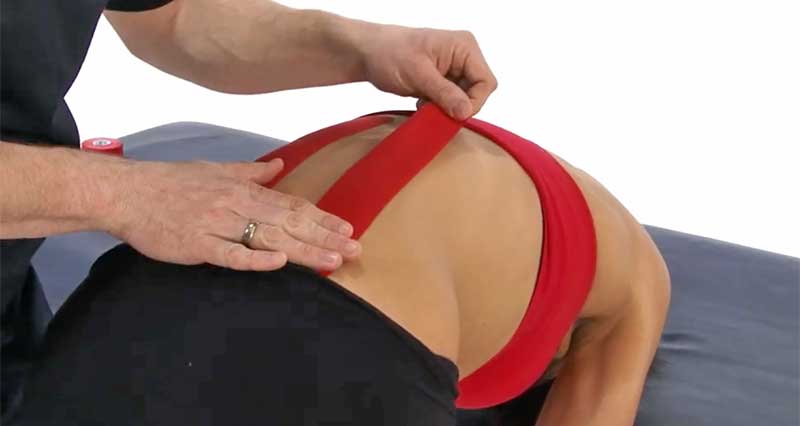
Wearing a sacroiliac support belt which may help take the strain off the joint and provide relief from symptoms. It works by applying compression around the hip and across the joint, protecting it from further injury.
Heat/cold
If you have muscle spasms around the joint use a heat pack to help them relax. However, if you have acute inflammation or recent muscle strains then heat will make your condition worse. In this case, cold therapy may be more effective.
Medication
Anti-inflammatory medications such as ibuprofen can help reduce inflammation and relax muscles. Check with your doctor or pharmacist before taking medication if you are unsure.
Massage
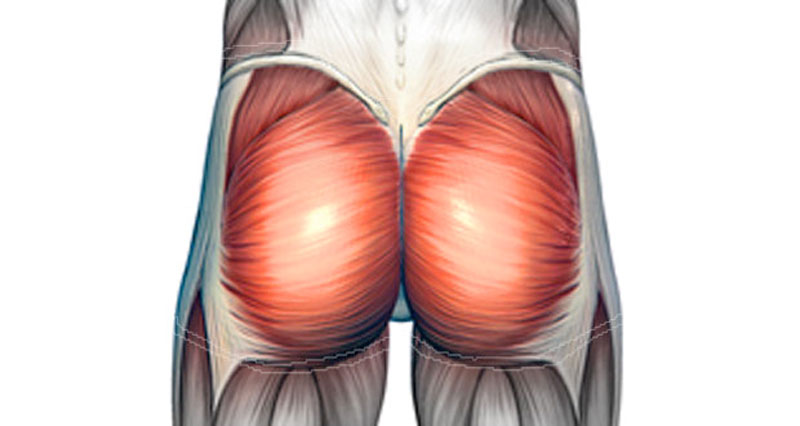
Sports massage may also help reduce muscle tension. In particular, deep tissue techniques for the lower back and buttock area.
A therapist who specializes in back conditions can do a full assessment and diagnostic tests to discover the cause of the problem ruling out medical diseases such as Ankylosing Spondylitis.
Electrotherapy
Electrotherapy such as ultrasound or interferential may be used to treat soft tissues.
Joint mobilizations
If indicated and safe to do, a Chiropractor or Osteopath will level the pelvis via sacroiliac joint manipulation and mobilization.
Joint mobilizations are used by professionals such as physiotherapists, chiropractors, and osteopaths. Due to the specialist knowledge required and room for error, do not attempt these techniques unless you are suitably qualified.
Rolled-up towel technique
Using 2 rolled-up towels placed correctly under the pelvis, it is possible to encourage the offending rotated ilia to return to its correct position.
The patient should be lying in the prone position with one towel located under the Anterior Superior Iliac Spine (ASIS) and the other towel lower down under the opposite Anterior Inferior Iliac Spine (AIIS), which are bony landmarks on the Ilia.
The patient’s body weight will encourage the ilia to rotate and if this is accompanied by soft tissue massage work to the low back and gluteal muscles this will further encourage rotated correction.
In order to place the towels in the correct position, you must have an accurate diagnosis. The wrong diagnosis will make things worse.
Articulating the SIJ
The therapist places one hand under the patient located across the sacrum and ilia joint. This is in preparation to feel the quality of movement between the 2 bones.
Using the leg as a lever gently rotate the knee around in circles to mobilize the SI joint.
In order to engage the joint, you may have to use more hip flexion and an element of compression whilst rotating the limb.
Movement can be detected with your hand across the joint whilst mobilization occurs. This should continue until the quality of movement is detected across the SI Joint.
Straight leg mobilization
With the leg straight, the therapist uses their body weight to mobilize the leg forwards and backward.
This helps to improve the mobility of the sacroiliac joint.
Exercises
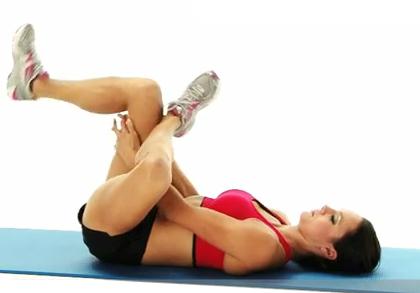
The aim of exercises for treating Sacroiliac joint pain is to correct and muscle imbalances. This is likely to include pilates exercises which may help strengthen the core muscles of the trunk. If the above treatment fails, a corticosteroid injection into the SIJ may be used.
Stretching exercises for the muscles of the hip, particularly the hip abductors (on the outside) and gluteal muscles can help if done gently, however, too much stretching with a hypermobile joint can inflame the joint and increase pain.