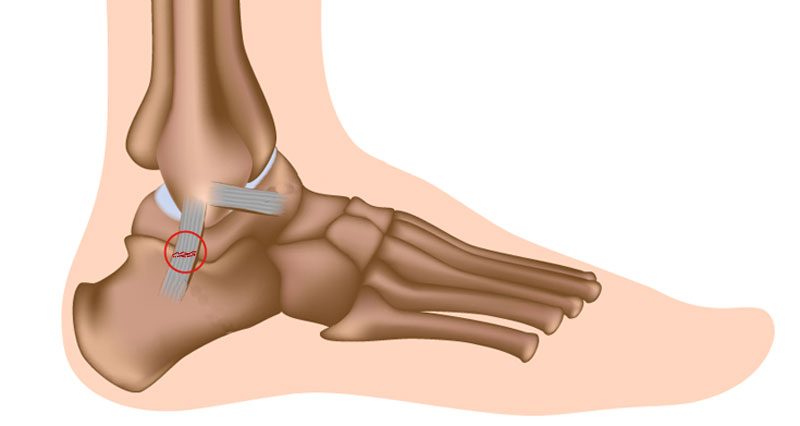
A sprained ankle is one of the most common injuries in sports. It occurs when the ligaments supporting the ankle are stretched or torn, usually on the outside of the joint. Although it can seem minor, poor treatment or returning to activity too soon often leads to ongoing pain, instability, and repeat injury.
Medically reviewed by Dr Chaminda Goonetilleke, 10th Jan. 2022
Sprained ankle symptoms
You will often feel the injury happen as your ankle rolls inwards (inversion), causing sudden pain on the outside of the joint. Symptoms can vary depending on the severity of the sprain, but typically include:
- Pain on the outside of the ankle
- Swelling, which may develop immediately or over the next 24 to 48 hours
- Bruising around the joint
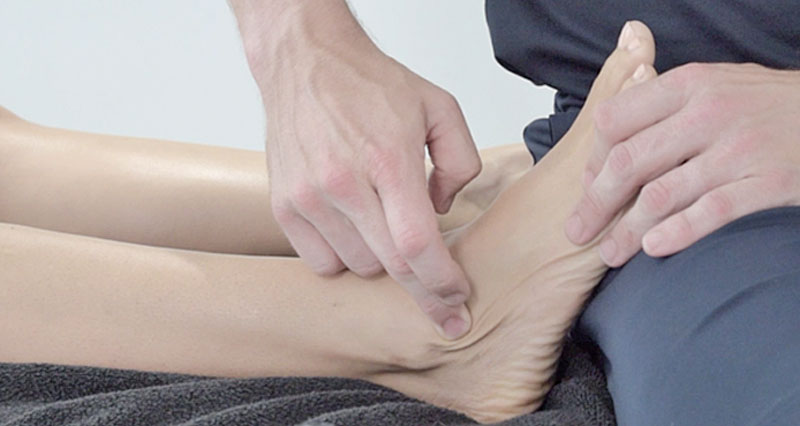
- Tenderness when pressing on the ligament
- Difficulty walking or putting weight on the ankle
More severe sprains may cause instability, where the ankle feels weak or gives way.
If you cannot put weight on your ankle or pain is severe, seek medical assessment to rule out a fracture.
Ankle sprain grades
Ankle sprains are graded from 1 to 3 depending on severity:
- Grade 1: Mild stretching of the ligament with minimal swelling and little instability
- Grade 2: Partial tear with moderate pain, swelling, and some joint looseness
- Grade 3: Complete rupture with significant swelling, instability, and difficulty walking
Your doctor or physiotherapist will perform a number of assessment tests to help diagnose how bad your injury is. For instance, the talar tilt test and anterior drawer test.
- More on ankle sprain diagnosis
Treatment for sprained ankles
Early treatment is essential to reduce pain and swelling and prevent long-term instability. Begin treatment as soon as possible after injury.
Immediate treatment (first 48 hours)
Use the PRICE principles:
- Protection: Avoid activities that cause pain or further damage
- Rest: Limit weight-bearing in the early stages
- Ice: Apply cold therapy for 10 minutes every hour initially, reducing as symptoms improve
- Compression: Use a bandage or support to limit swelling
- Elevation: Raise the ankle above heart level to reduce swelling
Cold therapy & compression
Cold therapy helps reduce pain, inflammation and swelling in the early stages.
Apply ice for 10 minutes every hour initially, then reduce frequency as symptoms improve. Do not apply ice directly to the skin. Wrap it in a wet towel or use a cold therapy compression wrap.
Rest your ankle
Rest is essential in the early stages. Continuing to walk or run on an injured ankle can make the injury worse and delay recovery.
Ankle support and bracing
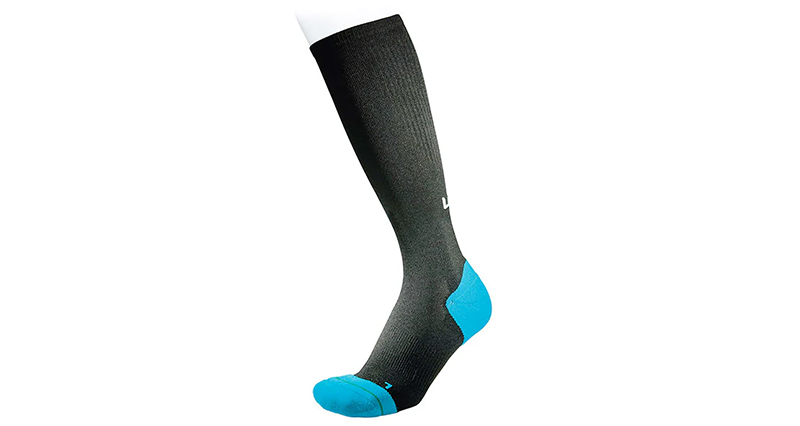
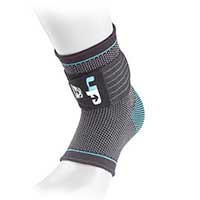
An ankle brace or support helps protect the injured ligaments and provides compression.
In the early stages, a simple elastic support is usually enough. As you progress, a more supportive brace may help protect the joint during rehabilitation and return to activity.
Electrotherapy
A professional therapist may use electrotherapy, such as ultrasound, to help reduce pain and swelling. Ultrasound uses high-frequency sound waves to create a micro-massage effect within the tissues.
- More on Electrotherapy
When can you walk on a sprained ankle?
You can begin to put weight through the ankle as pain allows.
Mild sprains may allow walking within a few days. More severe injuries take longer. Returning too early without adequate strength and control can delay recovery and increase the risk of further injury.
How long does a sprained ankle take to heal?
Recovery time depends on the severity of the sprain. In general:
- Mild sprains (Grade 1): 1 to 2 weeks
- Moderate sprains (Grade 2): 3 to 6 weeks
- Severe sprains (Grade 3): Several weeks to a few months
A structured rehabilitation programme is essential to restore strength, balance and stability, and to reduce the risk of re-injury.
Similar injuries and complications
It is important to rule out other injuries and complications that can occur with an ankle sprain. These include:
- Avulsion fractures occur when a ligament pulls a small piece of bone away
- Osteochondral Lesions are injuries to the cartilage at the ends of bones
- Ankle fractures can sometimes be mistaken for a severe sprain
If your pain is severe, you cannot bear weight, or symptoms do not improve, seek medical assessment to rule out these conditions.
Many ankle sprains become long-term problems due to poor rehabilitation. Following a structured, criteria-based programme ensures you regain full strength, control and confidence before returning to sport.
What causes a sprained ankle?
How ankle sprains happen
Most ankle sprains occur when the foot rolls inwards (inversion) under the body’s weight. This places sudden stress on the ligaments on the outside of the ankle, causing them to stretch or tear.
This commonly happens when:
- Landing awkwardly from a jump
- Changing direction quickly
- Running on uneven surfaces
- Missing a step or slipping
Inversion ankle sprains vs eversion sprains
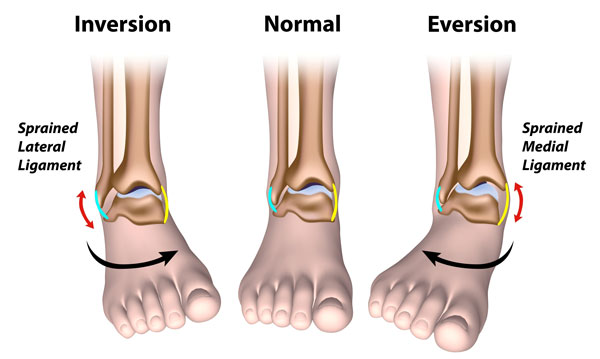
An inversion sprain is the most common type of ankle sprain. It occurs when the ankle rolls outwards and the sole of the foot turns inwards, stretching or tearing the ligaments on the outside of the ankle.
Eversion sprains are less common and affect the ligaments on the inside of the ankle. They usually occur with more severe injuries and may be associated with a fibula fracture.
Mild sprains may affect a single ligament, while more severe sprains can damage two or more.
- More on Eversion sprains
Previous ankle injury
A previous ankle sprain is one of the biggest risk factors. If the ligaments have not fully healed, or strength and balance have not been restored, the joint is more likely to become unstable and injured again.
Poor proprioception (balance and control)
Proprioception is your body’s ability to sense joint position and movement.
After an ankle sprain, this system is often impaired. As a result, the muscles react more slowly, increasing the risk of the ankle rolling again.
- More on proprioception
Muscle weakness
Weak muscles around the ankle and lower leg reduce joint stability and control. This makes it harder to correct movement quickly if the ankle begins to turn.
Inappropriate footwear
Wearing the wrong type of footwear for your sport or activity can increase your risk of injury. Shoes that lack support or grip make it easier for the foot to roll unexpectedly.
- More on choosing shoes
Fatigue
Tired muscles react more slowly and provide less support to the ankle joint. This increases the risk of injury, particularly towards the end of training or competition.
Anatomy
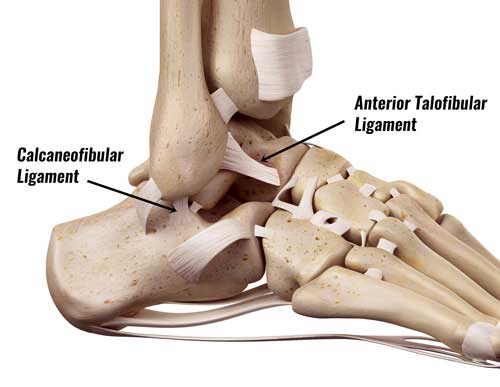
The ankle is supported by a number of ligaments that connect bone to bone. The main ligaments involved in a sprained ankle are the anterior talofibular ligament and the calcaneofibular ligament on the outside of the ankle.
Muscles in the lower leg attach to these bones via tendons and provide additional support and stability, helping to control movement and protect the joint.
Sprained ankle massage
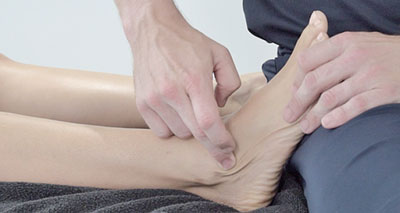
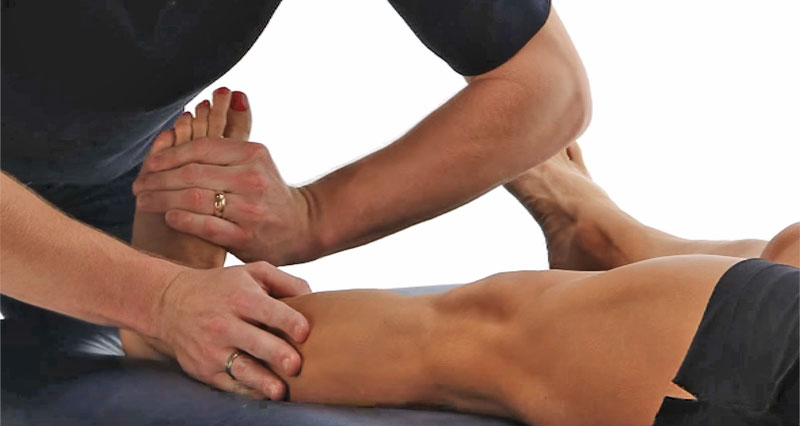
Sports massage can help reduce swelling in the early stages. As healing progresses, cross-friction massage applied directly to the ligament may help improve tissue alignment and reduce scar tissue formation.
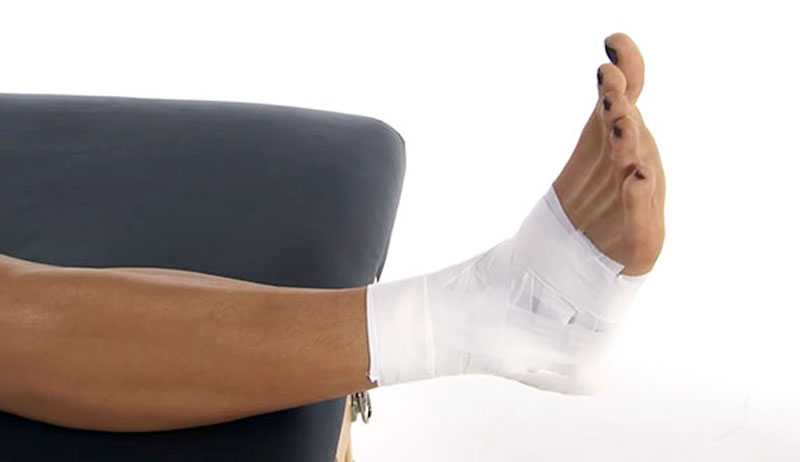
Sprained ankle taping
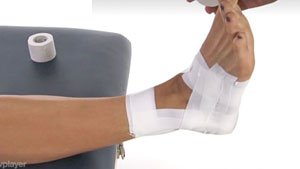
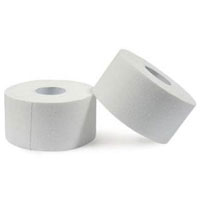
Taping for ankle sprains protects your injured ankle and improves confidence following injury. It supports the damaged tissues in your ankle and activates the surrounding muscles.
- How to tape a sprained ankle
When to see a sports injury professional
A professional therapist can accurately diagnose your injury and give advice on treatment and rehabilitation. This is essential if you have a severe injury or one that is not responding to treatment.
- More on when to see a doctor
Sprained ankle rehabilitation program
Many ankle sprains become long-term problems due to poor or incomplete rehabilitation. Simply resting the injury is not enough. Without restoring strength, balance and movement control, the ankle often remains unstable and prone to re-injury.
Our ankle sprain rehabilitation programme is created by England and British Lions Rugby physiotherapist Phil Pask. It follows a structured, criteria-based approach used with elite athletes and adapted for all levels.
The programme takes you step by step from early-stage recovery through to full return to sport. You progress through each phase based on clear criteria, ensuring your ankle is ready before moving forward.
It includes:
- Mobility and range of movement exercises
- Strengthening and muscle activation
- Balance and proprioception training
- Functional and sport-specific progressions
This structured approach reduces the risk of setbacks and helps you return to activity safely and with confidence.
- Learn more about our Ankle rehabilitation program
- See dislocated ankle
Frequently asked questions
How do you know if an ankle sprain is serious?
If you cannot put weight on your ankle, pain is severe, or swelling is significant, seek medical assessment to rule out a fracture.
Should you walk on a sprained ankle?
You can begin to put weight on your ankle as pain allows, but returning too early may delay healing and increase the risk of re-injury.
What is the fastest way to heal a sprained ankle?
Early treatment followed by a structured rehabilitation programme is the most effective way to recover and reduce the risk of long-term instability.
References & further reading
- Cook CE, Hegedus EJ. Orthopedic Physical Examination Tests. 2nd ed. Upper Saddle River, New Jersey: Pearson Education Inc, 2013.
- Fong DT, Hong Y, Chan LK, et al. A systematic review on an ankle injury and ankle sprain in sports. Sports Med 2007;37(1):73–94.
- Dimmick S, Kennedy D, Daunt N. Evaluation of thickness and appearance of anterior talofibular and calcaneofibular ligaments in normal versus abnormal ankles with MRI. J Med Imaging Radiat Oncol 2008;52(6):559–63.