Peroneus Brevis Rupture Sports Massage

Sports massage can be used in the treatment of tendon injuries such as to the Peroneus Brevis tendon. Massage can be applied directly to the tendon itself, as well as to the muscle belly  and other associated muscles.

The following sports massage guide is intended for information purposes only. We recommend seeking professional advice before attempting any self help treatment.

IMPORTANT: Before starting any massage treatment the therapist will check for contraindications (if any apply to you, then massage is not allowed).

Sports Massage to the Injured Tendon

After the acute phase, cross friction massage directly to the tendon may help in preventing scar tissue formation that is inelastic and may cause pain. Massage can usually be started around five days after the injury.

Oil or any other lubricant should not be used as you need to get a good feel of the ligament. Oil will mean the finger slides around and is unable to function correctly.

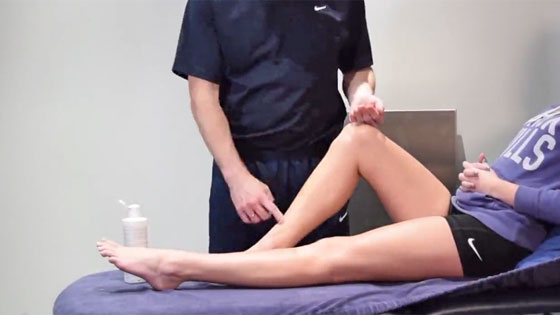
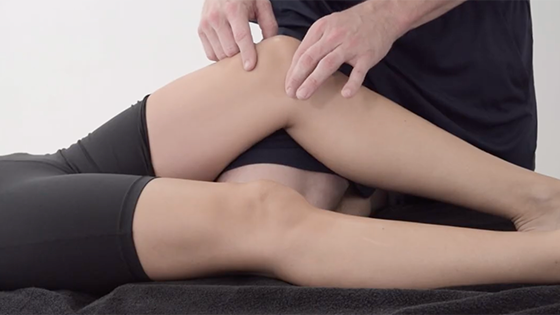
Cross friction massage should be applied with the tendon in the stretched position. Apply direct pressure with a single finger to the tendon and massage deeply (but within the limits of pain) backwards and forwards across the tendon - not along its length. The tendon should be felt under the skin. This is why it is important to have a knowledge of the anatomy involved and where the ligament attaches to.

Gradually massage deeper but within the limits of pain. This technique is likely to be a little painful but not so much that the athlete tightens up with pain. It might be easier to start treatment slightly away from the point of injury and gradually work in towards it.

The duration of treatment can be for around five to ten minutes. It is a good idea to use massage techniques every other day rather than every day. This gives you a chance to assess how the injury responds. If swelling increases or if pain is worse the next day then refrain from massage until the acute stage has passed.

Sports Massage to the Calf Muscles

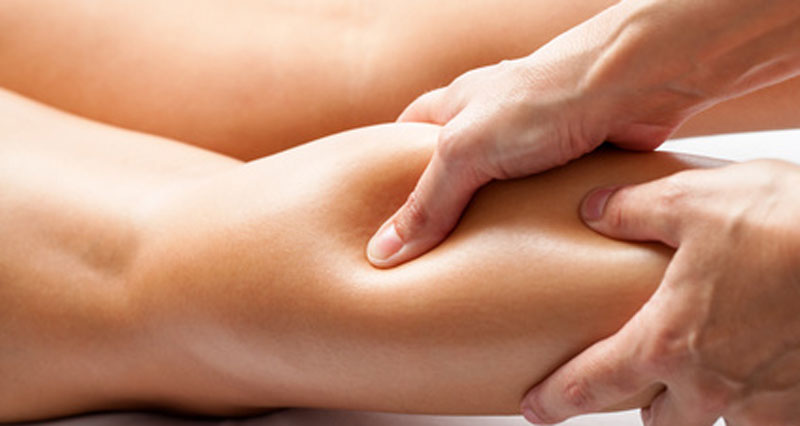
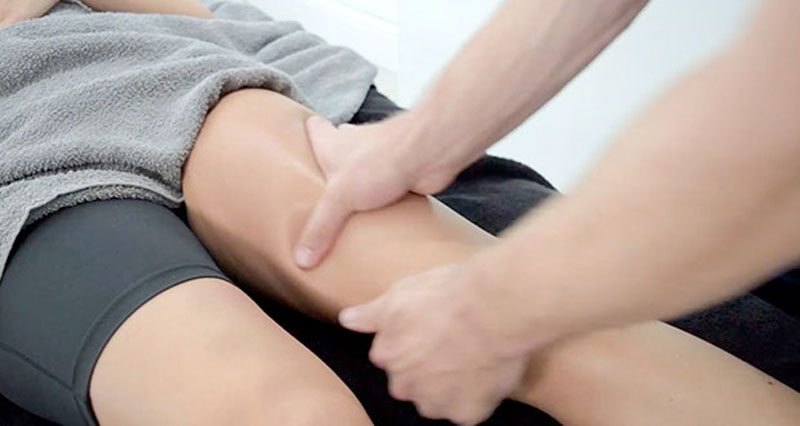
Sports massage can be beneficial in healing this injury and preventing it from recurring by reducing tension in the peroneal and calf muscles at the back of the lower leg.

Technique 1: Effleurage

Aim - light stroking to warm up the area in preparation for deeper techniques.

  • With the hands stroke lightly but firmly upwards from just above the heel to the knee.Always stroke upwards towards the heart as this is the direction of blood flow. The other way can damage veins.
  • Then lightly bring the hands lightly down the outside of the leg keeping them in contact but do not apply pressure.
  • Repeat the whole movement using slow stroking techniques, trying to cover as much of the leg as possible.
  • Repeat this technique for about 5 to 10 minutes, gradually applying deeper pressure on the up strokes.

Technique 2: Petrissage

Aim - kneading movements to manipulate and loosen the muscle fibres more.

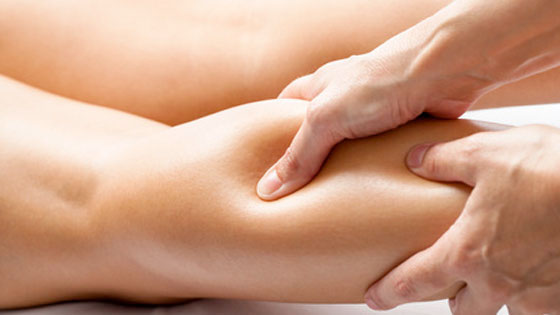
  • With the hands apply a firm, kneading technique. Try to pull half the muscle towards you with the fingers of one hand whilst pushing half the muscle away with the thumb of the other hand.
  • Then reverse to manipulate the muscle in the other direction.
  • Work your way up and down the muscle, trying to cover as much of the surface as possible.
  • Apply this technique for around 5 minutes, alternating with light stroking (above) occasionally.

Technique 3 and 4: Stripping the muscle

Aim - to apply sustained pressure to the muscle, ironing out any lumps, bumps and knots.

  • With both thumbs together, apply deep pressure up the middle of the calf muscle aiming to separate the heads (sides) of the big gastrocnemius muscle.
  • This technique should be slow and deliberate to 'feel' the muscle underneath.
  • Repeat this 3 to 5 times in a row, alternating with petrissage for 5 to 10 minutes.
  • This similar technique is applied with a single thumb, which can be reinforced with a couple of fingers from the other hand if more pressure is required.
  • Massage should be deep but not so deep that the athlete tightens up with pain.
  • This is especially important for the personnel muscles.

Techniques 5 and 6: Circular frictions and Trigger points

Aim - To break down knots, scar tissue and adhesions.

With either a single thumb or a reinforced thumb as shown, apply pressure in a circular pattern to any tight spots, lumps or bumps.

  • Apply 10 to 20 circular frictions at a time and alternate with stripping and petrissage techniques.

If the therapist finds any lumps and bumps or particularly sensitive spots then apply deep, sustained pressure to these points using the thumbs. A trigger point is a localized, highly sensitive point in the muscle.

  • Increase the pressure on the trigger point until it ranks 7/10 on the pain scale (10 being painful). Hold this pressure until it eases off to 4/10 on the pain scale (usually about 5 seconds).
  • Without easing off with the pressure, increase again until it reaches 7/10 on the pain scale once more. Hold until it eases, repeat once more.

This technique is very hard on the thumbs. It is important to keep the thumb slightly bent (flexed) when applying pressure to avoid damaging the joints.

Finishing off

The therapist can finish off with more petrissage techniques and then finally effleurage again. The whole process should not last more than half an hour.

Massage therapy can be applied every day if it is performed lightly however deeper techniques may result in a days recovery period to allow tissues to 'recover'.

For rehabilitation of muscle strains, sports massage is very important in softening / preventing scar tissue forming at the site of injury and re-aligning the new healing fibres in the direction of the muscle fibres. This will help prevent re-injury.