Calf Strain Massage
Calf strain massage can help improve recovery, reduce muscle tightness, and restore normal movement once the early stage of injury has settled. Using the correct techniques at the right time is essential, as massaging too early can make the injury worse.
This guide explains when to use massage for a calf strain, when to avoid it, and how to apply simple sports massage techniques safely.
Massage forms part of a structured calf strain rehabilitation program, helping restore movement, reduce stiffness, and prepare the muscle for strengthening and return to running.
When to massage a calf strain
Massage should only be introduced once the acute phase has passed. This is usually after 3 to 5 days for mild injuries, but may be longer for more severe strains.
You should only begin a massage when:
- Pain has reduced
- Swelling is settling
- You can walk without sharp pain
Starting too early can increase bleeding and delay healing.
Massage contraindications
A contraindication means the massage may not be safe or could make the injury worse. When treating a calf strain, you should be aware of the following:
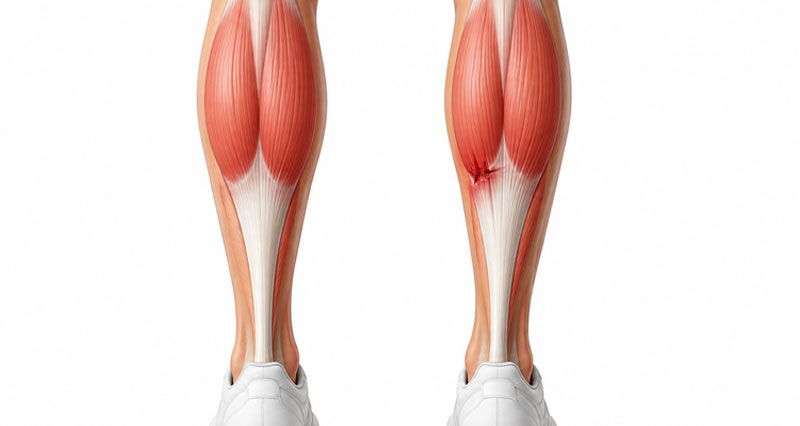
Acute muscle strains
During the first 24 to 72 hours following a calf strain, applying massage will make your injury worse, increase bleeding, and delay healing.
How long the acute stage lasts will depend on how bad your injury is.
Deep vein thrombosis
This is also known as DVT. This is a blood clot in the calf muscle area. Symptoms may be similar to a torn calf muscle, however, DVT pain is more likely to be constant.
If in doubt, seek medical advice as soon as possible. If you massage a blood clot, it might break loose with potentially fatal consequences. DVT is relatively common, especially if you are overweight, aged 50+, or have poor circulation.
- View all massage contraindications
Why is massage important?
Massage for any muscle injury is important, but particularly so for calf muscles. After the acute stage of healing has passed, massage will help stimulate blood flow, mobilise the muscle fibres, and release areas of muscle spasm.
Another major benefit of massage, particularly in the later stages, is to soften newly formed scar tissue and help align new fibres.
Once you have recovered, regular massage can help maintain muscle flexibility and reduce the risk of future injury. A skilled massage therapist can identify tight areas of the muscle, which, if left, may risk causing future injury. This is particularly important for athletes returning to running or sport, where tight or poorly healed tissue increases the risk of re-injury.
Massage is most effective when combined with strengthening exercises and a structured rehabilitation programme.
How to massage the calf muscles
The following is for information purposes. We always recommend seeking professional advice before attempting treatment.
Time needed: 30 minutes
How to massage calf muscles
- Check for contraindications
Always check for contraindications, especially Deep vein thrombosis, to ensure it is safe to perform sports massage.
- Positioning
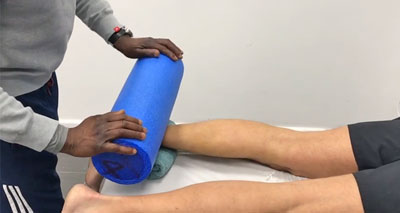
Position the patient on a firm base, preferably a massage table. Lie face down with the feet relaxed, either by supporting them with a rolled towel or allowing the feet to hang over the end of the massage table.
- Light effleurage
Begin with ‘effleurage’ techniques. These are light stroking techniques that begin to warm up the tissues, ready for deeper techniques.
- Deep effleurage
As above, but gradually working deeper into the tissues. Do not go so deep that the patient tightens up with pain, as the benefits will be lost.
- Petrissage
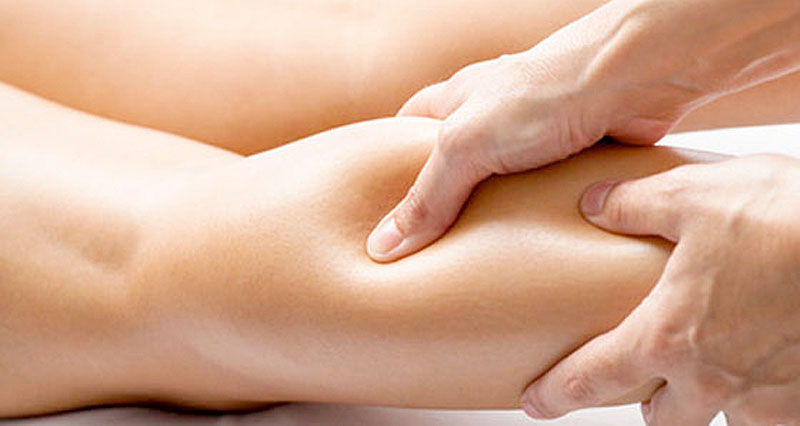
These are a variety of kneading-type techniques. Work as deeply as is comfortable. Over time, as the injury improves, massage pressure can be increased. Alternate petrissage techniques with effleurage.
- Tapotement
These are optional percussion-type techniques. Some therapists may choose to use them, but probably only in the later stages of recovery.
- Finishing
Return to light effleurage techniques to complete the massage.
Massage is not enough on its own
Massage can help recovery, but it should not replace strengthening and rehabilitation exercises. Without progressive loading, the muscle is more likely to re-injure.
For best results, combine massage with a structured calf strain rehabilitation program that progresses from early mobility through to strength and running.