Cocccyx pain is also known as Coccygodynia. The Coccyx is also known as the tailbone and can suffer from sudden onset acute pain from impact or trauma causing bruising or a fracture. Coccydynia is also a type of tailbone pain more common in women than men.
Coccygodynia (Coccyx pain)
Symptoms of coccygodynia include pain in the tailbone or coccyx right at the very base of the spine. Pain may be worse during or after sitting and stay uncomfortable for days. Pain in the tailbone can be worse when sitting on a soft surface as less of the pressure is taken by the ischial tuberosities (bones you sit on in the bottom) and more pressure is placed on the coccyx. Sharp pain may also be felt when moving from sitting to standing.
Causes of coccyx pain
Coccyx pain can be caused by an unstable coccyx which over time causes chronic inflammation. A fall or direct trauma to the base of the spine is also a very common cause. Repetitive strain or overuse, particularly from cycling or rowing can increase the likelihood of pain from the coccyx bone.
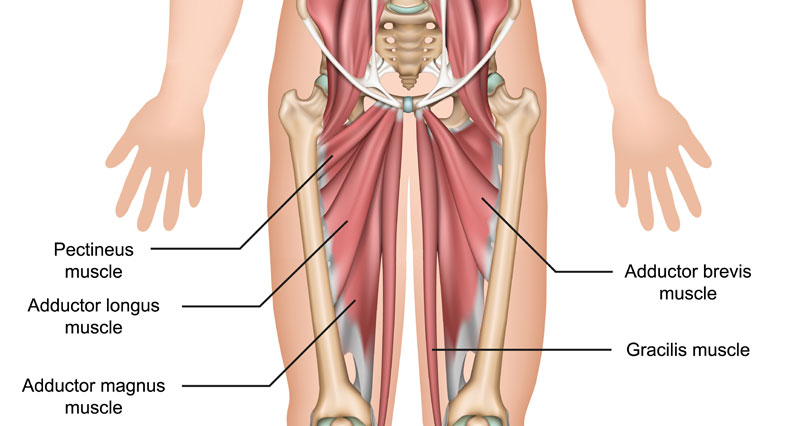
Muscle spasms or tightness in the pelvic floor muscles, gluteus maximus, piriformis or adductor magnus muscles can cause coccyx pain and this is distinguished because it eases when sitting rather than getting worse. Other causes include complications following surgery and childbirth.
Treatment of coccyx pain
What can the athlete do?
Avoid sitting down if possible. Sitting is likely to aggravate the injury and inhibit healing. If you have to sit, use a cushion with a hole or slit cut out to accommodate the coccyx and take the pressure off it. Apply hot or cold therapy to the area. Some therapists advise hot, some cold. Different approaches may be more successful for some than others. For an unstable coccyx, the injury will usually heal by itself over a period of weeks or months. Visit a doctor or other medical professional who can make an accurate diagnosis and advise on treatment.
What can the doctor or therapist do?
Physiotherapy can involve stretching and massage to the muscles around the coccyx including the piriformis. Strengthening and relaxation exercises for the pelvic floor are often given. For pain related to muscle spasms, deep tissue massage to release the tension and ease trigger points (localized knots in the muscle) and stretching can help.
A steroid injection is sometimes given. This may provide permanent relief or temporary relief for a period of months. A chiropractor or osteopath may perform an ‘internal manipulation’ by inserting a gloved finger into the anus and manipulating the coccyx! The last resort is surgery to remove the coccyx which is successful in most cases.
Bruised Tailbone
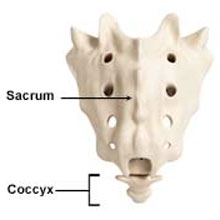
The tailbone (also known as the coccyx) is a group of 3-5 fused bones at the base of the spine. This is the remainder of a tail and has no real function in humans!
Symptoms of a bruised tailbone
Bruised coccyx symptoms include pain at the very base of the spine. Bruising usually develops in moderate to severe cases. There will be a pain when sitting down and walking may be uncomfortable. Pain may develop higher up the back due to the sudden jolt or compression when landing. Pain is occasionally felt during bowel movements in some cases.
Causes of a bruised tailbone
The Coccyx can become bruised as a result of a fall onto the backside. An impact such as this compresses the soft tissue in between the coccyx and the surface on which it landed!
Occasionally the tailbone is actually fractured as the result of a fall. In this case, the symptoms described below are usually more marked than if it is simply bruised and so moderate to severe coccyx injuries should be checked by a Doctor.
Treatment of a bruised tailbone
Treatment should involve rest from activity including sitting or putting pressure on it. Use a doughnut or ring cushion when sitting to ease pressure on the coccyx bone. Apply ice or cold therapy to reduce pain and inflammation. Rest is usually sufficient, although time scales for healing vary greatly from a few days to several weeks. Surgery is considered in cases which do not resolve with conservative treatment. This is more common with a fracture than bruising.
Broken Tailbone
A broken tailbone or fractured coccyx as it is also known occurs after a fall where the patient lands directly on the tailbone at the very base of the spine. Symptoms of a broken tailbone
Coccyx fracture symptoms include pain, often quite severe pain after an impact or fall onto the very bottom bone of the spine. Following the injury, there will be a pain when sitting over the coccyx area. The patient may also experience pain during bowel movements or sexual intercourse.
The coccyx bone is the pointy bone right at the very base of the spine. It is actually 4 bones that have been fused or stuck together rather than one single bone. It sits below the sacrum which consists of 5 bones which are also fused.
Treatment of a coccyx fracture
If you think you may have a fractured coccyx, visit your doctor as soon as possible. A doctor may examine your spine and may perform a digital examination of the rectum to try to reproduce the pain. An MRI or CT scan may be requested to confirm the diagnosis.
In most cases, rest is the best treatment. A doctor may prescribe painkillers and stool softeners to make bowel movements more comfortable. A ring (or doughnut) cushion may help to make sitting more comfortable. Surgery is occasionally required to fix fractures which may have been displaced.