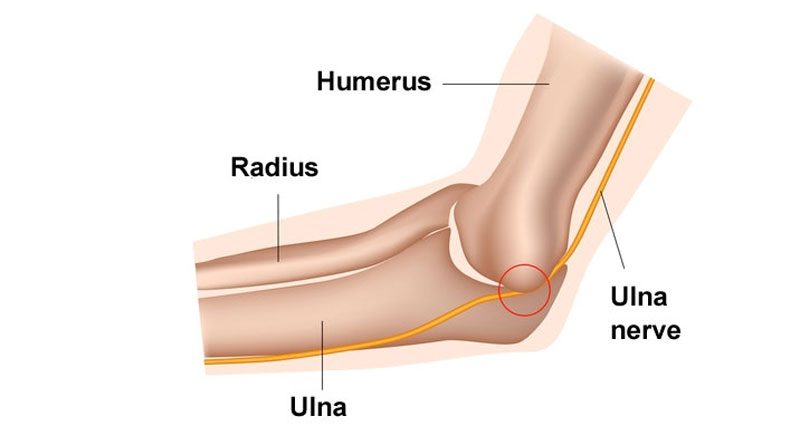
Ulnar nerve compression occurs when the ulnar nerve becomes irritated, compressed or trapped, usually at the inside of the elbow. It causes tingling, numbness and sometimes weakness affecting the little finger, ring finger and inner forearm. A sudden knock to the nerve is commonly known as “hitting your funny bone”.
Symptoms of ulnar nerve compression
Symptoms may come on suddenly after a direct blow, or develop gradually through repetitive strain or prolonged pressure on the nerve.They include:
- Tingling or pins and needles in the little finger and ring finger
- Numbness affecting the fourth and fifth fingers
- Pain or aching on the inside of the elbow
- Symptoms radiating down the inner forearm into the hand
- Weakness when gripping or holding objects
- Symptoms becoming worse when the elbow is bent for long periods
In more severe cases, weakness and muscle wasting in the hand may develop.
Diagnosis
A doctor or physiotherapist will usually diagnose ulnar nerve compression through a physical examination and assessment of symptoms. Specifically, they may:
- Tap over the nerve at the elbow (Tinel’s test) – positive if it reproduces symptoms
- Assess sensation in the fingers
- Test hand and grip strength
- Check elbow movement and nerve tension
In persistent or severe cases, nerve conduction studies or imaging scans may be required.
What is Ulnar nerve compression?
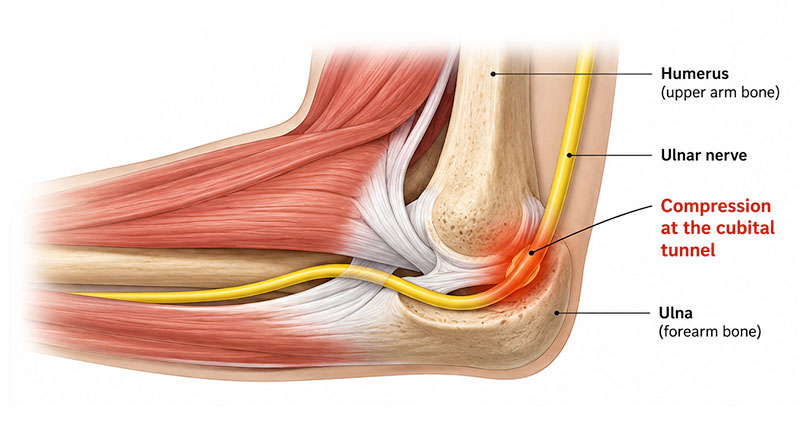
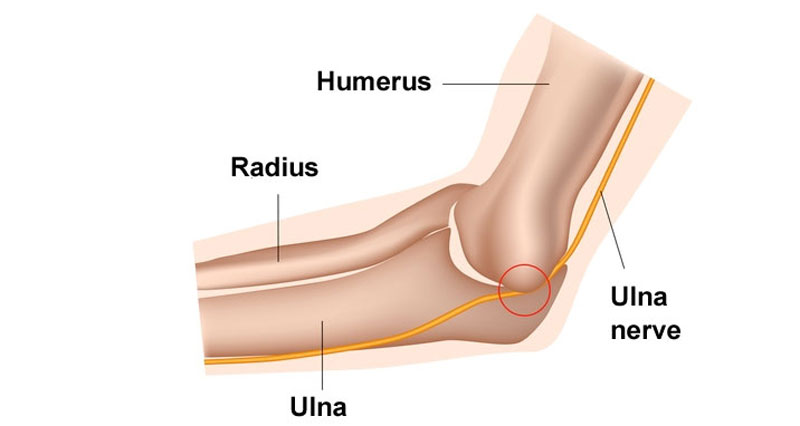
The ulnar nerve starts in the neck and runs down the inside of the elbow and into the wrist and hand. It is part of the brachial plexus nerve system and is one of the major nerves supplying the arm.
It is called the ulnar nerve because it runs close to the ulna bone in the forearm. The ulna is on the little finger (pinky finger) side of the forearm with the radius bone alongside.
It provides sensation to the forearm and fourth and fifth fingers. It also innervates (stimulates) the flexor muscles of the hand, allowing it to bend and move.
What causes Ulnar nerve compression?
Causes of Ulnar nerve contusion fall into two categories. Direct trauma from a blow or impact, or repetitive trauma from overuse.
Direct trauma
If you knock the inside of the elbow you can get numbness or buzz down the forearm into the fourth and fifth fingers.
This is often referred to as ‘hitting your funny bone’. It is a result of the ulnar nerve being hit, sometimes known as an Ulnar nerve contusion.
The nerve is compressed suddenly, therefore causing nerve compression and symptoms such as tingling and numbness when it happens.
Repetitive trauma
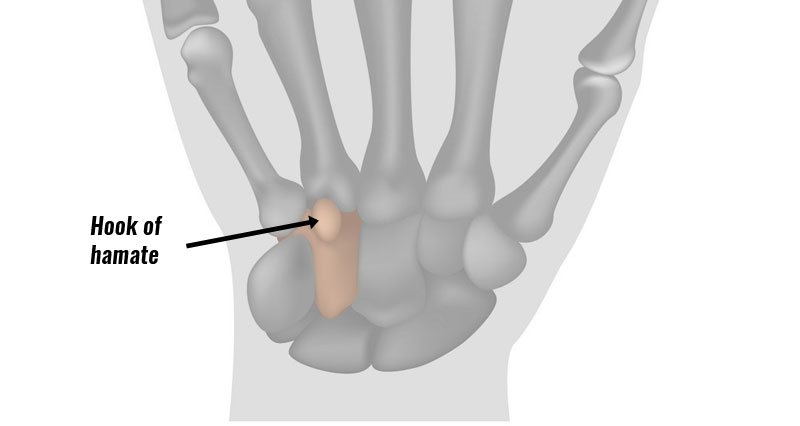
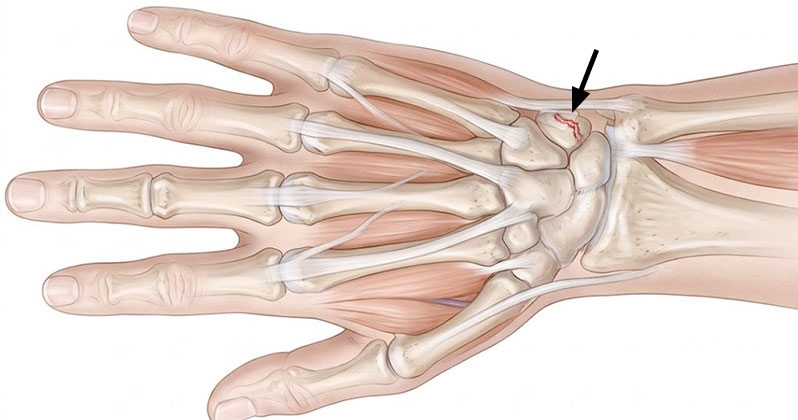
Ulnar nerve compression may be caused by compression of the Ulnar nerve at the wrist. This tends to affect cyclists1 who lean on handlebars for very long periods of time.
It is especially likely if they have a poor bike set-up or do not adjust their riding position occasionally. This is also known as hypothenar hammer syndrome or ‘Handlebar palsy‘.
It is also known to affect Baseball players2. Repetitive trauma from catching fast-moving baseballs.
Ulnar nerve compression may also be caused by becoming entrapped, compressed or damaged. This might be for several reasons, including:
- Traction injuries – are common in throwers, especially if you throw with a very fast arm and your arm is not yet accustomed to the strain.
- Progressive compression – due to inflammation and adhesions caused by repetitive strain.
- Bony growths – in a part of the ulna bone called the ulnar groove.
Sometimes the symptoms of ulnar nerve entrapment might be similar to that of golfer’s elbow (medial epicondylitis).
Treatment for Ulnar nerve compression
Treatment will depend on the cause. Acute Ulnar nerve contusions, usually pass after a few minutes. For gradual onset and long-term nerve compression injuries then identifying the cause is important, alongside treating the immediate symptoms.
What can the athlete do?
- Rest your arm.
- Apply cold therapy. Cold reduces pain and inflammation.
- If you are a cyclist then consider having the way your bike is set up looked at by an experienced cycling coach. Make sure you adjust your position on the handlebars occasionally on long rides.
What can a doctor do?
- A doctor may prescribe anti-inflammatory medication. For example, Ibuprofen – but always check with a doctor before taking medication. If you have asthma you should not take Ibuprofen.
- In severe cases, they may immobilize your arm for a short period.
- Use soft tissue therapy such as massage or myofascial release techniques. This is done in order to break down adhesions that may be restricting the nerve.
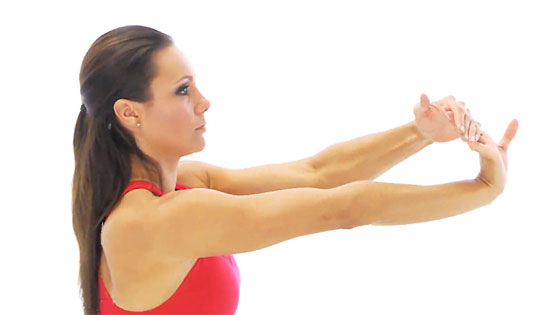
- Demonstrate neural stretching exercises.
- Operate in severe or persistent cases, where surgery is indicated.
References & further reading
- Capitani D, Beer S. Handlebar palsy—a compression syndrome of the deep terminal (motor) branch of the ulnar nerve in biking. J Neurol 2002;249(10):1441–5.
- Ginn TA, Smith AM, Snyder JR et al. Vascular changes of the hand in professional baseball players with emphasis on digital ischemia in catchers. J Bone Joint Surg Am 2005;87(7):1464–9.