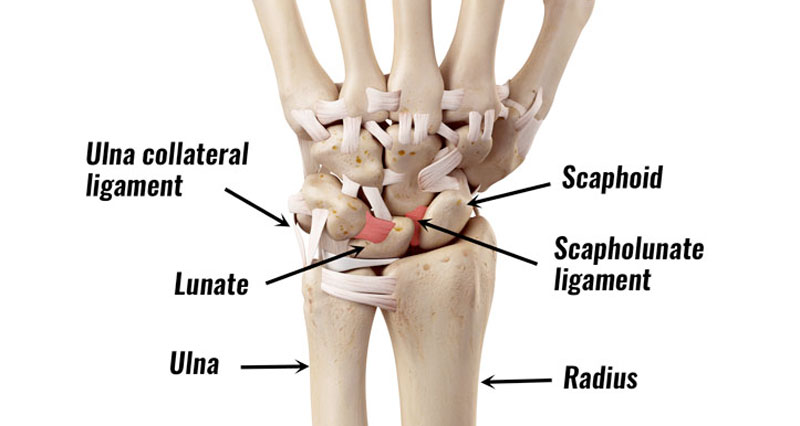
Wrist fractures are common injuries, usually caused by falling onto an outstretched hand. They can range from small cracks in the carpal bones, such as a scaphoid fracture, to more obvious breaks of the distal radius, including a Colles fracture.
Do I have a wrist fracture?
How to tell if you have fractured your wrist. Broken wrist symptoms vary slightly depending on the type and grade of the fracture. However, in general, they consist of:
- Severe pain after injury
- Rapid swelling
- Deformity
- Tenderness (especially anatomical snuff box)
- Reduced movement or grip strength
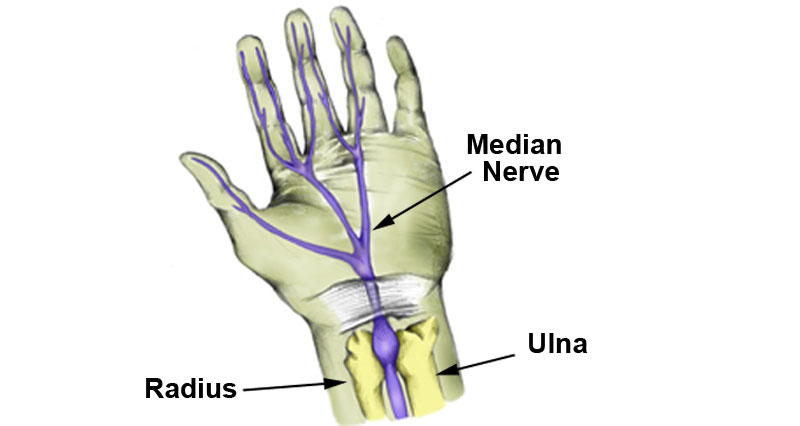
- Tingling or numbness in the hand or fingers (nerve damage)
If you have any of these symptoms seek medical attention immediately.
Diagnosis of a broken wrist
If you suspect a broken wrist then seek urgent medical attention immediately. Your doctor will X-ray your arm to confirm the diagnosis. This also determine how bad your injury is and the type of fracture.
An open fracture occurs when bone pierces the skin. A comminuted fracture is when bones fragment into more than one piece.
Types of wrist fracture
The following are the most common types of wrist fractures:
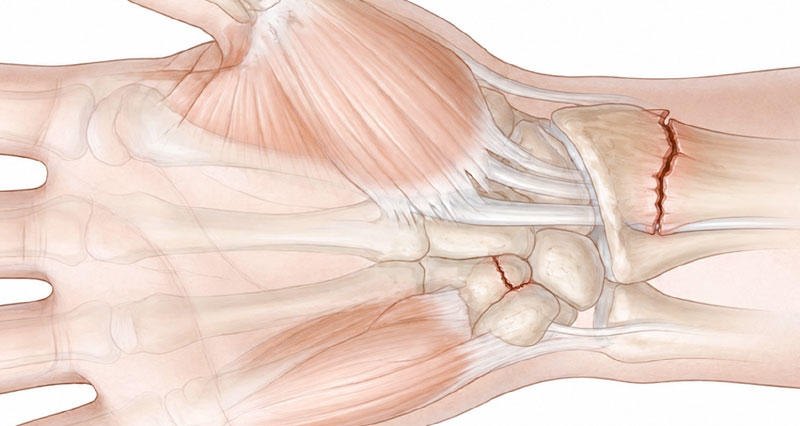
Colles fracture
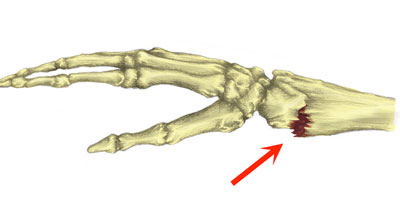
A Colles fracture is a break at the wrist end of the radius, usually caused by a fall onto an outstretched hand. The broken bone is displaced backwards.
Symptoms include:
- Sudden severe pain
- Rapid swelling
- A deformity called a ‘dinner fork deformity’ may also be obvious
- More on Colles fracture
Scaphoid wrist fracture
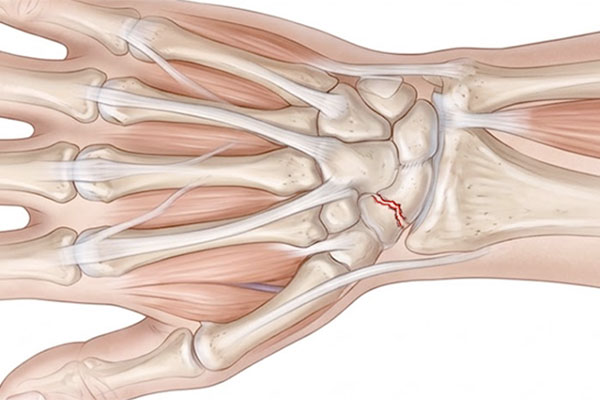
A Scaphoid fracture is a break of a small carpal bone at the base of the thumb. It is commonly missed and can heal slowly due to poor blood supply.
Symptoms of a scaphoid fracture include:
- Rapid swelling at the base of the thumb
- Pain sometimes settles down but gripping is difficult
- More on scaphoid fracture
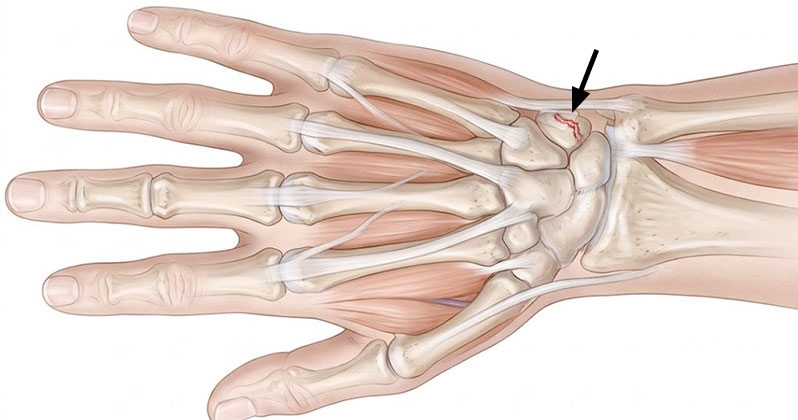
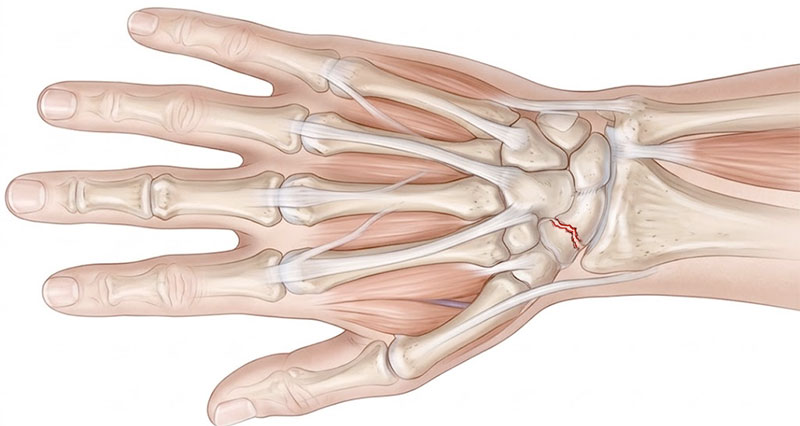
Hook of hamate fracture
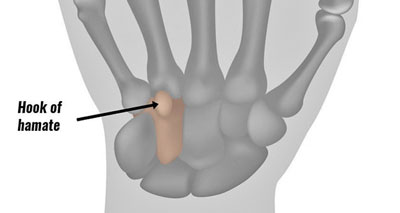
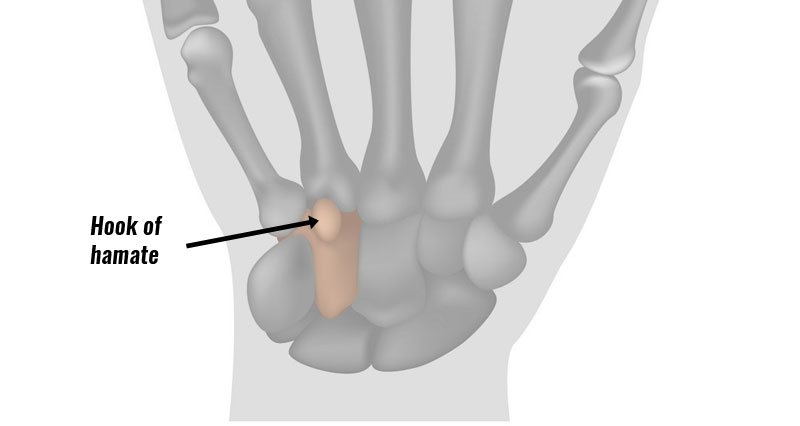
Another type of wrist fracture is a fractured hook of hamate. This is a fracture of the hamate bone on the little finger side of the wrist. It has a hook-shaped part that protrudes outwards and can under certain circumstances be fractured.
Symptoms include:
- Wrist pain which is located on the little finger side of the broken wrist
- The patient has reduced grip strength and tenderness over the palm side of the wrist
- More on Hook of hamate fracture

Triquetrum fracture
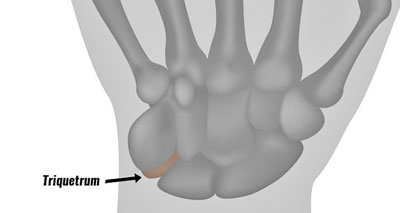
A Triquetral fracture is a break of the Triquetral bone, also sometimes called the triquetrum. It is the next most common carpal fracture after a Scaphoid fracture. Falling onto an outstretched arm is the most common cause.
Symptoms include:
- Pain in the wrist, located more on the little or pinky finger side of the wrist
- More on Triquetrum fracture
Bennett’s fracture
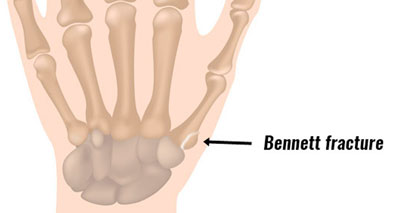
A Bennett fracture is an injury to the base of the thumb joint. It is usually caused by punching something hard or falling onto your hand with your thumb out to the side.
Symptoms include:
- Similar symptoms to other wrist and hand fractures with immediate and severe pain over the thumb side of the wrist
- In more serious cases the thumb appears deformed
- More on Bennett’s fracture
Rolando fracture
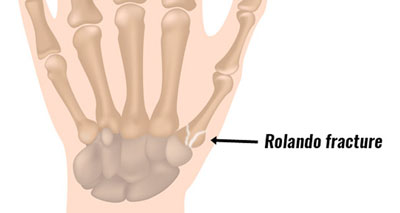
A Rolando Fracture, like Bennett’s wrist fracture is also a break at the base of the 1st metacarpal. However, it is a little more complex because the bone fractures into several pieces.
Symptoms include:
- Immediate severe pain on the thumb side of the wrist with rapid swelling and possible deformity
- More on Rolando fracture
Smith’s Fracture
A Smith’s fracture is a break at the end of the radius bone. The fragment of a fractured bone is displaced forwards to the palm side of the wrist.
Symptoms of a Smith’s fracture include:
- Sudden pain in the wrist after a fall or impact
- There will be tenderness in the area of the fracture with pain and difficulty moving the wrist
- The wrist may appear deformed with the hand appearing to be angled downwards
- More on Smith’s fracture