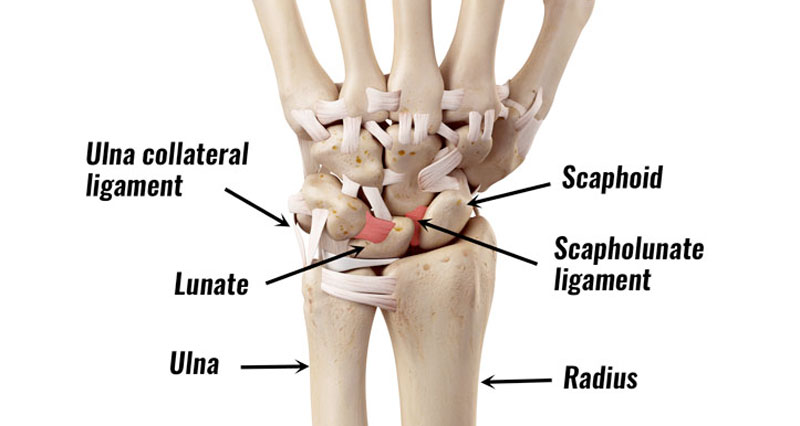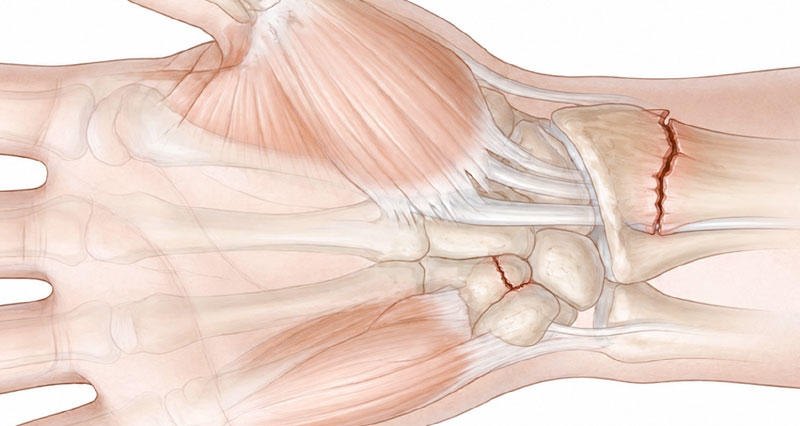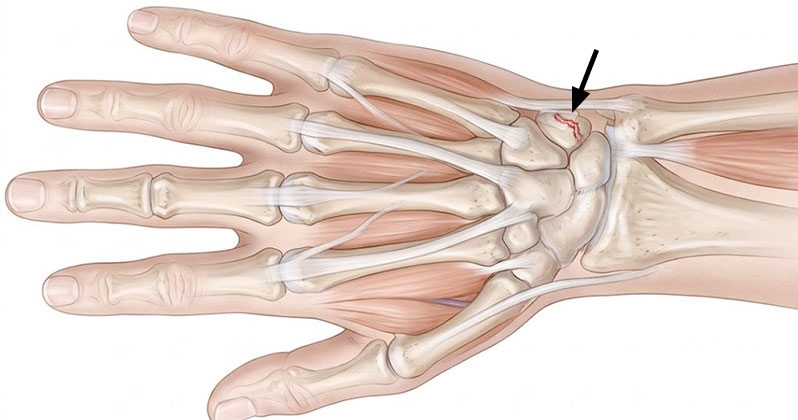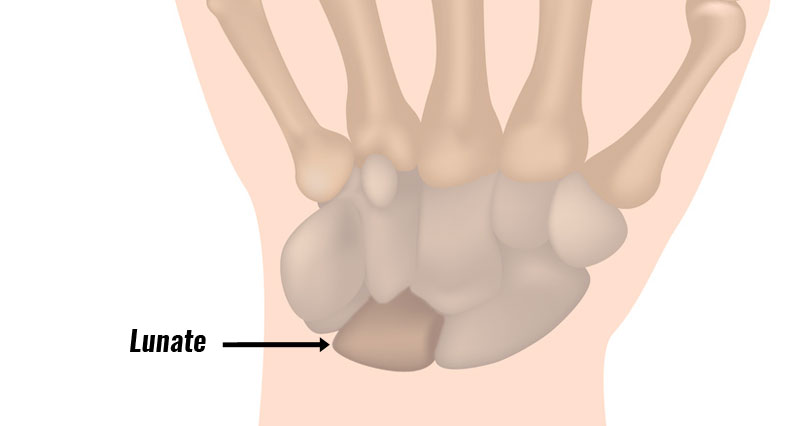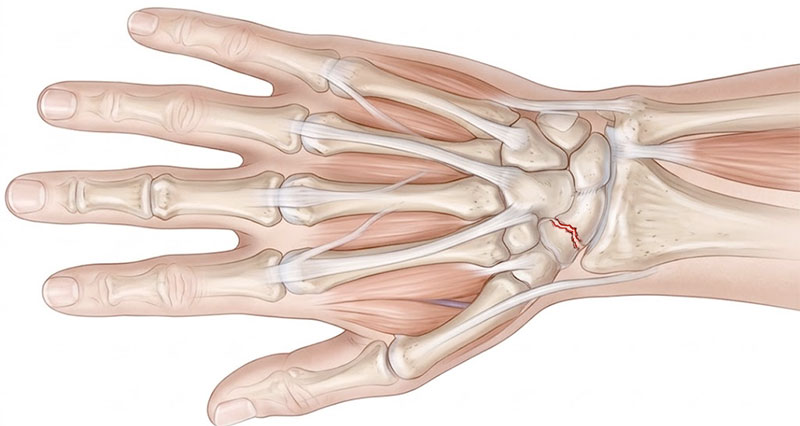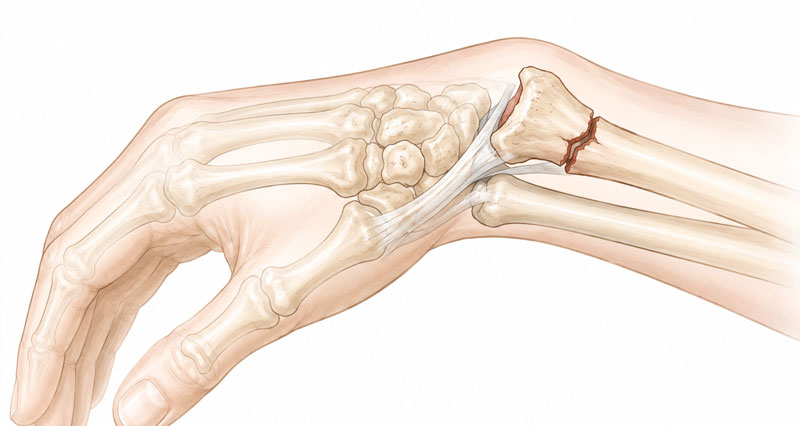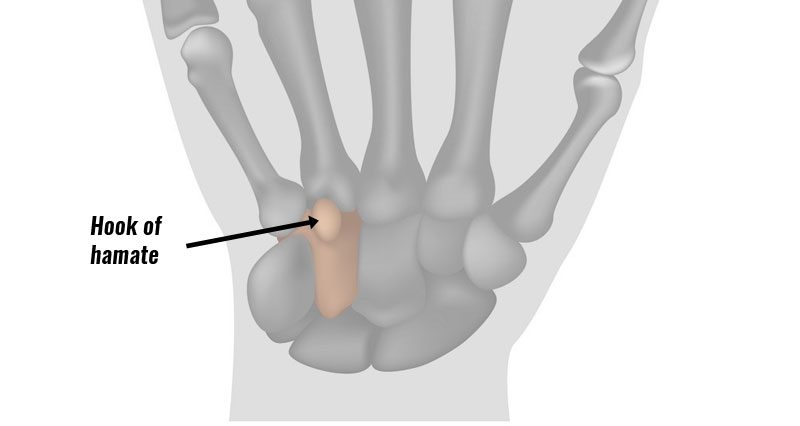
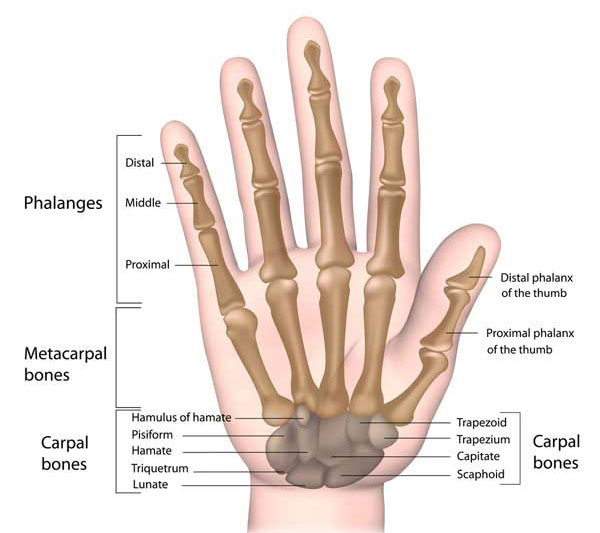
A hook of hamate fracture is a break to a hook-shaped projection on the hamate bone in the wrist. The hamate is one of the small carpal bones on the little finger side of the wrist. This injury commonly occurs in sports involving bats, rackets or clubs, such as golf, baseball and tennis.
The injury often happens when the handle of a club or racket strikes the ground or another hard object suddenly, sending force into the palm of the hand and wrist.
On this page:
Symptoms
Symptoms of a hook of hamate fracture usually develop immediately after injury and may include:
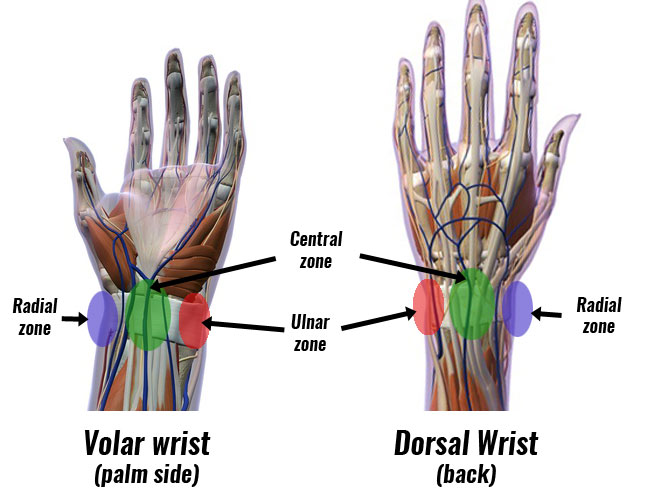
- Pain on the little finger (ulnar) side of the wrist.
- Pain when gripping objects tightly.
- Reduced grip strength.
- Tenderness when pressing into the palm side of the wrist.
- Pain when swinging a racket, bat or golf club.
- Swelling or bruising, although this is often minimal.
Some people also experience tingling or numbness into the ring and little fingers if the nearby ulnar nerve becomes irritated.
Diagnosis and imaging
A sports injury professional or doctor will examine your wrist and press over the hook of hamate to reproduce symptoms.
Standard wrist X-rays often fail to detect this injury because the hook of hamate is often difficult to see clearly. If your doctor suspect a fracture , your will need a CT scan or MRI scan to confirm the diagnosis.
What is a Hook of hamate fracture?
The hamate bone sits on the little finger side of the wrist and contains a small hook-shaped projection called the hook of hamate. This bony prominence helps form the carpal tunnel and acts as an attachment point for ligaments and tendons.
A fracture can occur either suddenly from a traumatic impact or gradually as a stress fracture from repeated loading over time.
Causes
A hook of hamate fracture is most common in sports where the handle of equipment presses repeatedly into the palm of the hand.
Common causes include:
- Striking the ground with a golf club during a swing.
- A baseball bat or racket suddenly jolting on impact.
- Repetitive gripping and swinging activities.
- Falling onto the hand while holding sporting equipment.
- Cycling accidents where the handlebars are forced sharply upwards into the palm.
Stress fractures of the hook of hamate are particularly common in baseball players due to repetitive batting.
Treatment for a hook of hamate fracture
If you suspect a hook of hamate fracture, seek medical attention as soon as possible. Early diagnosis improves healing and reduces the risk of long-term problems.
Most acute fractures are treated by immobilizing the wrist in a cast or splint for around 4 to 6 weeks. During this time you should avoid gripping, lifting and sporting activities.
Surgery
Hook of hamate fractures sometimes fail to heal properly because blood supply to the area is limited. Delayed diagnosis increases the risk of non-union.
If the fracture does not heal, surgery may be required. The most common procedure involves removing the fractured hook fragment completely. This usually provides good pain relief and allows athletes to return to sport successfully.
Following surgery, the wrist is normally immobilized for several weeks before rehabilitation begins.
Possible complications
Complications may include:
- Non-union (failure of the bone to heal).
- Chronic wrist pain.
- Reduced grip strength.
- Irritation of the ulnar nerve.
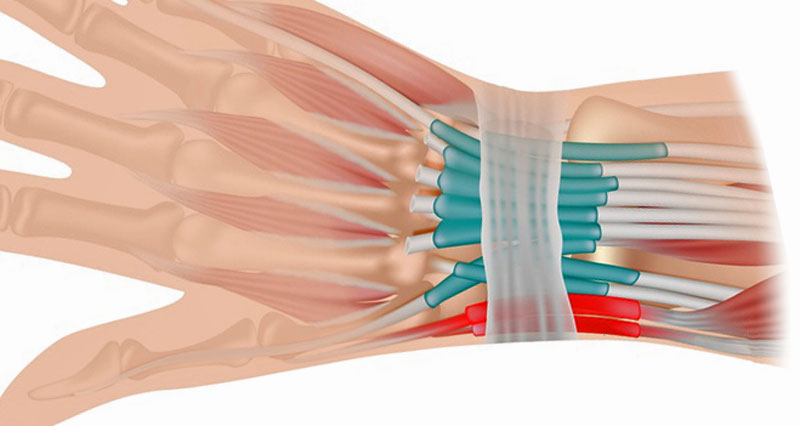
- Tendon irritation around the wrist.
Early diagnosis greatly reduces the risk of complications.
Rehabilitation
Once the cast is removed, rehabilitation focuses on restoring:
- Wrist mobility.
- Grip strength.
- Hand and forearm strength.
- Functional movement for sport.
Exercises may include:
- Wrist range of movement exercises.
- Grip strengthening with putty or hand exercise balls.
- Resistance band exercises.
- Sports-specific rehabilitation drills.
How long will it take to heal?
Recovery time depends on the severity of the fracture and whether surgery is required.
- Simple fractures treated early may recover within 6 to 8 weeks.
- Return to full sport may take 8 to 12 weeks.
- Delayed diagnosis or surgery can extend recovery time.
Athletes should regain full grip strength and pain-free wrist movement before returning to sport.
Return to sports-specific training may take 6 weeks or more. Once the wrist comes out of the cast, mobility and strengthening exercises should be done to restore full movement. Putty exercises and using hand exercise balls are excellent for achieving this.
Go to wrist strengthening exercises.
Further reading & references
- Aldridge JM 3rd, Mallon WJ. – Hook of the hamate fractures in competitive golfers: results of treatment by excision of the fractured hook of the hamate. Orthopaedics. 2003 Jul;26(7):717-9.