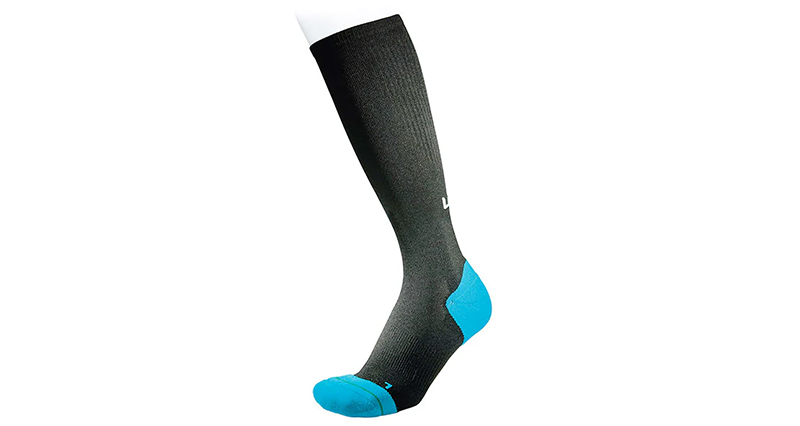
Calf Strain Exercises
Calf strain exercises are essential for restoring strength, flexibility, and function after injury. Starting the right exercises at the correct stage helps your calf heal properly and reduces the risk of re-injury.
This guide explains when to begin calf strain exercises, which exercises to use at each stage, and how to progress safely back to running and sport. The exercises below progress from gentle mobility and stretching through to strengthening, control, and return to running.
ADVERT
When can I start Calf strain exercises?
Begin calf strain exercises once the acute phase has passed and pain allows. This may be a few days for mild strains, or longer for more severe injuries.
You can start with gentle movements that do not place significant stress on the calf muscle. As symptoms improve, you can gradually increase the intensity and load.
Stretching exercises for calf strains
Stretching exercises are an essential part of calf strain rehabilitation. However, avoid stretching in the early stages, especially during the acute phase immediately after injury. This is because the muscle needs time to heal, and stretching too soon can delay recovery.
Perform all calf stretching exercises pain-free.
Later in the program, you can gradually increase stretching. You should continue to stretch regularly, even when you return to normal training, as this helps reduce the risk of your calf strain recurring.
Assessing flexibility
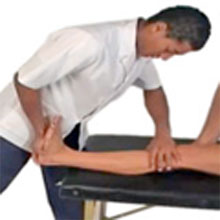
Before you begin calf strain exercises, it is a good idea to assess the flexibility of your calf muscles. One simple method is to apply gentle pressure to the forefoot while sitting with the leg straight in front.
There will be a point where resistance noticeably increases as the muscle begins to stretch. A therapist will often feel this before you notice any stretch in the calf.
ADVERT
Calf strain stretching exercises
Calf stretch straight & bent knee
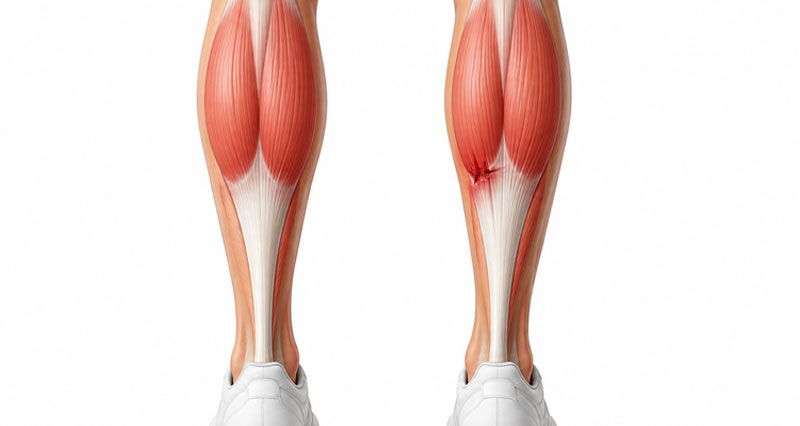
The calf muscles consist of the larger gastrocnemius and the smaller, deeper soleus. The gastrocnemius crosses the knee joint, while the soleus sits below it.
To stretch both muscles effectively, keep your knee straight to target the gastrocnemius, and bend your knee to target the soleus.
Sustained calf stretch
Sit with your legs straight and place an elastic resistance band around the balls of your feet. Gently pull back until you feel a stretch in the calf muscles.
Hold for up to 2 minutes, then relax.
Lateral flat foot stepover
Keep your feet flat and step over the mini hurdle from one side to the other, then back again. Avoid going up on your toes, as this increases load on the calf muscle.
Calf strain strengthening exercises
These exercises specifically strengthen the calf muscles. Our full programme also includes exercises for the ankle, as well as hip activation and movement control work to improve balance and proprioception.
Isometric plantar flexion
Keep your foot in a neutral position. Pull up on the band while resisting the movement with your calf muscles.
Plantar flexion with band
Wrap a resistance band around your foot. Push down against it using the ball of your foot. This works the calf muscles through movement and is known as an isotonic exercise.
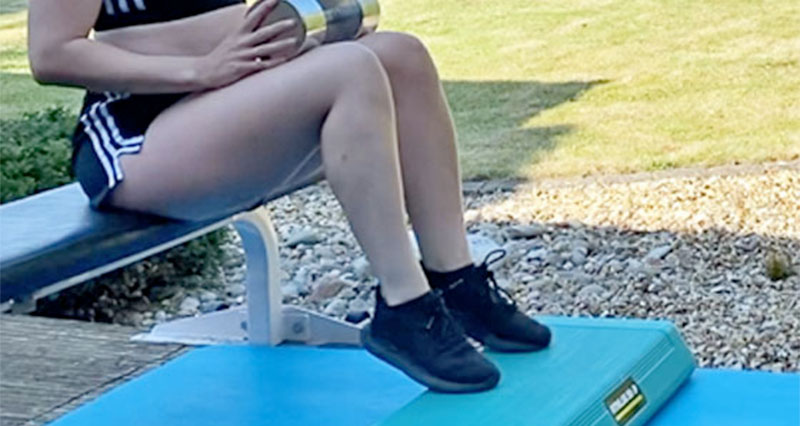
Seated calf raise
Sit with your feet on a step and knees bent. Place a weight on your thighs. Raise your heels up, then slowly lower back down under control.
Single leg hold in neutral
Stand on a step on the balls of your feet, keeping your foot in a horizontal, neutral position. Take one foot away so all your weight is on the injured leg. Hold for a few seconds without moving your foot then relax. Repeat 5 to 6 times as per the rehab program.
Double leg heel raise
Holding onto something to balance, raise and lower up and down on the balls of your feet. Make this exercise harder by progressing to single leg calf raise exercises.
ADVERT
Bent knee heel raise
Raise up and down on the balls of your feet but with your knees bent in a fixed position throughout the exercise. Again, make this harder by progressing to single leg calf stain exercises.
Pogo exercises for calf strains
With a resistance band (optional) around your ankles, bounce up and down on the spot and move forwards and backwards. Stay light on your feet and avoid bending your knees much. Try to make sure your calf muscles do most of the work but avoid completely straight legs to protect your knee joints.
Posterior chain exercises
These strengthen the hip and gluteal muscles. Although not specifically targeting the calf muscles, they are important.
Step down counterbalance front
Step down counterbalance side
Using a long pole to aid balance, step down slowly off the back of a step. Keep the movement slow and controlled all the way down, then return to the starting position.
Using a long pole to aid balance, step down slowly to the side. Keep the movement slow and controlled all the way down, then return to the starting position.
Heel raise in lunge
Go into a lunge position with your foot either flat on the floor, or slightly raised on a step or block. Keep in the lunge position as you perform heel raise exercises at the ankle.