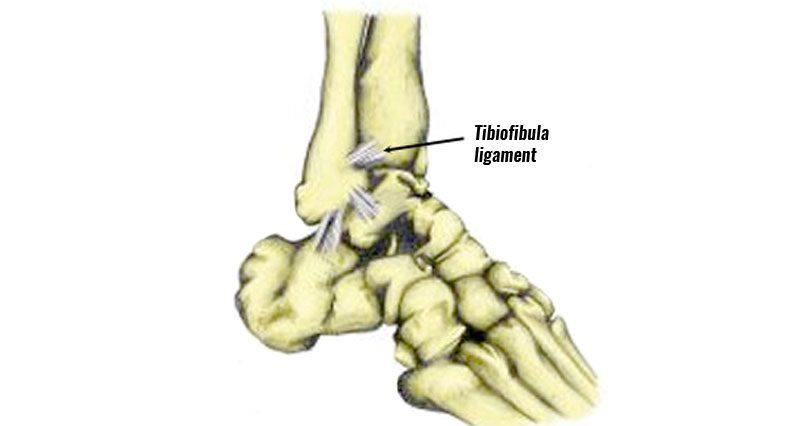
A high ankle sprain is also known as a Syndesmosis injury. It is a tear of the anterior tibiofibular ligament which joins the tibia and fibula together just above the ankle. It is generally more severe and complicated to treat than a normal ankle sprain.
Symptoms
Symptoms of a high ankle sprain include:
- Pain when pressing in on the tibiofibular ligament at the front of the ankle. This is the ligament which joins the tibia and fibula at the top of the ankle.
- Swelling and bruising at the front and outside of the ankle.
- Difficulty walking.
- The external rotation test reproduces the pain. This means rotating your ankle with your toes and foot pushed upwards.
Assessment tests
The squeeze test
The squeeze test assesses a high ankle sprain (Syndesmosis injury). The therapist squeezes the lower leg to compress the tibia and fibula. The test is positive if it reproduces symptoms.
External rotation test
The therapist moves the foot into dorsiflexion (pointing upwards) and rotates the lower leg outwards. The test is positive if it reproduces symptoms.
Internal knee rotation test
Rotate the knee inwards whilst flexing (bent). This causes the ankle to dorsiflex and the foot to rotate outwards. The test is positive if it reproduces symptoms.
What is a High ankle sprain?
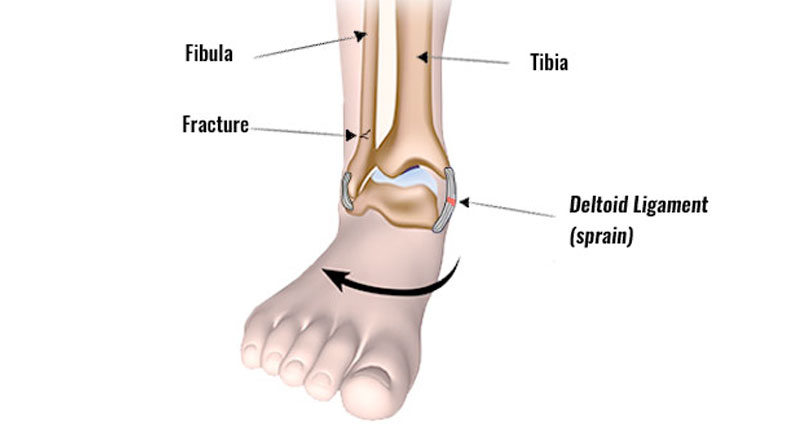
A high ankle sprain is a tear of the tibiofibular ligament at the top of the ankle.
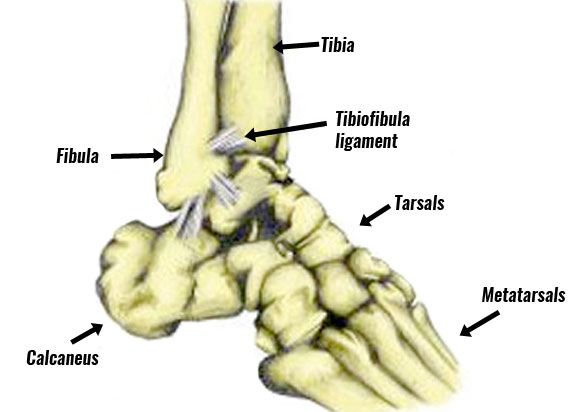
It is more severe than a common sprained ankle. This is because one of the lower leg bones fractures at the same time. Therefore, it is usually more difficult to treat.
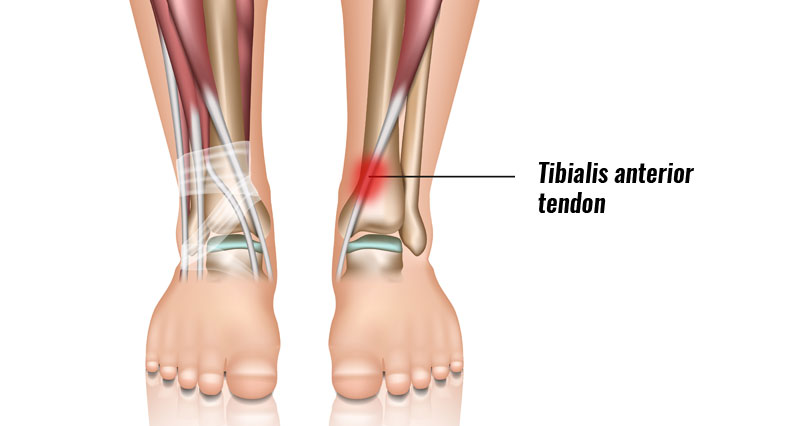
The most commonly injured ligament in a high ankle sprain is the anterior tibiofibular ligament. Severe injuries can also cause damage to the syndesmosis which is a membrane connecting the Tibia and Fibula.
High ankle sprain treatment
As soon as possible after injury apply the PRICE principles (protection, rest, ice, compression, elevation) to reduce pain and swelling.
Cold therapy
Apply a cold therapy compression wrap for 10 minutes every hour initially. Reduce to two or three times per day as your symptoms improve.
Do not apply ice directly to the skin but through a wet tea towel or using a commercially available hot and cold pack.
Elevate the foot to help swelling and tissue fluids drain away from the site of injury.
Medication
Anti-inflammatory and painkilling medication such as ibuprofen helps reduce pain and swelling after a High ankle sprain. Do not take Ibuprofen if you have asthma. Always check with a doctor or pharmacist before taking medication.
Massage
After a period of 72 hours, massage helps reduce swelling, loosen muscles and prevent the build-up of scar tissue.
Electrotherapy
Electrotherapy such as ultrasound can help with swelling and aid the healing process as well as reduce pain.
Exercises
Once the ankle is pain-free, the physical therapist would advise on mobility and strengthening exercises to restore the ankle to full function.
Wobble board exercises should be done to restore the coordination or proprioception of the injured ankle.
References & further reading
- van Dijk CN, Longo UG, Loppini M et al. Classification and diagnosis of acute isolated syndesmotic injuries: ESSKA-AFAS consensus and guidelines. Knee Surg Sports Traumatol Arthrosc. 2016;24(4):1200–16.
- Gerber JP, Williams GN, Scoville CR et al. Persistent disability associated with ankle sprains: a prospective examination of an athletic population. Foot Ankle Int 1998;19(10):653–60