Hamstring Strain Exercises

The following hamstring strain rehabilitation exercises form part of our step-by-step hamstring rehabilitation program. They include stretching, strengthening, and functional exercises designed to restore flexibility, strength, and movement control following injury. These exercises may also help improve hamstring strength and reduce the risk of future injury when performed correctly.
On this page:
Do not begin rehabilitation exercises until the initial acute stage has settled. Beginning exercises too early may aggravate the injury and delay recovery.
Medically reviewed by Dr Chaminda Goonetilleke, 24th Dec. 2022
Stretching exercises for Hamstring strain rehabilitation
Stretching exercises help restore flexibility and normal muscle length after a hamstring strain. However, avoid stretching too soon after injury. Only begin once pain has settled sufficiently.
Our full rehabilitation program includes both static and dynamic hamstring stretches. Static stretches involve holding a position for a period of time, while dynamic stretches use controlled movement to prepare the muscles for activity.
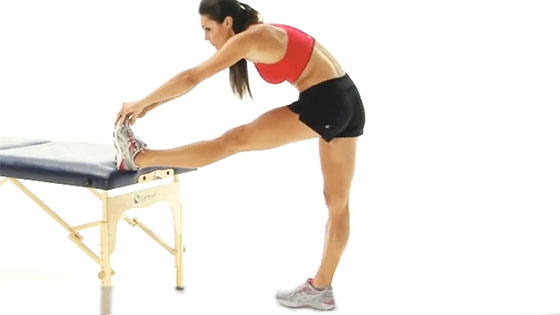
Straight leg hamstring stretch
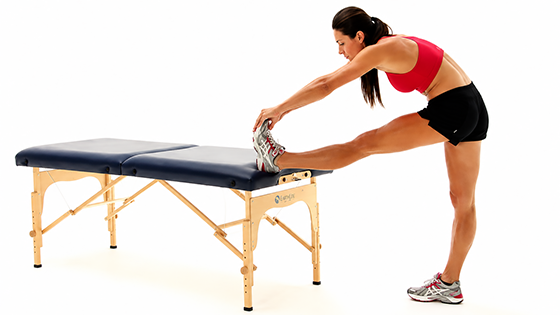
The static or isometric hamstring stretch involves little or no movement. Ease gently into the stretch and hold the position without bouncing or forcing the movement.
You can perform this exercise on a bench, table, or the floor. As you ease further into the stretch, you should feel a gentle pull at the back of the thigh. As this stretch eases, gradually increase the stretch if comfortable.
This exercise targets the hamstring muscle fibres higher up the back of the thigh rather than closer to the knee.
ADVERT
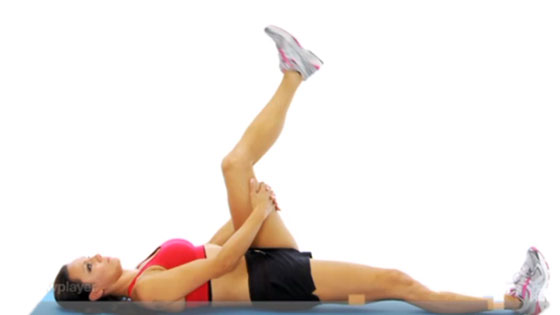
Bent knee hamstring stretch
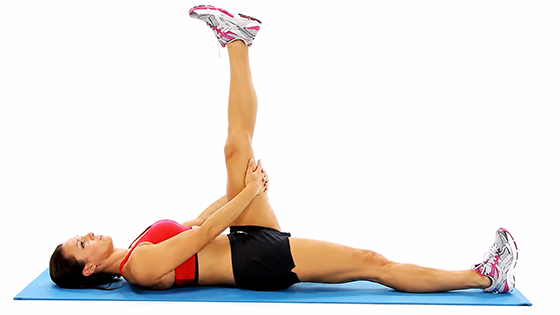
Bent knee hamstring stretch targets the muscle fibres closer to the knee rather than higher up the thigh.
This stretch is particularly useful if your hamstring strain is lower down the muscle. However, it is important to restore flexibility throughout the entire hamstring.
Gently lift your leg and slowly straighten the knee until you feel a stretch. Hold for 10 to 15 seconds before relaxing. If comfortable, gradually increase the stretch slightly.
Do not force the movement or bounce during the stretch. Stretching should remain comfortable and pain-free throughout.
Hamstring swings
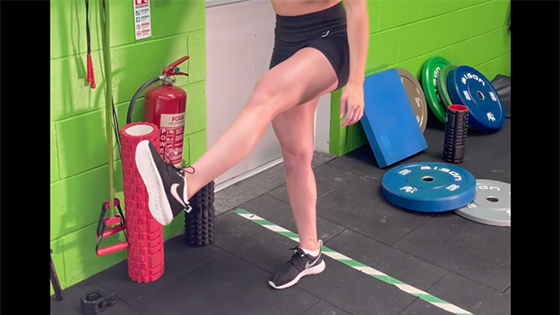
Hamstring swings are a dynamic stretching exercise used during the later stages of hamstring strain rehabilitation.
They form part of our rehabilitation programme once the injury has healed sufficiently and the muscles can tolerate more controlled movement.
Stand tall with your feet together and hold onto a sturdy object for balance if needed. Then swing one leg forward and backwards in a smooth, controlled movement.
Straight leg raise
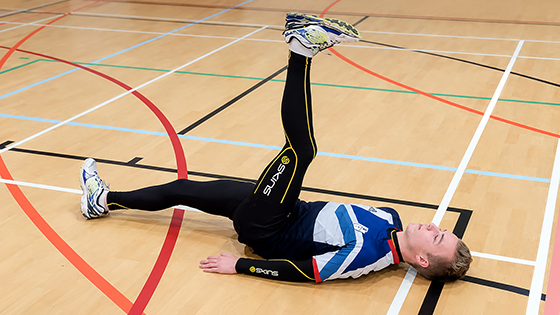
Lie on your back and lift the injured leg within a comfortable, pain-free range before slowly lowering it again.
Perform the movement in a smooth, controlled manner. As flexibility improves, gradually work towards straightening the knee further during the exercise.
Upside downcycling
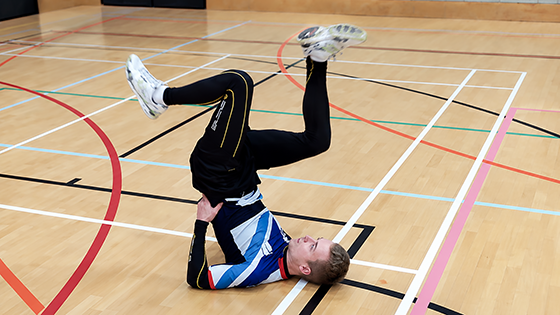
Upside-down or inverted cycling is a dynamic hamstring rehabilitation exercise. Unlike leg swings, it requires greater coordination and movement control while also engaging the core muscles.
Lie on your back and support your hips with your hands. Then perform a controlled cycling motion with your legs.
Strengthening exercises for Hamstring rehabilitation
These hamstring strengthening exercises begin in phase 2 of our rehabilitation programme and can be performed at home without specialist equipment.
Initially, the programme focuses on isometric exercises, which involve little or no movement. Later stages introduce isotonic exercises using movement, resistance bands, or weights to progressively strengthen the hamstring muscles.
Isometric hamstrings
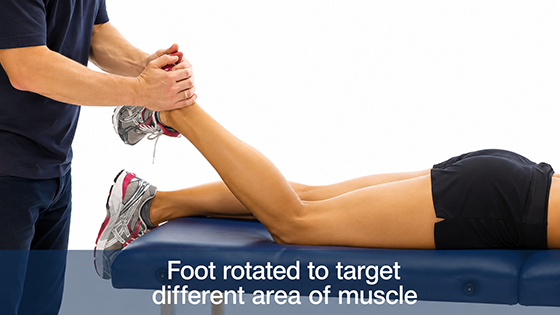
These exercises are best performed with a partner or therapist. Lie face down in the prone position and contract the hamstring muscles against your partner’s resistance. Hold briefly, then relax.
Vary the angle of knee bend to work the muscles at different lengths. Once completed, repeat the exercise with the foot turned inwards and then outwards to target different areas of the hamstring muscles.
Standing hamstring curl
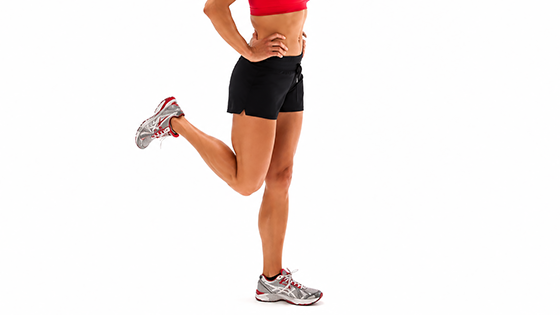
Bend your knee and bring your heel towards your buttock in a smooth, controlled movement. As strength and confidence improve, gradually increase the number of repetitions and the speed of movement.
Hamstring catches
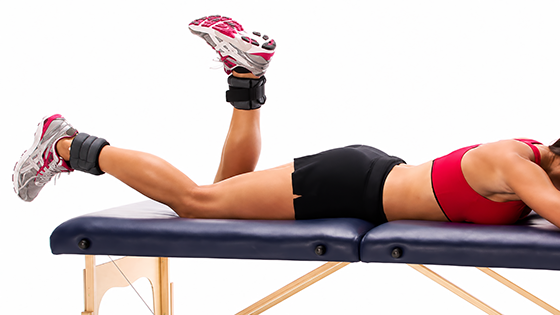
Allow your leg to fall slowly from a bent knee position. Then contract the hamstring muscles to catch the movement before the lower leg reaches a horizontal position.
Stay relaxed as the leg falls under the influence of gravity and only contract the hamstrings to control the movement. This exercise works the hamstring muscles eccentrically with a light dynamic training effect.
Double leg bridge
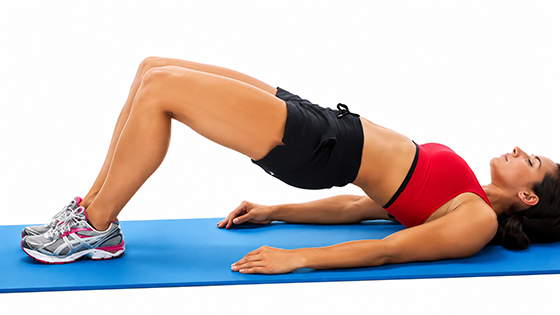
Lie on your back with both knees bent and feet flat on the floor. Tighten your glute and hamstring muscles, then lift your hips until your body forms a straight line from your shoulders to your knees.
Hold briefly before lowering under control. As strength improves, gradually increase the hold time or repetitions.
Seated hamstring pull
Secure one end of a resistance band to a fixed point or have a partner hold it. Attach the other end around your foot.
Pull your heel towards your buttock against the resistance of the band, contracting the hamstring muscles throughout the movement. Then slowly return to the starting position under control.
As strength improves, gradually increase the resistance or number of repetitions.
Single leg bridge
Lie on your back with one knee bent and the other leg raised. Tighten your gluteal and hamstring muscles, then lift your hips upwards until your body forms a straight line from your shoulders to your knee.
Hold briefly before lowering slowly under control. Keep your hips level throughout the exercise and avoid letting them drop or rotate.
This single-leg variation places greater demand on the hamstrings, gluteal muscles, and core stability muscles.
Alternate hip extension hamstring exercises
Use a step or box to support your upper body through the elbows. Then alternate by lightly touching each heel to the floor. Maintain good core stability throughout and keep your hips and shoulders level.
As each heel touches the ground, the gluteal and hamstring muscles work isometrically to stabilise the body. This exercise places the hamstrings in a position similar to sprinting and acceleration activities.
Straight leg ball pick up
This is an excellent hamstring rehabilitation exercise because it strengthens the hamstring muscles in a stretched position.
Stand on one leg while holding a medicine ball or weight. Keeping your back straight and core engaged, bend forwards from the hips and lower the ball towards the floor. Return slowly to the starting position under control.
Maintain a slight bend in the standing knee throughout the movement and avoid rounding your back. This exercise helps improve hamstring strength, balance, and movement control.
Lunge with a ball
Hamstring strengthening exercises gradually become more demanding and sport-specific as rehabilitation progresses. However, be careful not to overdo things when returning to normal sports training.
Some of these exercises may feel more difficult than expected if you are not used to them. Therefore, monitor how your hamstring feels during exercise and again the following day before progressing further.
Good mornings
Hamstring strengthening exercises gradually become more demanding and sport-specific as rehabilitation progresses. However, be careful not to overdo things when returning to normal sports training.
Some of these exercises may feel more difficult than expected if you are not used to them. Therefore, monitor how your hamstring responds during exercise and again the following day before progressing further.
Norwegian hamstring curl
Functional hamstring strain rehabilitation exercises
Functional hamstring exercises are more activity and sport-specific. They help bridge the gap between basic hamstring rehabilitation exercises and returning to normal training or competition.
These exercises focus on speed, balance, coordination, acceleration, deceleration, and movement control. Progress gradually and only increase intensity if your hamstring remains pain-free during exercise and the following day.
Quick feet and hold
Stand facing a wall with your hands supported for balance. Begin with one knee lifted towards your chest, then switch feet quickly in a running motion while keeping your core tight and your hips stable. After several quick repetitions, pause and hold the knee-up position for 2 to 3 seconds before changing legs.
Keep the movement fast but controlled, landing softly on the balls of your feet. This exercise helps improve hamstring strength, balance, coordination, and sprint mechanics during the later stages of rehabilitation.
Side jump
Perform a two-footed squat jump sideways, landing softly with your knees slightly bent and your hips stable. Hold the landing position briefly before jumping back in the opposite direction.
Keep your chest up and your core engaged throughout the exercise. Focus on controlled landings rather than speed. This exercise helps improve hamstring strength, balance, and lateral movement control during the later stages of rehabilitation.
Pogo hamstring strain rehabilitation exercises
Perform small, quick jumps on both feet while keeping your knees slightly bent. Aim to stay light and springy on the balls of your feet rather than jumping high off the ground.
You can place a resistance band around your ankles to increase activation of the hip muscles. Keep your core engaged and your posture upright throughout the exercise. Although the movement mainly targets the calf muscles, it also helps improve hamstring stiffness, lower limb control, and reactive strength for running and sprinting activities.