Overpronation is often recognised as a flattening or rolling in of the foot but it is not quite as simple as that. If you overpronate, the timing of when your foot rolls in is also important. Here we explain overpronation and how it increases the risk of specific sports injuries.
Medically reviewed by Dr Chaminda Goonetilleke, 20th Jan. 2022
What is overpronation?
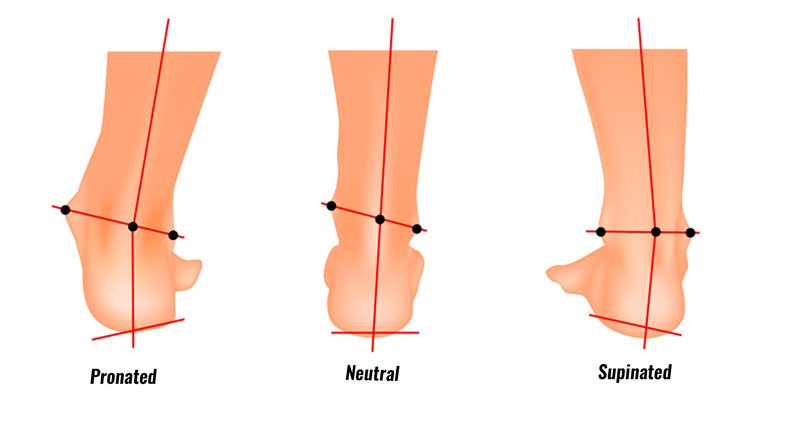
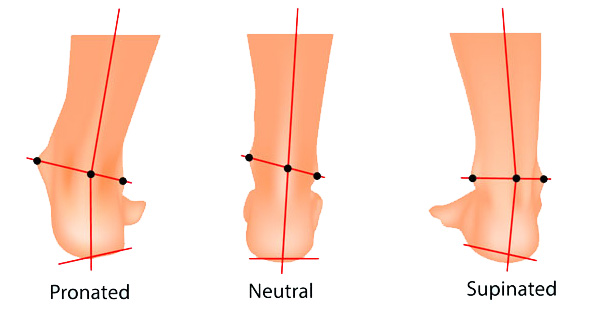
Pronation occurs when your foot naturally rolls inwards. This is because weight is transferred from the heel to the forefoot. A certain amount of this is natural and necessary. But in many people, the foot rolls in too much. This is known as overpronation.
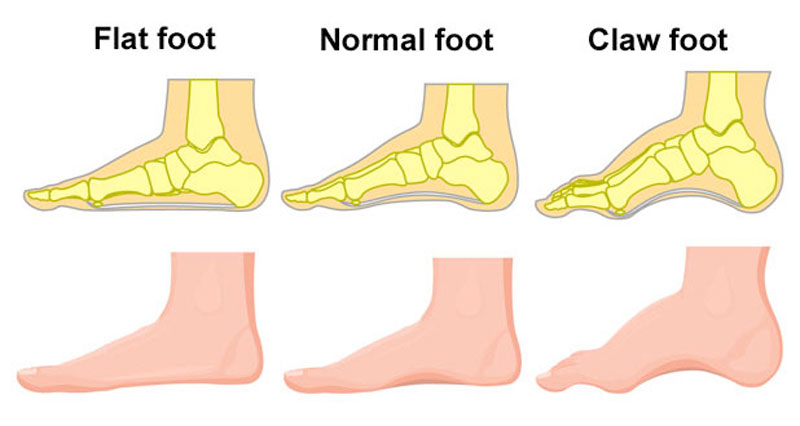
When standing, as your foot rolls inwards, the arch of your foot flattens. Therefore, the term often used to describe someone who overpronates is having ‘flat feet‘. Pronation is normal and helps provide shock absorption at the foot. The opposite movement to pronation is supination.
How can I tell if I overpronate?
The best way to determine if you overpronate is to visit a podiatrist or similar. They will do a full gait analysis on a treadmill or using force plates. This exactly measures the forces and angles of your foot whilst running. However, we don’t all have the time or money to visit a professional. There are other ways you can get an idea of how much you overpronate.
- Firstly, look at your feet when standing. Have you got a clear arch on the inside of the foot? If there is not an arch and the innermost part of the sole touches the floor, then your feet are overpronated.
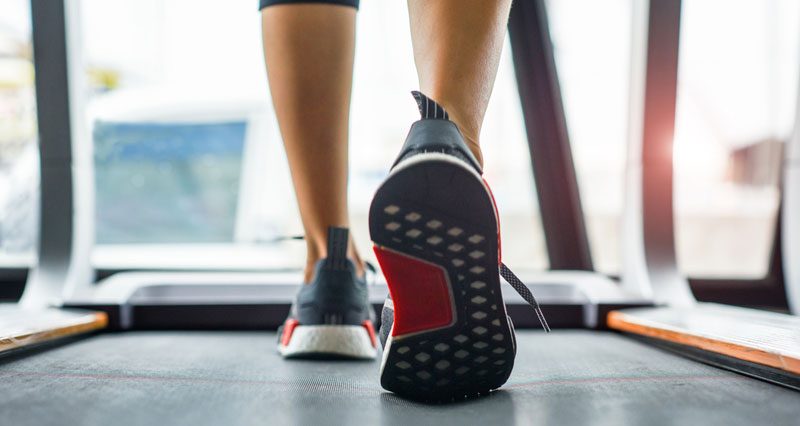
- Secondly, look at your running shoes. If they are worn on the inside of the sole in particular, then pronation may be a problem for you.
- Thirdly, try the wet foot test. Wet your feet and walk along a section of paving and look at the footprints you leave. A normal foot will leave a print of the heel, connected to the forefoot by a strip approximately half the width of the foot on the outside of the sole. If your feet are pronated there may be little distinction between the rear and forefoot, shown opposite.
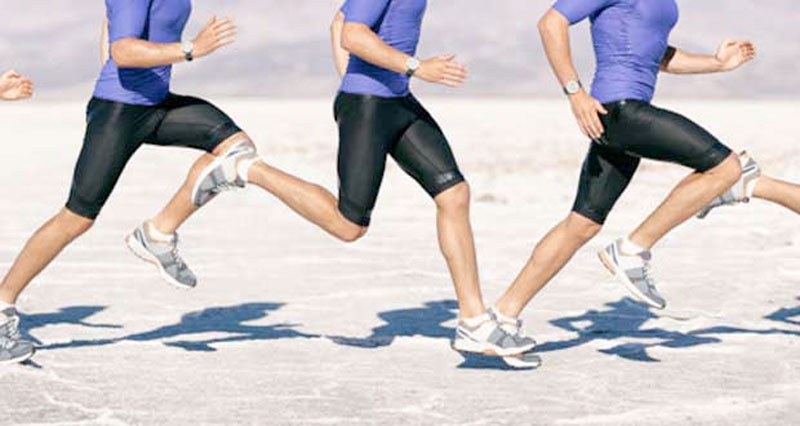
It is not only the amount of overpronation which is important but the timing of it during the gait cycle as well that needs to be assessed.
How does overpronation cause Injury?
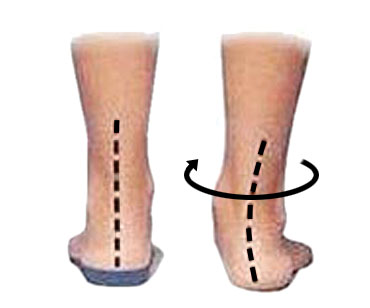
Overpronation usually causes overuse injuries, especially in runners. If you have a neutral foot it naturally pronates during walking or running. As a result, your lower leg, knee, and thigh all rotate internally (medially).
If you overpronate the inward rotation of the lower leg is exaggerated. This, in turn, increases stresses on the muscles, tendons, and, ligaments of the foot, lower leg, and knee as they try to limit the movement.
Related sports injuries
Overpronation (or hyper-pronation) is quite a common problem and can lead to a number of injuries, especially in runners, including:
- Shin splints
- Anterior compartment syndrome
- Patellofemoral pain syndrome
- Plantar fasciitis
- Tarsal tunnel syndrome
- Bunions (Hallux valgus)
- Achilles tendonitis
- Abductor hallucis strain
When someone overpronates, the foot rolls in or flattens. This causes the lower leg to turn inwards, which puts the knee and hip out of alignment and can cause the back to be rotated as well.
Correcting overpronation
Most podiatrists, physios, and sports therapists will offer full gait analysis to determine whether you need orthotic inserts. Or if you have the right running shoes to suit your running gait.
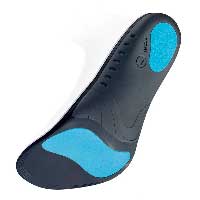
Running shoes
If overpronation is a problem then a shoe with extra medial support is preferable. Many running shoes have a harder material on the inside of the midsole (the thick hard foam part of the running shoe).
This means the inside of the shoe will be compressed less under load and support the inside of the foot preventing it from rolling in or flattening.
Read more on choosing running shoes.
Orthotics
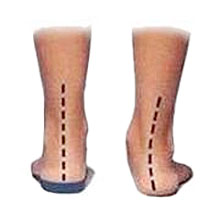
For people with considerable overpronation, another option is to have an orthotic device fitted. Orthotic insoles correct overpronation by controlling the position of your heel.
Orthotic insoles come in many types and prices. Some are pre-moulded and can be bought off the shelf. These are ok for the majority of problem feet. However, some cases may require specially cast orthotics from a relevant sports injury therapist or podiatrist.