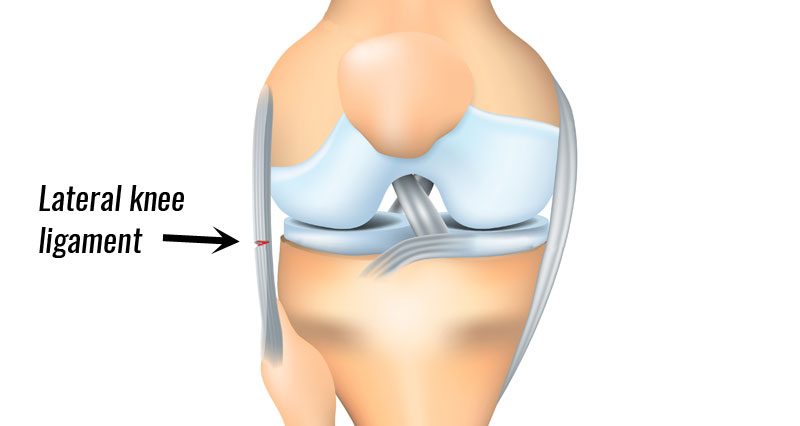
An LCL sprain or lateral knee ligament sprain is a tear to the ligament on the outside of the knee. It most commonly occurs following a direct blow to the inside of the knee. However, it can also develop gradually through overuse.
Medically reviewed by Dr Chaminda Goonetilleke, 13th Dec. 2021
Symptoms of an LCL sprain
The main symptoms of a lateral collateral ligament sprain (LCL sprain) are:
- Pain on the outside of the knee.
- Symptoms range from very mild to a complete rupture of the ligament.
- You may have swelling over the outside of the joint, especially with more severe injuries.
Lateral ligament sprains fall into grades 1, 2 or 3, depending on the severity of the injury.
Grade 1 LCL sprain
If you have a grade 1 sprain, your knee will feel tender on the outside. You will have little or no swelling. However, you will feel pain with the varus stress test (see below), but no joint laxity.
Grade 2 LCL sprain
With a grade 2 LCL sprain, you will have significant tenderness on the outside of your knee. In addition, you will likely have some swelling. The varus stress test will indicate pain and some joint laxity; however, there will be a definite endpoint, indicating the ligament is still intact.
Grade 3 LCL sprain
A grade 3 lateral ligament sprain is a complete tear of the ligament. However, pain levels can vary and may be less than in a grade 2 sprain. In addition, you will have significant joint laxity with the varus stress test, with no firm endpoint. As a result, your knee may be very unstable.
A full examination is needed once any pain and swelling have gone down. A painful, swollen knee is more difficult to assess.
GO MOBILE!
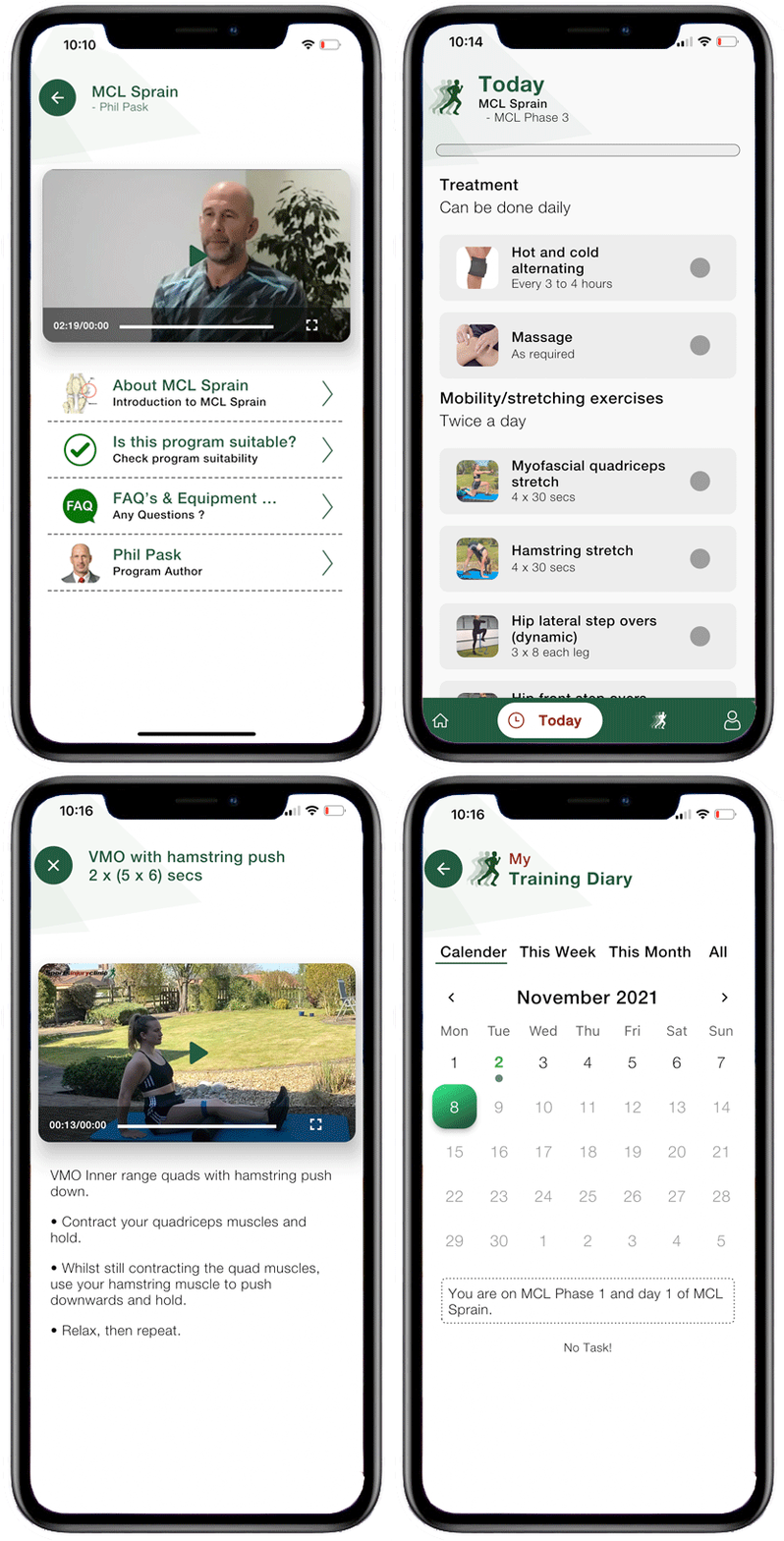
Take your program with you to the gym or training field. Our step-by-step LCL Sprain Rehab app tells you what treatment and exercises to do each day and tracks your progress.
Download now!



Varus stress test
The varus stress test is used to help diagnose lateral knee ligament sprains. It stresses the lateral ligament specifically.
Your doctor/physio holds your leg with the knee slightly bent to approx 30 degrees. They stabilize your thigh whilst applying inward pressure on your lower leg.
As a result, the lateral ligament becomes stretched or stressed. The test is positive if pain is felt on the outside of the knee. The degree of damage depends on the amount of movement or instability present.
Imaging
In more serious cases, an MRI scan and/or X-Ray may be necessary.
Anatomy
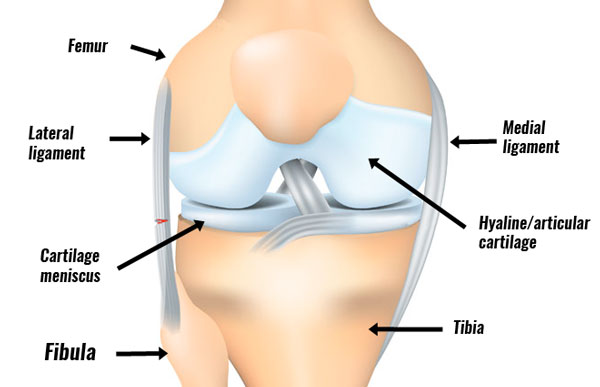
The lateral collateral knee ligament, or LCL for short, connects the femur (thigh bone) to the top of the fibula (shin bone).
The ligament itself is a narrow, strong cord of collagen fibres and its function is to provide stability to the outside of the knee.
The ligament is not connected to the lateral meniscus in the joint like the medial ligament (on the inside) does. Therefore, LCL sprains are not normally associated with cartilage meniscus tears. However, injury to the anterior cruciate ligament or posterior cruciate ligament can occur at the same time as an LCL sprain.
Causes
The LCL is most commonly injured by a direct impact to the inner surface of the knee, for example, during a rugby or football tackle. This force causes the knee joint to open on the outside (lateral side), stretching the lateral ligament.
An LCL sprain is less common than a medial collateral ligament sprain.
Treatment
Treatment begins with immediate first aid using the PRICE principles (Protection, Rest, Ice, Compression, Elevation), followed by a structured rehabilitation programme.
Cold therapy
Apply cold therapy and compression wrap as soon as possible after injury. If your injury happened some time ago and you still have swelling, then you should also apply cold. Apply ice for 10 to 15 minutes every couple of hours. Reduce frequency as your symptoms improve.
Rest
If your injury is severe, recent, or acute, then you should rest completely until normal daily activities are pain-free.
For the more long-term, chronic injuries, active rest may be more appropriate. This means discontinuing the sport or activity that irritates your injury or causes pain.
Supports & braces
Wear a hinged knee brace to support and protect your joints. This is particularly important for grade 2 and 3 injuries. A hinged knee brace has solid metal supports at the sides. This protects your knee from lateral (sideways) movements, which would stress the lateral knee ligament.
Taping
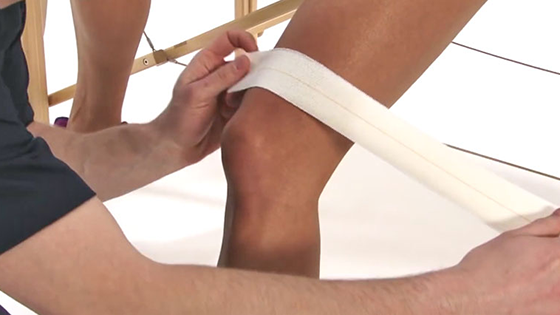
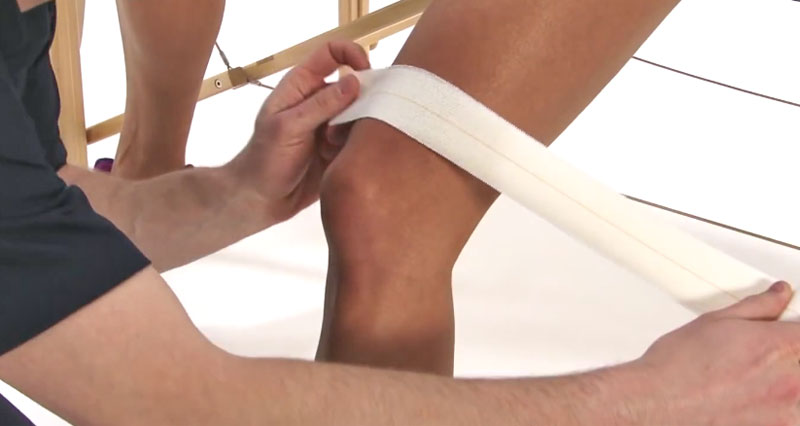
Your physio may apply support taping. This protects and supports your knee whilst it is healing. It may also help with confidence and proprioception as you return to running.
Sports massage for LCL sprains
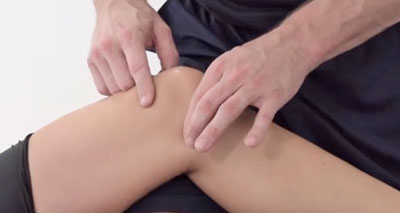
Cross-friction massage is applied directly to the ligament, where it may help reduce scar tissue formation and realign new ligament fibres as they heal.
Before starting any massage treatment, your therapist will check for contraindications. If any apply to you, then massage should be avoided.
Cross-friction massage also must not be performed during the acute stage. This is usually the first 48 to 72 hours after injury. But for grades two and three strains, this could be a week or more.
Apply friction backwards and forwards across the ligament. Start gently and apply deeper frictions as you become accustomed to the massage.
Read more: LCL sprain rehabilitation program
LCL sprain exercises & rehabilitation

Rehabilitation exercises for lateral knee ligament sprains should include mobility, stretching, strengthening, proprioception and, eventually, sport-specific exercises. Initially, begin with isometric or static strengthening exercises, then progress to dynamic knee exercises involving movement. Proprioception exercises focus on improving balance and coordination.
Read more on LCL sprain exercises.
LCL sprain Surgery
In grade 3 sprains, particularly when other structures such as an ACL or PCL are also damaged, surgery may be required to restore knee stability. In these cases, the surgeon may suture the torn ends of the LCL or reconstruct the ligament using a tendon graft, such as a hamstring tendon.
References & research
- LaPrade RF, Wentorf FA, Fritts H et al. A prospective magnetic resonance imaging study of the incidence of posterolateral and multiple ligament injuries in acute knee injuries presenting with a hemarthrosis. Arthroscopy 2007;23(12):1341–7