Calf Strain
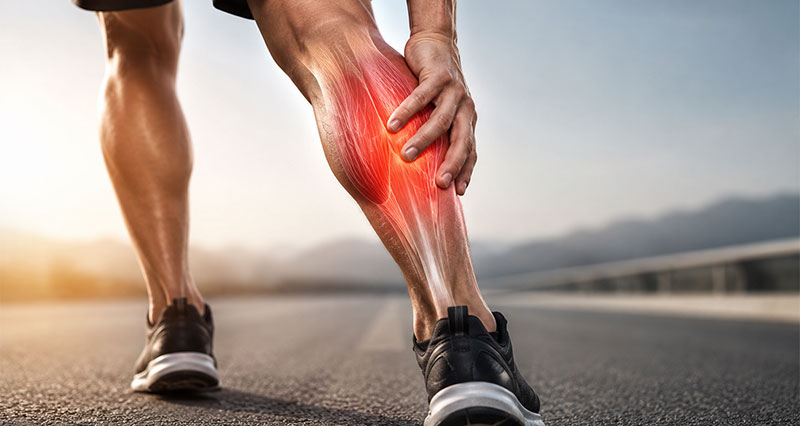
A calf strain is a tear in one or more of the muscles at the back of the lower leg. It commonly occurs during sprinting, accelerating, jumping, or sudden changes of direction. Symptoms range from a mild tightness or pulling sensation to a sudden sharp pain, or even a noticeable ‘pop’ in more severe injuries. Here we explain the symptoms, diagnosis, causes, treatment and rehabilitation of calf muscle strains.
ADVERT
Medically reviewed by Dr Chaminda Goonetilleke, 10th Jan. 2022.
On this page:
Calf strain symptoms
Symptoms of a calf strain vary depending on the severity of the injury and are graded from 1 to 3 with grade 3 being most severe. Mild strains may feel like a tightness or dull ache, often during or after exercise. More severe strains cause a sudden, sharp pain at the back of the lower leg.
Understanding the severity of your injury is important for choosing the right treatment and rehabilitation approach.
Grade 1
A Grade 1 calf strain is a minor tear involving a small number of muscle fibres.
Symptoms include:
- Mild pain, tightness or a pulling sensation in the calf
- You may be able to continue exercising
- Symptoms often worsen over the following 24 hours
- Mild tenderness when pressing on the injured area
- Little or no swelling
Without appropriate treatment, a Grade 1 injury can progress into a more significant tear.
Grade 2
A Grade 2 calf strain involves a larger number of torn muscle fibres.
Symptoms include:
- Sudden sharp pain at the back of the lower leg
- Swelling and tenderness
- Bruising may develop over the following days
- Pain when walking or pushing up onto your toes
- Noticeable weakness in the calf muscle
- Inability to continue activity
Grade 3
A Grade 3 calf strain is a complete or near-complete rupture of the muscle.
Symptoms include:
- Severe and immediate pain
- A popping or snapping sensation at the time of injury
- Rapid swelling
- Significant bruising
- Difficulty walking
- A visible gap or deformity in the muscle in some cases
If you suspect a grade 2 or 3 injury, seek professional advice.
Try our Calf strain pain calculator to determine how bad your injury is.
ADVERT
Diagnosis
Your doctor or physio will diagnose a calf strain from your symptoms, how the injury occurred and a physical examination. They may assess calf muscle strength, pain when stretching the muscle, tenderness over the injured area and your ability to perform a single-leg calf raise.
Ultrasound scans can help confirm the location and severity of a muscle tear. Also, for severe injuries or where the diagnosis is uncertain they may use MRI.
Similar conditions – what else might it be?
It is important to rule out other causes of calf pain including:
Seek urgent medical attention if you develop unexplained swelling, redness, warmth throughout the calf, chest pain or shortness of breath.
Calf strain anatomy
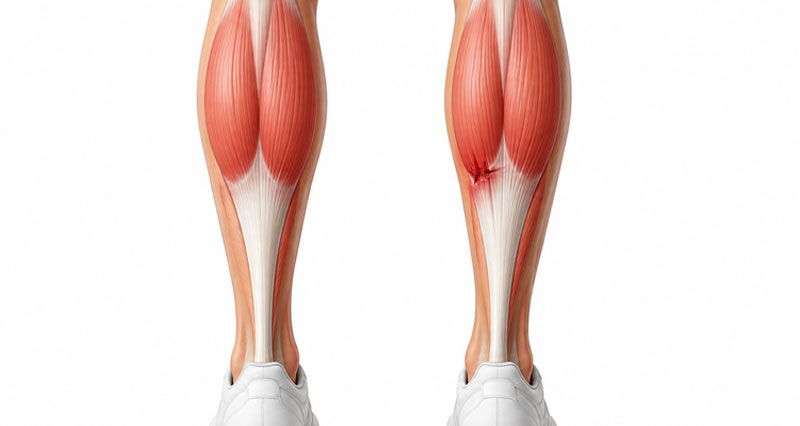
A calf strain involves a tear in one of the muscles at the back of the lower leg, most commonly the gastrocnemius.
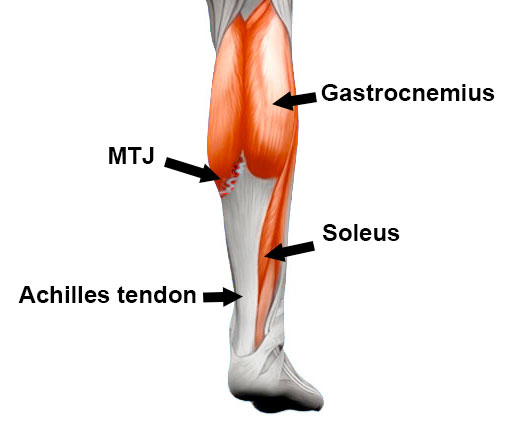
The calf muscle group consists of two main muscles: the gastrocnemius and the soleus. The gastrocnemius is the larger, more powerful muscle used during sprinting and explosive movements.
The soleus sits underneath and works more during steady activities such as walking and running. Both muscles help point the foot downward (plantar flexion), which is the movement used when pushing off or standing on your toes.
Most calf strains occur in the medial (inside) part of the gastrocnemius, often at the musculotendinous junction where the muscle joins the tendon. This type of injury is sometimes referred to as ‘tennis leg’.
Calf strain causes
Calf strains usually occur during sudden, explosive movements such as sprinting, pushing off, or changing direction quickly. They can also happen when the muscle is overstretched under load.
Factors which increase the risk of calf strain include:
- Poor warm-up
- Tight calf muscles
- Previous calf injuries
- Muscle weakness
- Sudden increases in training load
- Returning to sport too quickly after injury
- Wearing high heels regularly
Addressing these factors can help reduce the risk of future injury.
ADVERT
Calf strain treatment
Early treatment focuses on protecting the muscle, reducing pain and swelling, and gradually restoring movement. Acting quickly helps speed up recovery and reduce the risk of long-term problems.
Cold Therapy
In the early stages, the P.R.I.C.E. principles (protection, rest, ice, compression, and elevation) help manage symptoms. Apply cold therapy for 10 to 15 minutes every 1 to 2 hours during the early stages. Reduce frequency as pain and swelling improve. Protect the skin if using ice by wrapping in a wet towel. A specialist cold therapy compression wrap is ideal.
Rest
Complete rest for at least 2 to 3 days for a grade 1 injury. If you have suffered a grade 2 or grade 3 calf strain then you may need to completely rest for a couple of weeks or more. Use crutches if necessary. As pain settles, gentle movement and controlled loading help the muscle heal more effectively. Avoid pushing through pain.
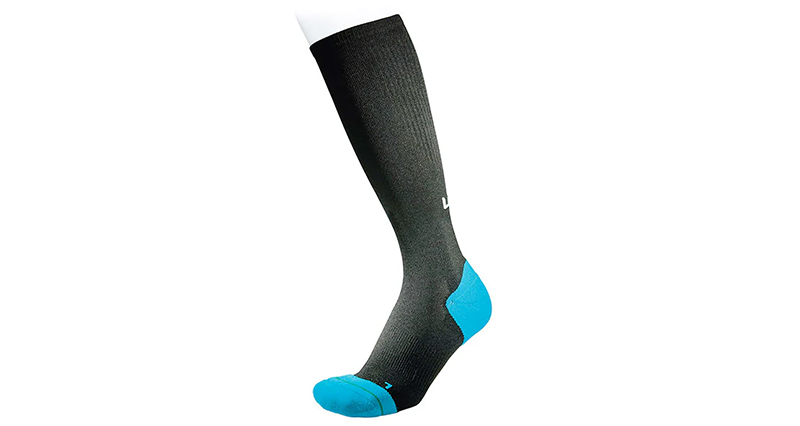
Wear a calf support
Compression can help reduce swelling and provide support. Use a calf support or compression bandage during the early stages. As you return to activity, a supportive sleeve can help keep the muscle warm and improve confidence when moving.
ADVERT
Medication
Anti-inflammatory medications such as ibuprofen may help reduce pain during the first few days after injury. However, inflammation is a normal part of the healing process, and some research suggests that use of anti-inflammatory medication immediately after a muscle strain may interfere with tissue repair. For this reason, use anti-inflammatory drugs cautiously and only when needed for pain relief. Always seek advice from your doctor or pharmacist before taking medication.
Wear a heel lift
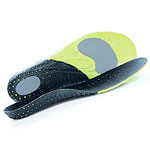
Using a small heel lift can reduce strain on the calf muscle by slightly shortening it. This may help in the early stages of recovery. Use them in both shoes to avoid imbalance. However, long term use may adaptively shorten the calf muscles leaving potential weakness when removed.
Massage
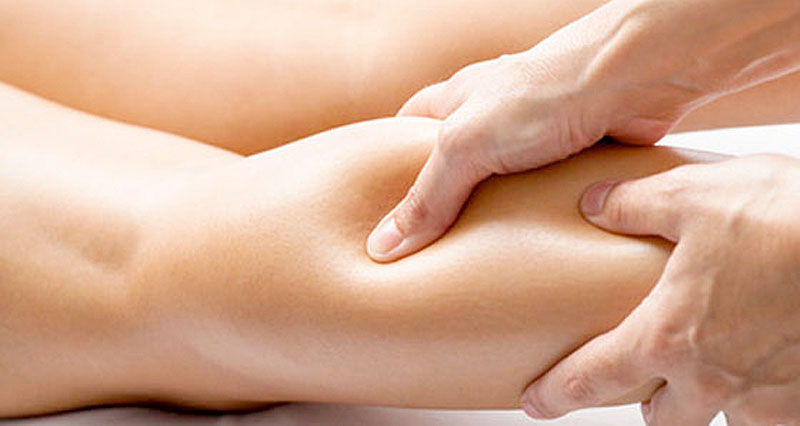
Sports massage may be beneficial once the acute phase has passed. Massage too early after injury may increase bleeding and delay healing. As recovery progresses, massage can help reduce muscle tightness, improve flexibility and encourage blood flow to the injured area.
Learn how to apply massage for calf strains
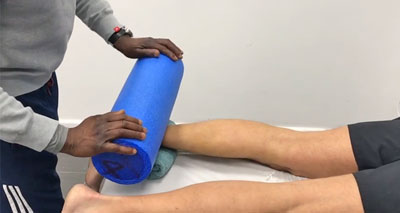
If you don’t have access to massage then use a foam roller as an alternative in the later stages of rehabilitation. Roll slowly along the length of the calf for 1 to 2 minutes. This can help improve mobility and reduce muscle tightness.
ADVERT
Learn how to use a foam roller for calf injuries
Electrotherapy
Your physiotherapist may use ultrasound therapy to support healing in the early stages. It can help increase blood flow and promote tissue repair.
Recovery time for a calf strain
Recovery time depends on the severity of the injury, the muscle involved, and how closely you follow your rehabilitation programme.
As a general guide:
- Grade 1 calf strains: 2 to 3 weeks
- Grade 2 calf strains: 4 to 8 weeks
- Grade 3 calf strains: 3 to 6 months or longer
Soleus muscle injuries often take longer to recover than gastrocnemius strains because the soleus is active during walking, running and everyday activities.
Recovery may also be slower in older athletes and those with a history of previous calf injuries.
When can I return to running?
Do not return to sport based on time alone. Instead, your calf should be able to tolerate progressively increasing loads without pain. Before returning to sport or running you should be able to:
- Walk pain-free
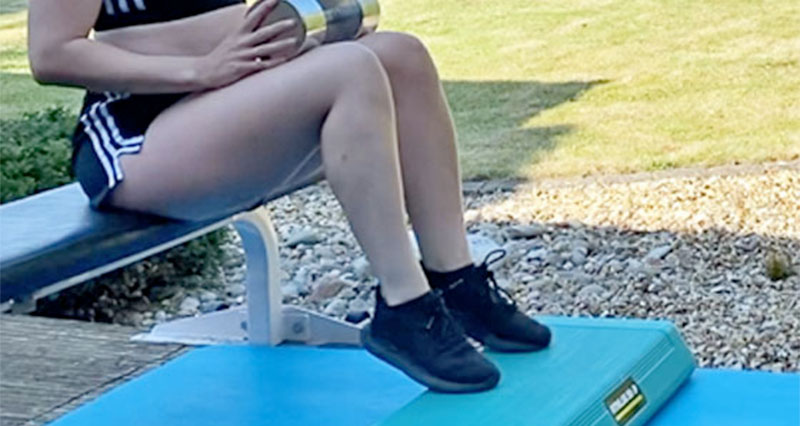
- Perform single-leg calf raises without discomfort
- Jog and run without symptoms
- Match the strength of the uninjured leg
- Complete jumping, sprinting and sport-specific drills pain-free
Returning too early is one of the most common causes of calf strain recurrence. Following a structured rehabilitation programme helps ensure a safe return to full activity and reduces the risk of re-injury.
When to start rehabilitation exercises
Our full calf strain rehabilitation program begins with initial treatment immediately following injury. Basic exercises begin once you can walk without significant pain and and swelling has started to settle.
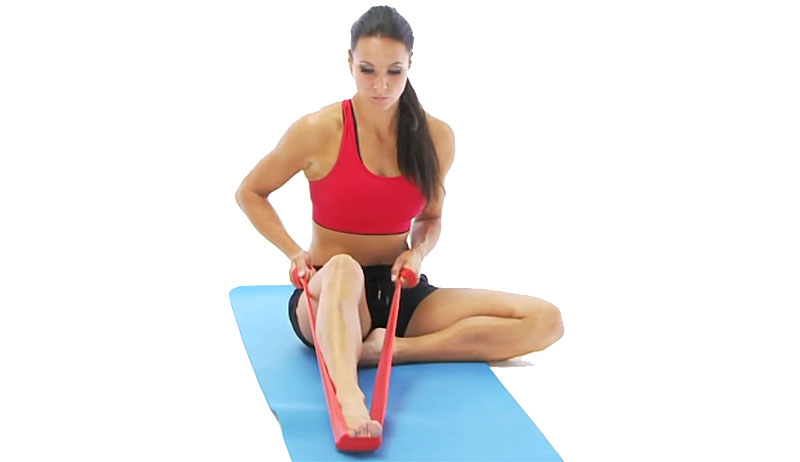
Start with gentle mobility and light activation exercises. As your symptoms improve, you gradually progress to strengthening, loading, and eventually running.
Progressing too quickly can delay recovery, but doing too little also slows healing. Following a structured, criteria based, step-by-step approach helps ensure you return to full activity safely and reduces the risk of re-injury.
Learn more about our calf strain rehabilitation program.
Calf strain references & research
- Koulouris G, Ting AYI, Jhamb A et al. Magnetic resonance imaging findings of injuries to the calf muscle complex. Keletal Radiol 2007;36:921-7
- Orchard J, Alcott E, James T, et al. Exact moment of a gastrocnemius muscle strain was captured on video. Br Journal Sports Med 2002;36:222-3
- Kwak HS, Han YM, Lee SY, et al. Diagnosis and follow-up US evaluation of ruptures of the medial head of the gastrocnemius (‘tennis leg’). korean J radiol 2007;7(3):193-8