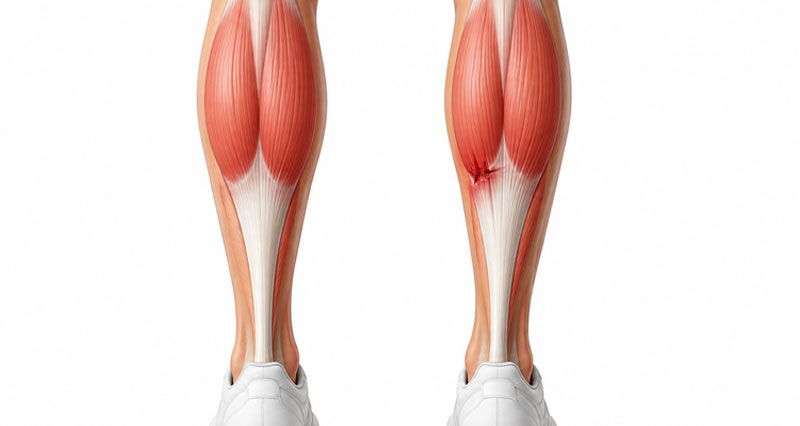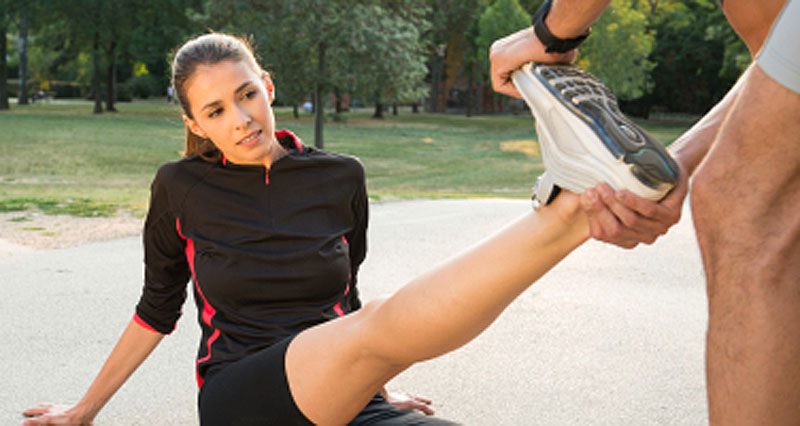
A calf cramp is a sudden, involuntary contraction of the calf muscles. It can be extremely painful and may last from a few seconds to several minutes. Although most cramps settle quickly, severe or repeated episodes can leave the muscle sore for several days afterwards.
Calf cramps are common during exercise, particularly towards the end of a long run, hard training session, or competitive match when the muscles become fatigued.
On this page:
Cramp symptoms
Common symptoms of a calf muscle cramp include:
- Sudden, intense pain in the back of the lower leg.
- The calf muscle becoming hard, tight and visibly contracted.
- Difficulty walking or putting weight on the leg during the cramp.
- Ongoing soreness or tenderness after the cramp has settled.
- In severe cases, a cramp may contribute to a minor calf muscle strain.
The calf muscles consist of the gastrocnemius and soleus muscles, both of which can be affected.
What causes cramp in the calf muscles?
The exact cause of muscle cramps is not fully understood. Research suggests they are most likely related to muscle fatigue and changes in the way nerves control the muscle during prolonged or intense exercise.
Factors which may increase the risk of calf cramps include:
Muscle fatigue
The most common trigger for exercise-related cramps is muscle fatigue. This is why cramps often occur towards the end of a race, match or hard training session. Low carbohydrate levels increase the risk of muscle fatigue.
Tight calf muscles
Reduced calf flexibility or tight calf muscles may increase the risk of cramping, particularly if the muscles are repeatedly overloaded.
Training errors
Increasing training volume or intensity too quickly can overload the calf muscles and make cramping more likely.
Dehydration and electrolyte imbalance
Although dehydration and loss of electrolytes such as sodium may contribute in some situations, they are not thought to be the sole cause of most exercise-related cramps.
Poor conditioning
Athletes returning from injury or those with inadequate calf strength and endurance may be at greater risk.
Can cramp cause a calf strain?
Occasionally, a severe cramp can contribute to a calf muscle strain. The force generated during an involuntary contraction may place excessive stress on the muscle fibres.
If you continue to experience pain, swelling, bruising or difficulty walking after a cramp, you may have suffered a calf strain and should follow appropriate treatment and rehabilitation advice.
View Calf strain rehabilitation program
Treatment
During the cramp
If you experience a calf cramp during exercise:
- Stop activity immediately.
- Gently stretch the calf muscles by pulling the toes upwards towards the shin.
- Massage the muscle gently if comfortable.
- Walk around once the cramp begins to ease.
- Replace fluids if you have been exercising for a prolonged period.
After the cramp
If the calf remains sore:
- Gentle stretching can help restore normal muscle length.
- Light massage may help reduce muscle tightness.
- Foam rolling can help improve flexibility and reduce muscle tension.
- Avoid intense exercise until soreness has settled.
Preventing calf cramps
You may be able to reduce the risk of calf cramps by:
- Gradually increasing training loads.
- Improving calf strength and endurance.
- Stretching tight calf muscles regularly.
- Maintaining adequate hydration during prolonged exercise.
- Replacing fluids and electrolytes during long events in hot conditions.
- Following an appropriate recovery programme after hard training sessions.
When should I seek medical advice?
Seek medical advice if:
- You suffer frequent or unexplained cramps.
- Cramps regularly disturb your sleep.
- Symptoms are getting worse.
- You develop swelling, weakness, numbness or persistent pain.
- You suspect a calf strain or other injury.
A physiotherapist or sports therapist can assess muscle tightness, strength deficits and training factors that may be contributing to recurrent cramps.
Recommended products
We recommend the following products from our commercial partners (Amazon) for helping with recovery from a Calf contusion:
- Cold therapy wrap: One of the most important treatments during the first 48 hours. Helps reduce pain, bleeding and swelling within the injured muscle.
- Compression calf support: Provides gentle compression to help control swelling and support the calf during the early stages of recovery.
- Foam roller: Useful later in rehabilitation to improve muscle flexibility and reduce tightness once the acute injury phase has passed.
- Massage ball: Helps target specific areas of muscle tightness and trigger points as healing progresses.
- Resistance bands: Ideal for rebuilding calf strength and progressing rehabilitation exercises before returning to sport.
- Electrolyte tablets or drink: Useful during long training sessions, endurance events, or exercise in hot conditions.
- Heat therapy: Can help relax tight muscles and improve flexibility once swelling and acute pain have settled.
- Kinesiology tape: May provide support, improve confidence during activity and help manage symptoms during the return to sport phase.