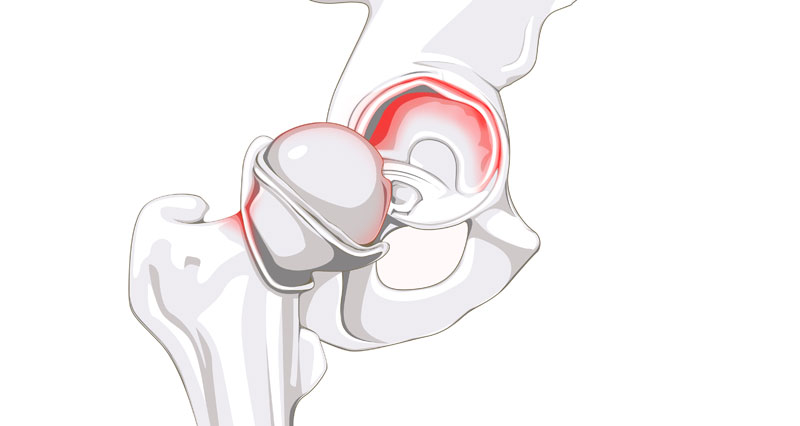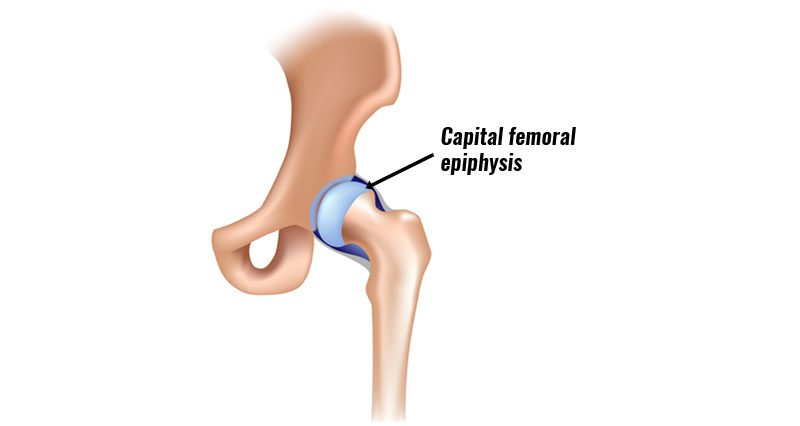
A slipped capital femoral epiphysis occurs when there is a fracture at the neck or top of the thigh bone causing hip pain. It is more common in boys aged 11 to 16 years old and usually develops gradually but can occur suddenly. Failure to recognise this injury may cause long-term damage and surgery may be required.
Symptoms of a slipped capital femoral epiphysis
- A slipped capital femoral epiphysis is more likely to affect older children between the ages of 12 and 15 years.
- Symptoms consist of pain in the hip and groin which can radiate into the knee.
- Pain is likely to have developed gradually over time, but can also occur suddenly.
- It is likely the young athlete will walk with a limp.
- When examined, a doctor or therapist may find one leg is shorter than the other and may be rotated outwards slightly.
- The patient will have limited ability to abduct the leg (move it out to the side) and rotate it inwards compared to the other leg. So when they attempt to move their leg out to the side, it will have a natural tendency to rotate outwards because of limited mobility.
- An X-ray will be done to confirm the diagnosis and will show a thickening of the epiphysis (growth plate).

What is a Slipped capital femoral epiphysis?
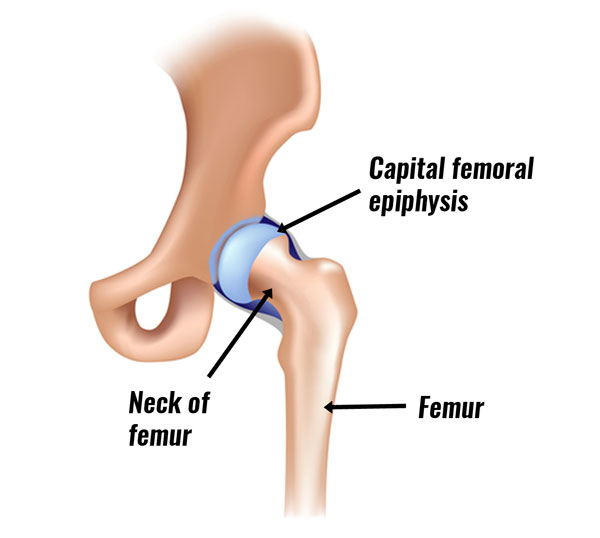
The epiphysis is the area of the bone that ‘does the growing’ in children and adolescents. It is sometimes called the growth plate. A slipped capital femoral epiphysis is a fracture or slipping of the bone which occurs at the growth plate.
It is not a particularly common condition but does typically affect boys aged twelve to fifteen years old. It may be brought on by sports activity. Athletes who are overweight and late-maturing are also more prone to suffering injury because of the additional stresses and strains on the growing bones.
It is very important to consider a slipped capital femoral epiphysis in young athletes because if it is not recognised and treated it can lead to more serious, long-term problems. In particular, a decrease in blood flow to the head of the Femur will result in bone dying (avascular necrosis), and so should be addressed as soon as possible.
Growing pains
Elite physiotherapist Neal Reynolds explains growing pains in children.
Treatment of a slipped capital femoral epiphysis
- If you suspect this is the cause of hip pain then seek medical attention as soon as possible.
- An acute, sudden-onset injury is a medical emergency requiring immediate surgery.
- A slipped capital femoral epiphysis that develops gradually may also require surgery.
- Failure to treat this injury may lead to the death of the head of the femur and permanent injury or disability.
If you suspect a slipped capital femoral epiphysis then X-rays will need to be taken to confirm the diagnosis and assess how bad the injury is.
Surgery
Surgery involves fixing the head of the femur with pins or a screw, followed by a period of immobilisation. A full rehabilitation program is required. This will gradually progress the patient to full weight-bearing. Eventually, exercises to restore full strength and movement in the hip will be needed.