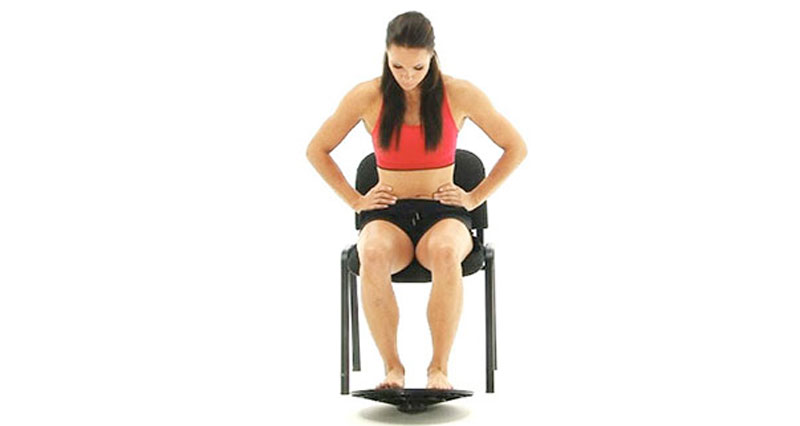
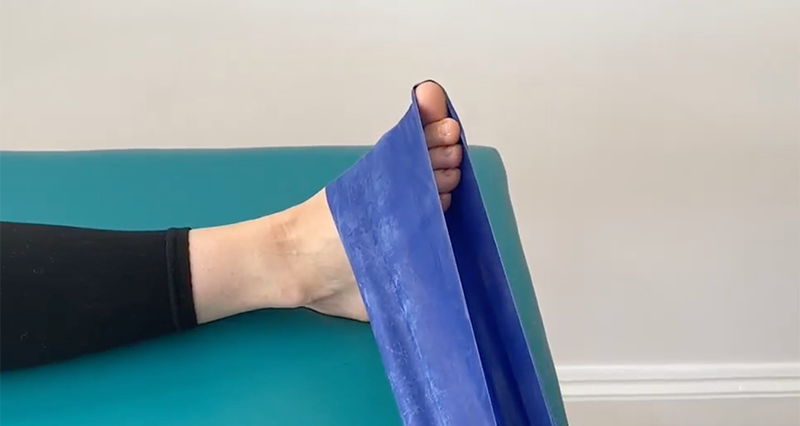
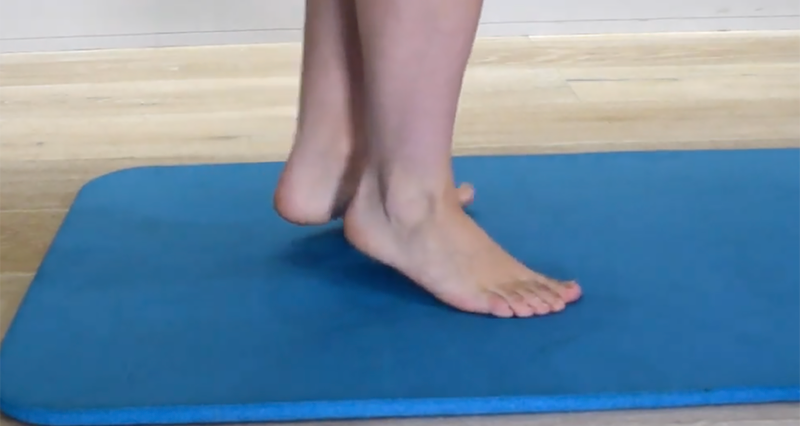
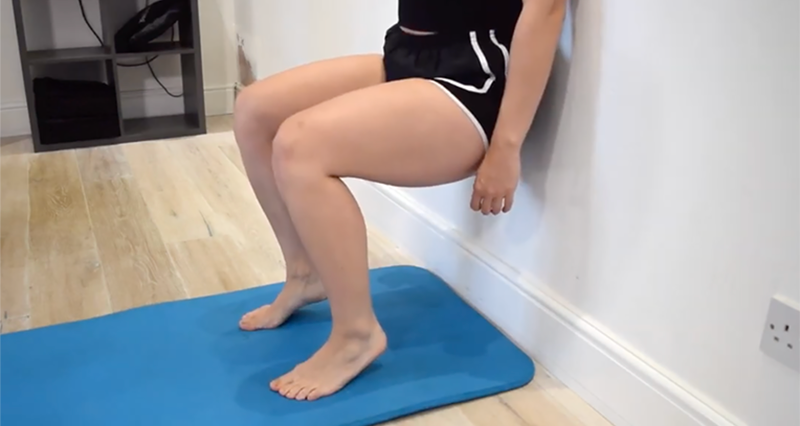
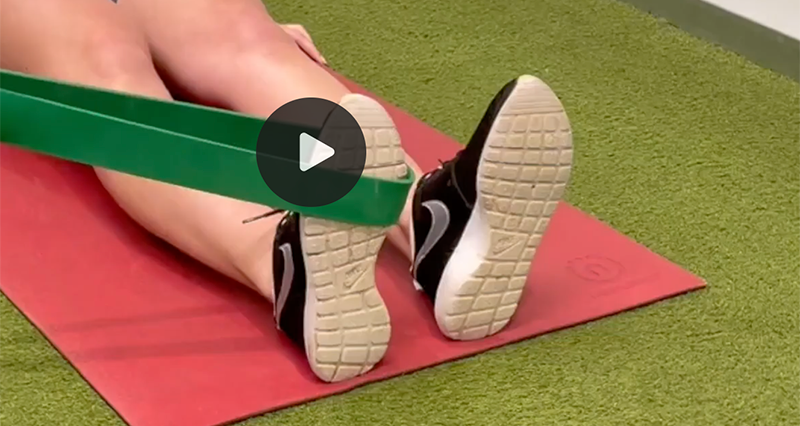
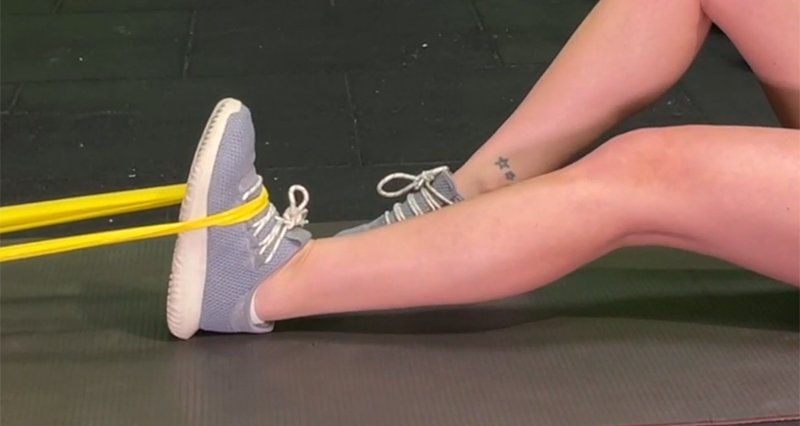
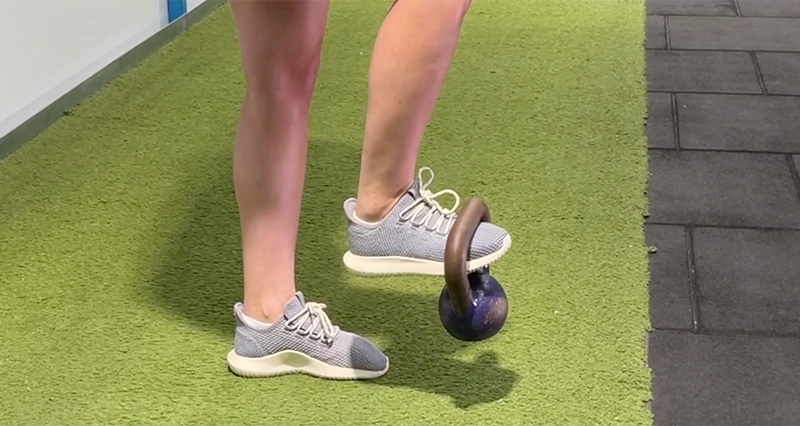
Isometric ankle exercises are strengthening exercises performed without movement at the joint. They involve holding a muscle contraction to improve stability and activate the muscles around the ankle without placing excessive stress on the joint.
These exercises are commonly used in the early stages of rehabilitation when movement may be limited but muscle activation and control are needed.
How to perform isometric ankle exercises
- Sit or stand with your ankle in a neutral position.
- Apply gentle resistance against your foot using a partner or fixed resistance.
- Push against the resistance without allowing the ankle to move.
- Hold the contraction for 5–10 seconds.
- Relax and repeat for the required number of repetitions.
- Perform in different directions, including dorsiflexion, plantar flexion, inversion and eversion.
Key points
- Do not allow the ankle to move
- Keep the contraction controlled, not maximal
- Avoid pushing into pain
- Breathe normally during the hold
- Build intensity gradually
What are isometric ankle exercises?
Isometric exercises involve contracting a muscle without changing its length or moving the joint. They are useful in rehabilitation as they allow strengthening without placing excessive load on healing tissues.
Depending on your stage of recovery, you may work the ankle in different directions:
- Dorsiflexion (pulling the foot up)
- Plantar flexion (pushing the foot down)
- Inversion (turning the foot inward)
- Eversion (turning the foot outward)
In early rehabilitation, certain movements may be limited depending on the injury. For example, inversion and eversion may be restricted after an ankle sprain to avoid stressing healing ligaments.
This exercise forms part of our plantar fasciitis and ankle sprain rehabilitation programs, helping to restore strength and stability before progressing to more dynamic exercises.