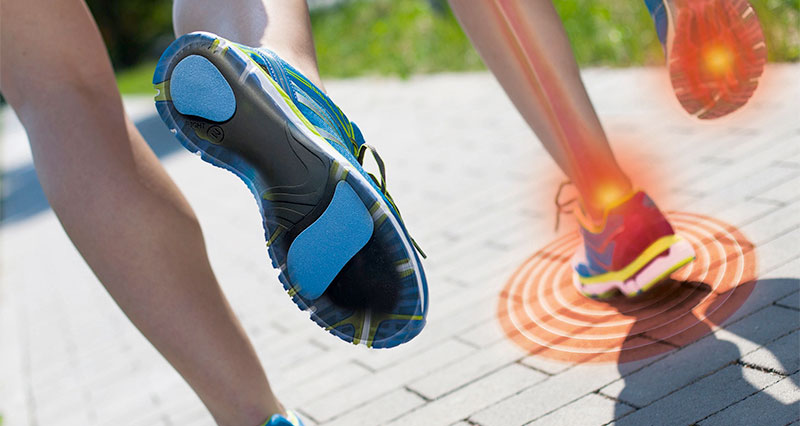
Calf pain from running is common and can come on suddenly or develop gradually over time. It may be caused by muscle strain, cramp, or more serious conditions such as compartment syndrome or stress fractures.
Recognising the cause of your symptoms is important so you can manage the problem correctly and avoid making it worse.
Chronic calf pain when running
Chronic calf pain develops gradually over time. You may not notice a specific point when it began. It often results from overuse or an injury that has not fully healed. Common causes include chronic compartment syndrome and tight calf muscles.
Acute calf pain from running
Acute calf pain from running comes on suddenly. You will usually feel the exact moment it happens and may have to stop immediately. Common causes include calf strains, contusions, and cramps.
Most common causes of running calf pain
The following are some of the most common causes of calf pain in runners:
Calf strain
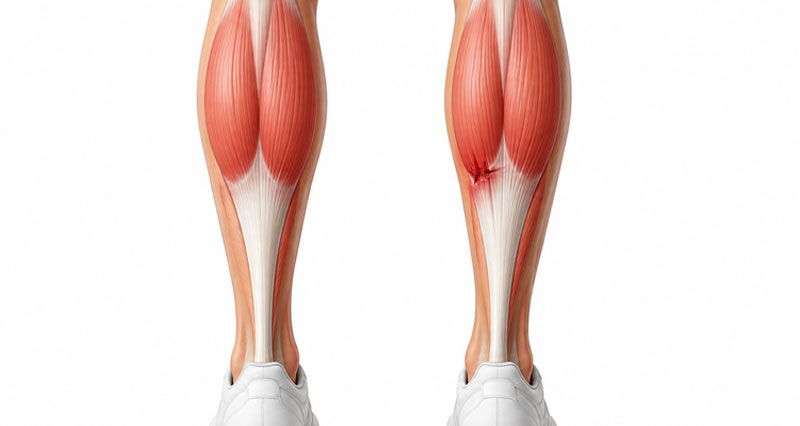
A calf strain (torn calf muscle) is the most common cause of sudden calf pain when running. Symptoms include:
- Sudden sharp pain at the back of your lower leg
- Often in the middle of your muscle at the point where the big gastrocnemius muscle connects to the Achilles tendon
- Tenderness at the point of injury.
- Swelling and/or bruising, depending on the type and severity of your injury.
Treatment consists of applying immediate cold therapy and compression and rest, followed by a full calf strain rehabilitation program.
Cramp
A cramp is a sudden, painful, involuntary contraction of the calf muscle that can cause pain during or after running.
Symptoms include:
- Sudden tightening or spasm in the calf
- Often occurs towards the end of a hard training session or shortly after
- Common causes include dehydration and low energy levels. Immediate treatment is to stretch the muscle to relieve the spasm.
Read more on cramp in the calf muscles
Compartment syndrome
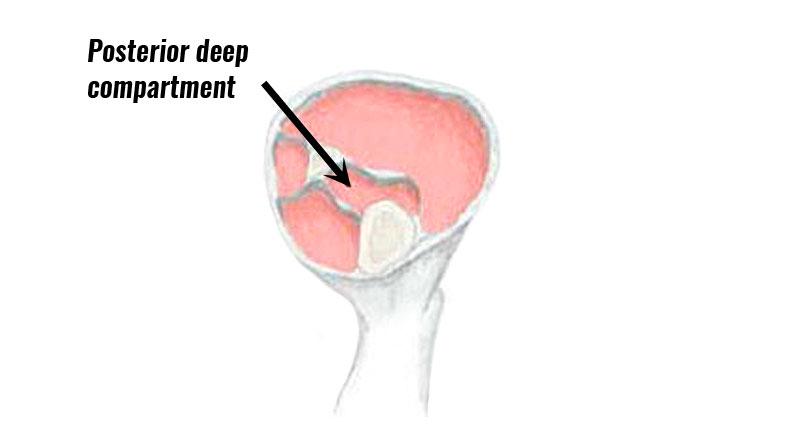
Chronic posterior compartment syndrome is a gradual-onset cause of calf pain when running. It occurs when pressure builds within the muscle during exercise.
Symptoms include:
- Deep aching pain or tightness in the back of the lower leg during running, which eases with rest
- Pain that often starts at the same point in a run and gradually worsens
In some cases, compartment syndrome can occur suddenly following trauma. Acute cases are medical emergencies and require urgent assessment.
Treatment may include:
- Surgery in severe or persistent cases
- Relative rest, such as reducing running volume or switching to cycling or swimming
- Ice and compression for up to 20 minutes at a time
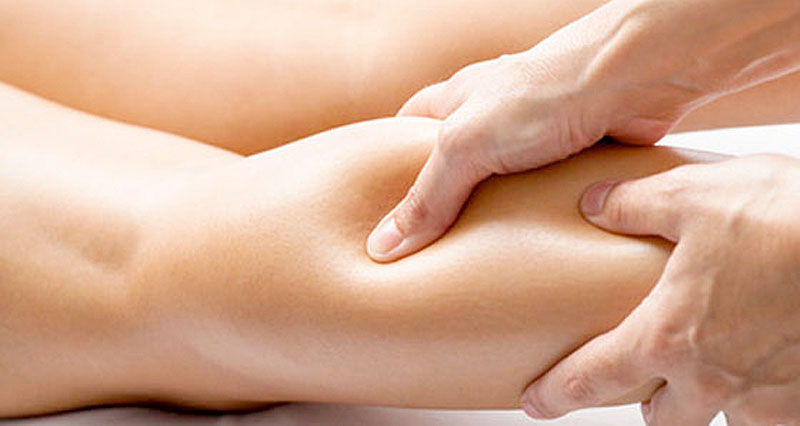
- Soft tissue treatment to reduce tightness
- Gait analysis and orthotics, if needed
Read more on chronic posterior compartment syndrome
Tight calf muscles
Tight calf muscles are a common cause of discomfort when running and can increase the risk of injury.
Symptoms include:
- Gradual tightening or stiffness in the calf
- Pain that may improve during a run but return afterwards
- Tender or tight areas within the muscle
A physiotherapist may assess calf flexibility and muscle tightness using specific tests.
Ways to improve tight calf muscles include:
- Stretching exercises
- Sports massage or soft tissue work
- Using a night splint if needed
Read more on tight calf muscles
Fibula stress fracture
A fibula stress fracture is a rare but important cause of calf pain in runners. It is an overuse injury where repeated stress leads to a small crack in the fibula bone on the outside of the lower leg.
Symptoms include:
- Pain in the lower leg, often towards the outside
- Pain when weight-bearing
- Calf pain that worsens with running
Read more on Fibula stress fracture
Deep vein thrombosis
Deep vein thrombosis (DVT) is a serious condition and should always be considered as a possible cause of calf pain.
A DVT is a blood clot in a deep vein, most commonly in the calf. It can occur after long periods of inactivity, such as long flights, or following surgery.
Symptoms include:
- Constant pain in the calf
- Tenderness deep within the muscle
- Swelling in the lower leg
- Warmth in the affected area
- Red or discoloured skin
If you suspect a DVT, seek urgent medical advice. Do not attempt to exercise or run.
External links:
- Buy Men’s running shoes & Women’s running shoes at Sportlink.co.uk (UK)
- Buy replacement running spikes at UPMedical.co.uk
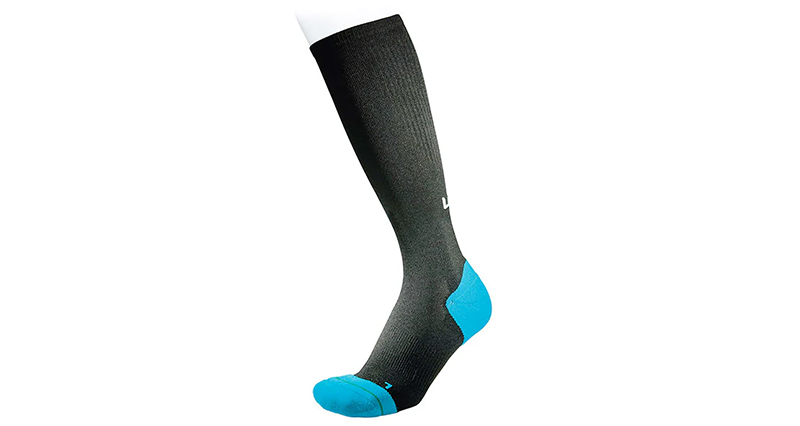
- Compression Running Support Socks at 1000Mile.co.uk