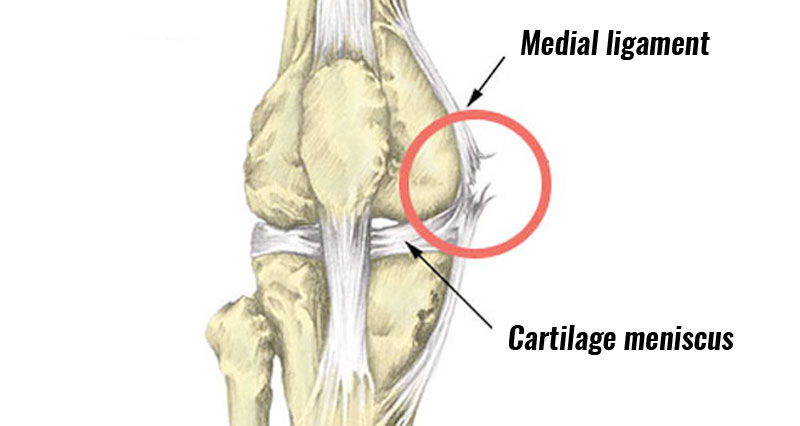
An MCL sprain is diagnosed using specific clinical tests that assess pain, stability, and movement in the knee. The most common is the valgus stress test, which helps determine the severity of the injury.
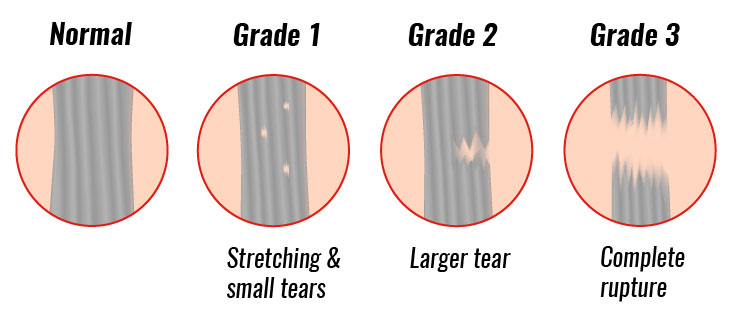
MCL sprains are graded from 1 to 3 depending on the extent of ligament damage and joint instability.
Medically reviewed by Dr Chaminda Goonetilleke, 13th Dec. 2021
MCL sprain grading
A grade one injury is a mild sprain, grade two injuries are moderate, and grade three injuries are severe. Grade 3 sprains often involve a complete tear of the ligament.
MCL sprains are classified into three grades based on severity:
Grade 1
If you have a grade 1 MCL sprain, you may have mild tenderness on the inside of your knee, but not usually any swelling.
You are likely to be able to walk or even run with minimal symptoms, but not at 100%. However, you will likely experience discomfort.
When the valgus stress test is performed, your knee feels stable with a hard ‘end feel’ and no joint laxity.
You will have minimal movement in the joint, but some degree of pain from the ligament.
Grade 2
Grade 2 injuries are usually associated with significant tenderness and pain on the inside of your knee.
You will likely have some swelling, especially on the inside of your knee.
The valgus stress test will usually reproduce symptoms and you may have some degree of laxity (excess movement) in your knee. However, there will be a definite endpoint as the ligament is not completely ruptured.
Grade 3
Grade 3 injuries involve a complete (or near-complete) tear of the ligament.
Pain levels can sometimes vary and it may feel less painful than a grade 2 MCL sprain. The reason for this is that the nerves supplying pain signals have also ruptured.
You will have significant swelling and may feel that you have a very wobbly or unstable knee.
Assessment tests, such as the valgus stress test, will show significant movement in the joint (laxity). The test will probably not have a definite endpoint when the medial ligament is stressed, as there is no ligament stopping the movement.
A grade 3 MCL injury often occurs with other injuries in the knee at the same time, such as an ACL sprain.
If you suspect a grade three sprain, then seek medical advice immediately. You may require surgery or a long period of immobilisation. Rehabilitation will be similar to that of a grade 2 sprain.
Valgus stress test (play video)
The valgus stress test is a diagnostic test used in cases of suspected MCL injury. The therapist holds the leg with the knee slightly bent (approximately 30 degrees). They stabilise the thigh while applying outward pressure to the lower leg (tibia), which stretches the medial ligament.
Pain on the inside of the knee and/or excessive movement (laxity), with an altered end feel in the ligament, indicates a positive test. A positive result suggests injury to the medial collateral ligament. The degree of damage can then be determined by how much movement and instability are present.