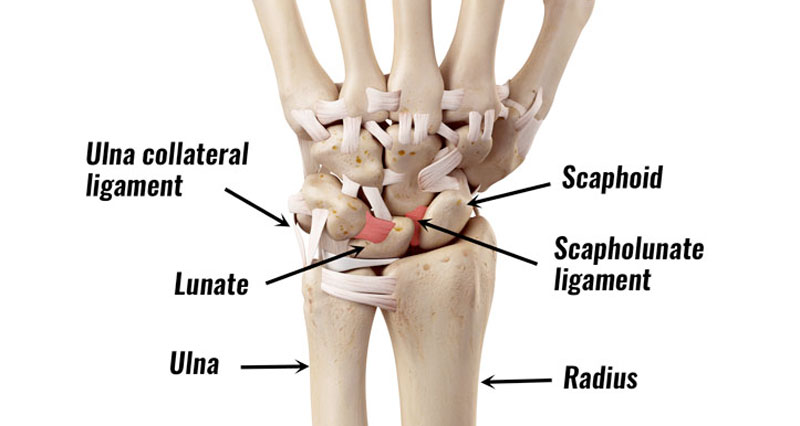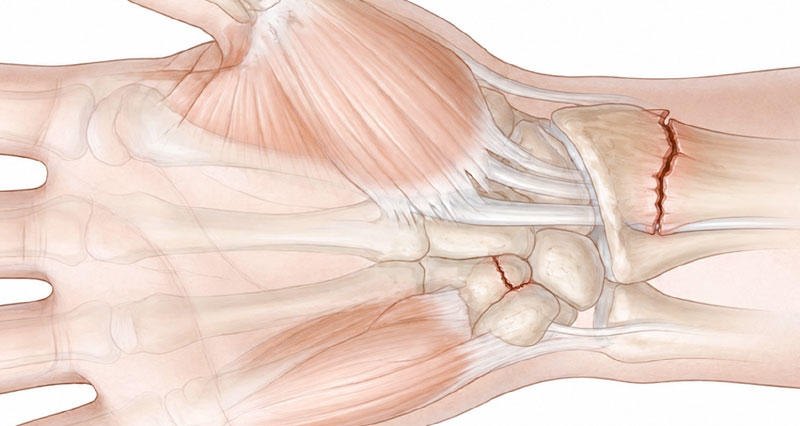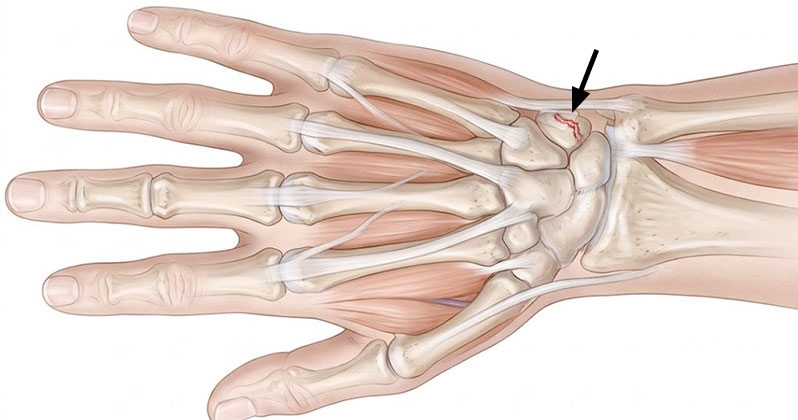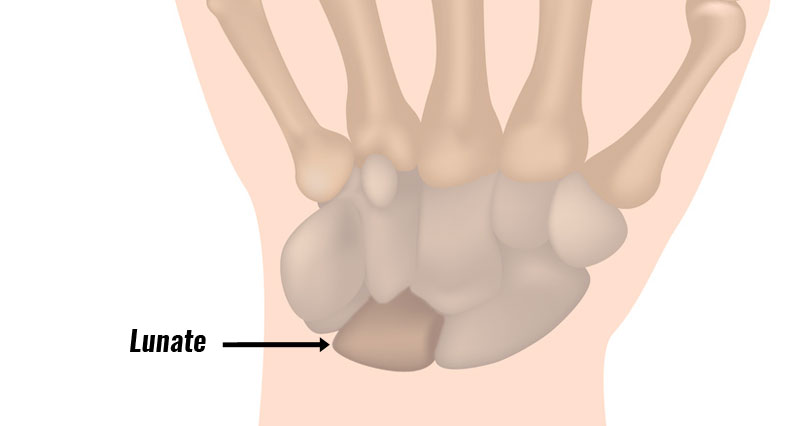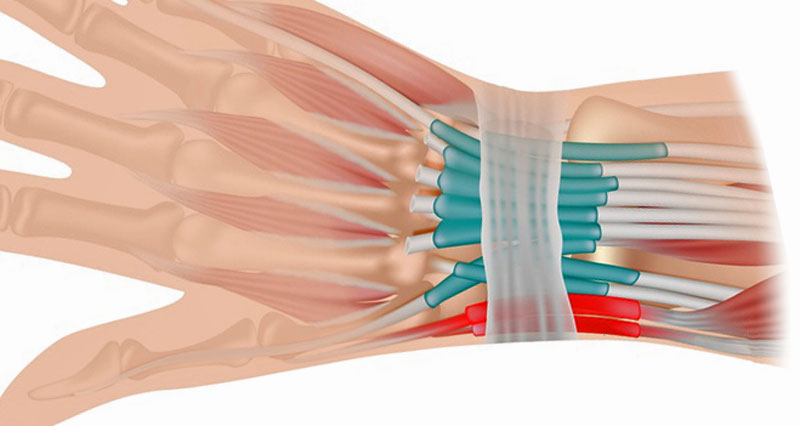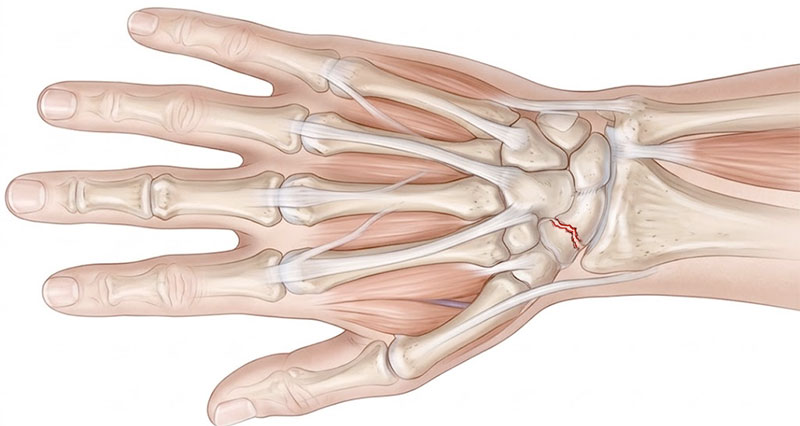
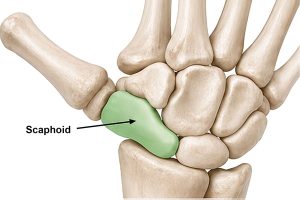
A scaphoid fracture is a break in one of the small wrist bones, usually caused by a fall onto an outstretched hand. It is one of the most commonly missed wrist injuries. If not treated properly, it can lead to long-term pain and arthritis.
On this page:
Scaphoid fracture symptoms
- Pain on the thumb side of the wrist
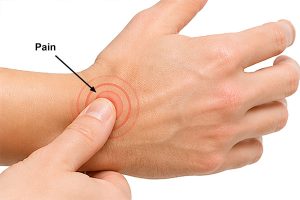
- Tenderness in the anatomical snuffbox
- Pain when gripping or squeezing
- Swelling is often mild or absent
ADVERT
What is the anatomical snuffbox?
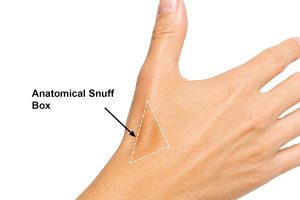
The anatomical snuffbox is a small hollow on the thumb side of your wrist.
To find it:
- Hold your hand out in front of you
- Lift your thumb up and away from your hand (like a “thumbs up”)
- You’ll see a small triangular dip just below the base of the thumb
That dip is the anatomical snuffbox. Pain when pressing firmly in this area is a key sign of a possible scaphoid fracture.
Imaging
A scaphoid fracture may show up on an X-ray, but not in all cases. It is the most common missed fracture resulting in legal claims. A CT scan is better for a recent acute injury if this type of fracture needs to be ruled out. An MRI scan is also suitable, however, a scaphoid fracture may not show up during the first 24 hours following injury.
ADVERT
Important: A fracture may not be visible on imaging within the first 24 hours. If symptoms persist, repeat imaging is often required.
Do I have a scaphoid fracture?
Answer the questions below to assess your risk.
Scaphoid fracture treatment
Initial treatment
If you suspect a scaphoid fracture, apply ice, immobilise the wrist and seek medical assessment as soon as possible. An X-ray is usually performed first, but scaphoid fractures are commonly missed on early imaging.
If your doctor suspects a fracture but the X-ray is normal, you should still be treated as a fracture. Further imaging is often required.
Recovery
Treat stable fractures with immobilisation in a cast or splint for around 6–8 weeks. The cast usually extends from below the elbow and includes the base of the thumb to limit movement.
After this, the wrist is reassessed and rehabilitation begins to restore movement and strength. A gradual return to activity is important.
Scaphoid fractures heal slowly due to a limited blood supply and may take longer than other wrist injuries.
Do I need Scaphoid fracture surgery?
Scaphoid fractures have a risk of not healing due to a limited blood supply. If the bone fails to heal (non-union), further immobilisation may be tried for a short period. However, prolonged casting beyond this is unlikely to be effective, and therefore, surgery is often recommended.
Also, in some cases, surgeons may choose to operate earlier rather than risk delayed healing.
Why this matters
The scaphoid plays a key role in normal wrist movement. If it does not heal properly, it can disrupt the smooth motion of the wrist.
Over time, this may lead to:
- Persistent pain
- Stiffness
- Progressive joint damage
- Post-traumatic arthritis
- Types of surgery
Percutaneous screw fixation
A minimally invasive technique where a screw is inserted through a small incision to stabilise the bone.
This allows faster recovery and is often preferred for:
- Recent acute fractures
- Athletes
- Patients wanting a quicker return to activity
Open surgery and bone grafting
If the fracture does not heal or the bone collapses, more complex surgery may be required.
This can involve:
- Fixation with a screw or plate
- Bone grafting (using bone from elsewhere in the wrist)
- What happens if it is missed?
Scaphoid fractures are commonly misdiagnosed as wrist sprains because they may not show on early X-rays. If untreated, the bone fails to heal, leading to long-term wrist problems.
Recommended products
We recommend the following products from our commercial partners (Amazon) for helping with recovery from a Scaphoid fracture:
- Wrist support: Provides stability, reduces pain and helps confidence when coming out of the cast. Use for 1–3 weeks, then gradually reduce.
- Therapy putty or hand exerciser: Rebuilds grip strength and targets muscles weakened during immobilisation. One of the most effective rehab tools.
- Hand exerciser/grip strengthener: Allows progressive resistance training and helps with return to sport-specific activity.
- Resistance bands: Used for wrist flexion, extension and radial deviation to restore full strength, not just grip.
- Cold therapy pack & Gel: Useful in the early rehab phase to reduce pain and control inflammation after exercise.
- Heat therapy: Helps reduce stiffness once swelling has settled and is useful before mobility exercises.
References & further reading
- Dekker R, Groothoff JW, van der Sluis CK et al. Long-term disabilities and handicaps following sports injuries: outcome after outpatient treatment. Disabil Rehabil 2003;25(20): 1153–7.
- Matzkin E, Singer DI. Scaphoid stress fracture in a 13-year-old gymnast: a case report. J Hand Surg Am 2000;25(4):710–3.
- Banks LN, Trail IA. Local vascular bone graft reconstruction. In: Trail IA, Fleming ANM, eds. Disorders of the Hand. London: Springer, 2015:153–60.