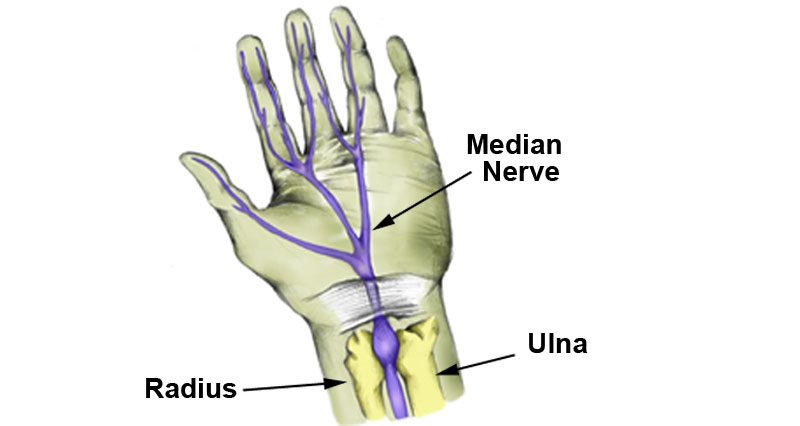
Carpal tunnel syndrome causes pain, numbness, pins and needles in the hand and wrist due to compression of the median nerve as it passes through the carpal tunnel at the wrist.
ADVERT


Carpal tunnel syndrome symptoms
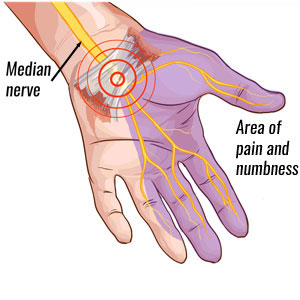
- Pins and needles in the thumb, index and middle fingers
- Numbness in the hand, especially at night
- Burning or tingling pain in the wrist or forearm
- Weak grip strength
- Dropping objects
- Symptoms often worsen with typing, gripping or repetitive hand movements
Symptoms of carpal tunnel syndrome usually develop gradually over time and may initially only be present at night. They occur in just one hand only (usually the dominant one), or both at the same time. Symptoms are three times more common in women, probably because they generally have a smaller carpal tunnel.
The little finger is usually unaffected because it is supplied by a different nerve.
When to seek urgent medical advice
Seek medical attention if you have:
- Loss of hand function
- Constant numbness
- Significant hand weakness
- Muscle wasting at the base of the thumb
- Carpal tunnel symptoms following a wrist fracture or acute injury
ADVERT


Carpal tunnel assessment & diagnosis
Specific clinical tests help identify irritation of the median nerve in the carpal tunnel.
Phalen’s test for Carpal tunnel syndrome
Carpal tunnel self test: Bend both wrists fully and press the backs of the hands together for 60 seconds. Tingling or numbness in the thumb, index or middle fingers suggests irritation of the median nerve.
Tinel’s sign
A clinician taps over the median nerve at the wrist. Tinel’s sign is positive if you feel tingling or electric-shock sensations in the fingers.
Imaging
Diagnosis is usually by clinical examination, however, the following tests may include:
What causes Carpal tunnel syndrome?
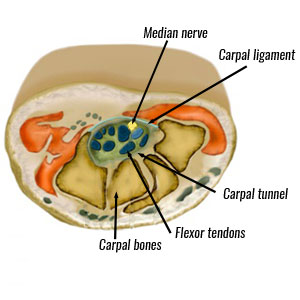
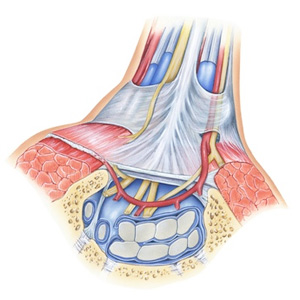
Compression of the median nerve in the wrist causes Carpal tunnel syndrome. The nerve and tendons of the flexor digitorum superficialis and flexor pollicis longus muscles pass through a narrow channel in the wrist called the carpal tunnel.
If the tunnel narrows, this creates pressure on the nerve. It may occur for a number of reasons:
- Traumatic wrist injuries such as wrist sprains and broken wrists
- Repetitive strain injury or RSI caused by overuse of the wrist
- Pregnancy which causes fluid retention in the wrist
- Use of vibrating machinery which may cause damage or inflammation to the soft tissues
- It may be congenital meaning some people naturally have a smaller, narrower carpal tunnel
- Arthritis
- Medical conditions such as diabetes
Sleeping with carpal tunnel syndrome
Carpal tunnel syndrome symptoms are often worse at night, causing numbness, tingling or pain which may wake you up. Avoid sleeping with the wrists bent or underneath your body, as this increases pressure on the median nerve. Wearing a night splint helps keep the wrist in a neutral position and may reduce symptoms. Many people find temporarily shaking or hanging the hand out of the bed helps relieve symptoms.
ADVERT
Carpal tunnel syndrome treatment
initial treatment is usually conservative (non-surgical) aimed at reducing pressure on the median nerve and relieving symptoms.
Active rest
Rest from activities which trigger symptoms or make them worse. This may include typing, DIY, gripping activities or racket sports. If you are an athlete, use this opportunity to work on another aspect of your game or maintain fitness with aerobic exercise.
Carpal tunnel wrist splint
Wear a wrist splint support or brace. Choose one with a solid spoon or splint in because this helps keep the wrist in a neutral position, reducing pressure on the median nerve whilst still allowing some hand function. Splints are often worn at night when symptoms are usually worse.
Ice/cold therapy
Cold therapy helps reduce pain and inflammation. Apply ice or a cold wrap for 10 minutes at a time, especially after activities which aggravate symptoms. A simple cold gel pack or wrap is ideal.
Medication
Your doctor may prescribe Anti-inflammatory medication such as ibuprofen to help reduce pain and inflammation. Additionally, medication to help reduce fluid retention may be beneficial in some cases.
Acupuncture
Some evidence shows Acupuncture improves carpal tunnel syndrome symptoms in some people. Acupuncture is inserting needles of various lengths and diameters into specific points over the body.
Injections
Corticosteroid injections can help reduce inflammation and pressure on the median nerve. If symptoms persist despite conservative treatment, surgery may be recommended.
Exercises for carpal tunnel syndrome
Exercises may help improve mobility, reduce nerve irritation and restore strength once pain and inflammation have settled. Treatment usually begins with gentle mobility and nerve gliding exercises before progressing to strengthening work.
Read more on Carpal tunnel syndrome exercises.
Surgery for Carpal tunnel syndrome
Consultant surgeon interview: Mr Elliot Sorene, Consultant Hand Surgeon discusses surgery for carpal tunnel syndrome.
When is surgery needed?
Milder cases can usually be treated successfully with wrist splints, physiotherapy, hand therapy, or steroid injections. However, severe cases causing loss of sensation, thumb weakness, difficulty gripping, or problems with fine hand movements may require surgery.
What is involved?
Carpal tunnel release surgery involves cutting the ligament compressing the nerve. It is usually performed through a small incision under local or general anaesthetic. Success rates are over 95%, with most patients recovering excellent hand function.
Recovery time
Usually carried out on an outpatient basis, the wound typically heals within two weeks. Although avoid heavy lifting for several more weeks.
Recommended products
We recommend the following products from our commercial partners (UPmedical.co.uk & Amazon) for helping with recovery from Carpal tunnel syndrome:
- Carpal Tunnel Wrist Splint: Keeps the wrist in a neutral position reducing pain and inflammation.
- Ergonomic Computer Mouse: An ergonomic computer mouse helps reduce strain on the wrist and median nerve by keeping the hand and wrist in a more natural, neutral position during computer use.
- Therapy putty or hand exerciser: Rebuilds grip strength and targets muscles weakened during immobilisation.
- Hand exerciser/grip strengthener: Allows progressive resistance training and helps with return to sport-specific activity.
- Resistance bands: Used for wrist flexion, extension and radial deviation to restore full strength, not just grip.
- Cold therapy pack & Gel: Useful in the early rehab phase to reduce pain and control inflammation after exercise.
- Heat therapy: Helps reduce stiffness once swelling has settled and is useful before mobility exercises.
References
- Dincer U, Caker E, Kiralp MZ, et al. The effectiveness of conservative treatments of carpal tunnel syndrome: splinting, ultrasound, and low-level laser therapies. Photomed Laser Surg 2009;27(1):119-25.
- Popescu S, Poenaru D, Galbeaza G, et al. Conservative treatment for carpal tunnel syndrome. Journal of clinical medicine 2008:249-53.