A Bennett’s fracture is a break and partial dislocation at the base of the thumb where the thumb metacarpal joins the wrist. It is a serious injury, similar to a Rolando fracture. Bennett fractures, like Rolando fractures are commonly caused by punching a hard object, or a forceful impact to the thumb. Without proper treatment, long-term problems with grip strength, pinching and thumb movement are common.
On this page:
ADVERT
Symptoms of a Bennett’s fracture
Symptoms usually come on immediately after injury and may include:
- Severe pain at the base of the thumb.
- Rapid swelling around the thumb and wrist.
- Bruising develops over the thumb side of the hand.
- Difficulty moving the thumb or gripping objects.
- Pain when pinching or trying to hold items.
- In more severe cases, the thumb appears deformed or out of position.
Because symptoms are similar to other thumb and wrist fractures, it is important to X-ray the wrist to confirm the diagnosis.
Diagnosis
A doctor or hand specialist examines the thumb and uses X-rays to confirm the fracture and amount of displacement. They may also use a CT Scan in more seerious injuries, for example if the Trapezium is also fractured.
What is Bennett’s fracture?

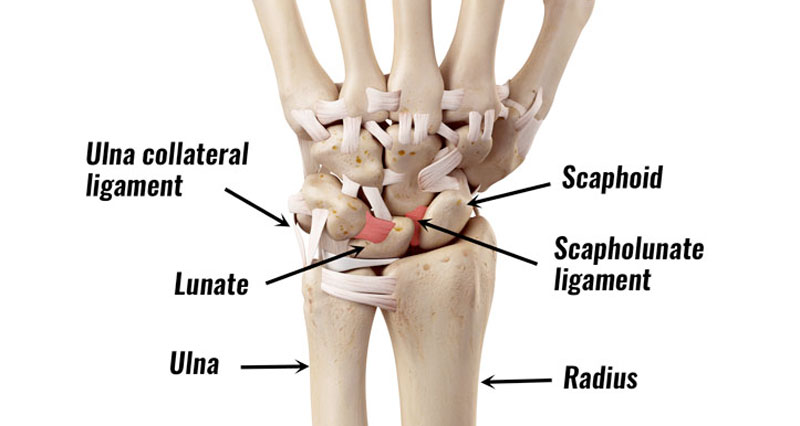
A Bennett’s fracture is a fracture-dislocation of the first carpometacarpal (CMC) joint at the base of the thumb. This is the joint where the metacarpal bone of the thumb meets the trapezium bone in the wrist and is similar to a Rolando fracture. However, a Rolando fracture is more severe because the bone is broken into several fragments rather than a single fracture line.
In a Bennett fracture, a strong ligament holds a small fragment of bone in place while the muscles of the thumb pull the main thumb bone out of position. This separates the fracture fragments, making the injury unstable. Doctors often need surgery to realign and secure the bones while they heal.
Why is it serious?
The thumb contributes to around 40–50% of overall hand function. If the joint heals in the wrong position it leads to:
- Weak grip strength.
- Pain when pinching.
- Reduced thumb mobility.
- Difficulty opening jars or holding objects.
- Early arthritis in the thumb joint.
- Long-term weakness and disability.
Pinching movements between the thumb and fingers are especially affected if the fracture is not treated correctly.
ADVERT
Treatment
If you suspect a Bennett fracture seek urgent medical attention immediately. Do not attempt to continue using your hand.
- Rest the hand immediately.
- Apply cold therapy to reduce pain and swelling.
- Support the thumb in a splint if possible.
- Avoid gripping or lifting.
Bennett’s fracture surgery
Expert interview: Mr Elliot Sorene MBBS FRCS (Tr & Orth) EDHS Consultant Orthopaedic, Hand & Upper Limb Surgeon talks about surgery for Bennett’s Fracture.
Most Bennett fractures require surgery because the fracture is unstable, therefore, bones are likely to displace or move.
Surgical treatment usually involves:
- Realigning the broken bone fragments.
- Holding them in position using pins, screws or wires.
- Immobilising the thumb while the fracture heals.
The aim is to restore normal joint alignment and reduce the risk of arthritis and long-term disability.
Recovery time
Recovery varies depending on the severity of the injury and whether you need surgery, however:
- Immobilisation is usually for 4 to 6 weeks.
- Hand therapy or physiotherapy is important afterwards.
- Strength and grip function may take several months to fully recover.
- Return to contact sport or heavy manual work may take 2 to 3 months or longer.
Trapezium fracture
A fracture of the trapezium bone sometimes occurs alongside a Bennett fracture. The trapezium is one of the small carpal bones in the wrist which forms part of the thumb joint.
Symptoms include:
- Pain deeper in the wrist below the thumb.
- Swelling around the thumb base.
- Pain gripping or pinching.
Read more on Trapezium fracture.
Recommended products for Bennett fracture recovery
We recommend the following products from our commercial partners (Amazon) for helping with recovery from a Scaphoid fracture:
- Cold therapy wrap: Helps reduce pain, swelling and inflammation during the first few days after injury or surgery. Most appropriate during the acute phase and after rehabilitation exercises if swelling develops.
- Arm sling: Supports and protects the injured wrist whilst waiting for medical treatment or during the early stages of recovery. Helps reduce strain on the fracture site.
- Wrist support: Provides stability, reduces pain and helps confidence when coming out of the cast. Use for 1–3 weeks, then gradually reduce.
- Compression wrist support: Helps reduce mild swelling and improve comfort during later-stage recovery. Best used once healing has progressed and movement exercises have started.
- Therapy putty or hand exerciser: Rebuilds grip strength and targets muscles weakened during immobilisation. One of the most effective rehab tools.
- Hand exerciser/grip strengthener: Allows progressive resistance training and helps with return to sport-specific activity.
- Resistance bands: Used for wrist flexion, extension and radial deviation to restore full strength, not just grip.
- Cold therapy pack & Gel: Useful in the early rehab phase to reduce pain and control inflammation after exercise.
- Heat therapy: Helps reduce stiffness once swelling has settled and is useful before mobility exercises.