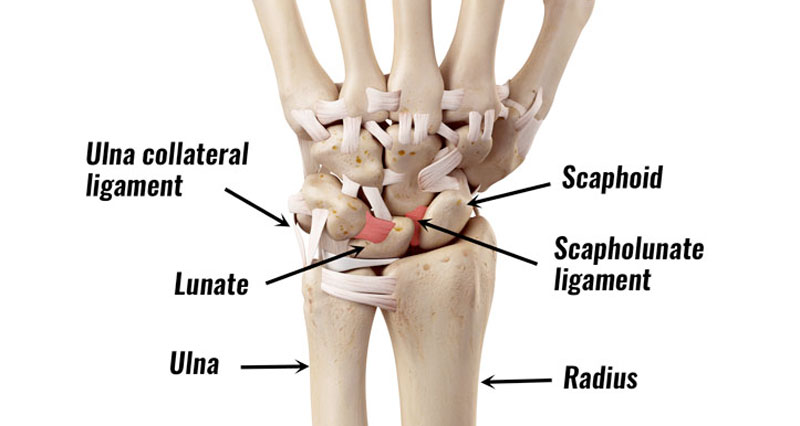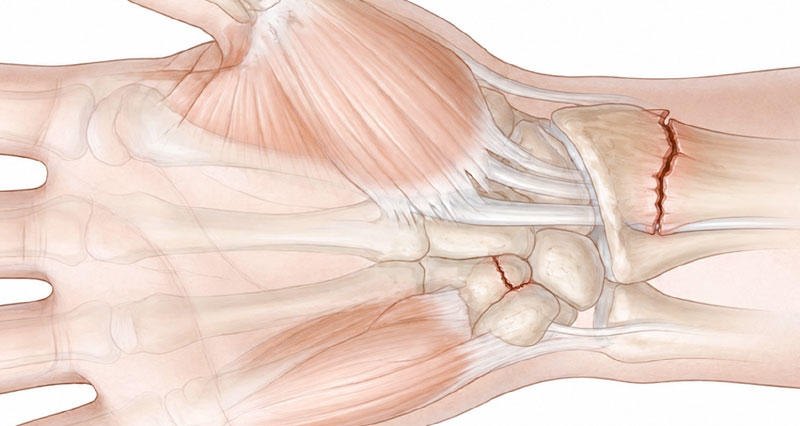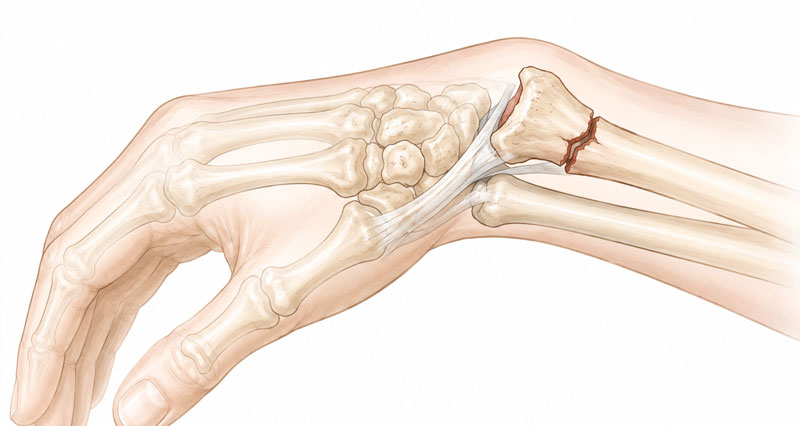
A Colles fracture is a common type of broken wrist involving a fracture of the radius bone near the wrist. It usually occurs after falling onto an outstretched hand and causes pain, swelling and deformity around the wrist. Seek medical attention immediately if you suspect a wrist fracture.
On this page:
ADVERT
Symptoms
Symptoms of a Colles wrist fracture consist of:
- Sudden severe wrist pain after a fall
- Rapid swelling around the wrist
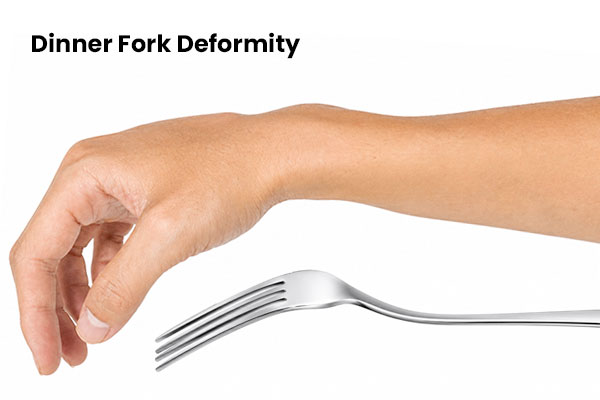
- Difficulty or inability to move the wrist A visible deformity (“dinner fork deformity”)
- Bruising and tenderness
- In severe cases, bone may pierce the skin (open fracture)
Diagnosis
A doctor will examine the wrist and arrange an X-ray to confirm the fracture. This also determines how far the bones have moved out of position.
A Colles fracture is defined as:
- A transverse fracture of the radius
- Occurring close to the wrist joint
- With upwards displacement of the broken fragment
What causes a Colles fracture?
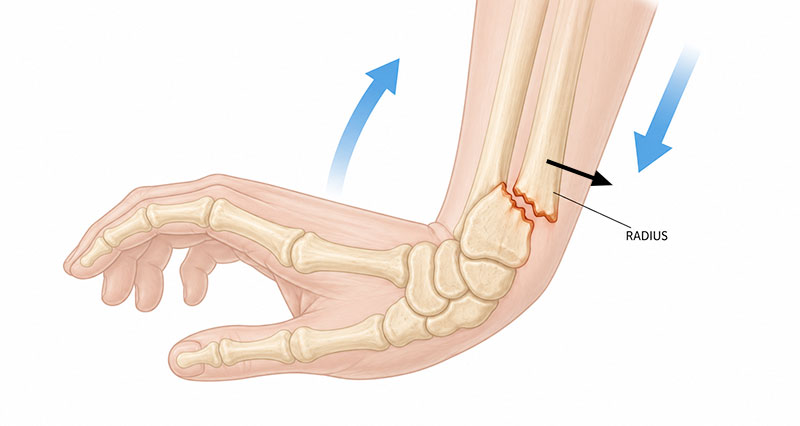
The most frequent cause of a Colles fracture is a fall onto an outstretched hand. This is especially common in older females who suffer from Osteoporosis where bones are weaker and fracture more easily.
Other injuries may occur at the same time, including:
- Fracture of the ulna bone
- Wrist ligament injuries
- Tendon damage
ADVERT
Treatment
If you suspect a wrist fracture then seek urgent medical attention immediately. Treatment depends on how severe the fracture is and whether the bones are displaced.
Casting
Simple fractures with little or no displacement are usually treated with a plaster cast for around 6 weeks. A temporary splint is sometimes applied first to allow swelling to settle.
Closed reduction
If the bones are slightly displaced, a doctor may manipulate them back into position before applying a cast. This is called a closed reduction.
Colles Fracture Surgery
Consultant surgeon interview: Mr Elliot Sorene, Consultant Hand Surgeon discusses surgery for a Colles fracture of the wrist.
Not all Colles fractures require surgery. Simple fractures which remain in a good position can often be treated successfully in a plaster cast.
However, surgery may be needed if:
- The broken bone fragments are badly displaced
- The fracture is unstable
- The bone is broken into multiple pieces (comminuted fracture)
- The fracture slips out of position after reduction
- The patient wishes to regain movement and function more quickly
Surgery usually involves realigning the broken radius and fixing it internally using a specially designed metal plate and screws. Modern locking plates provide very stable fixation, even in older patients with osteoporotic or weakened bone.
In the past, severe fractures were often treated using pins and plaster casts, or external fixators with metal frames outside the wrist. Modern plating techniques now mean many patients no longer require prolonged immobilisation in plaster after surgery.
One of the major advantages of surgical fixation is that rehabilitation can begin much earlier. Patients are usually encouraged to start moving their fingers almost immediately after the operation, helping to reduce stiffness in the wrist and hand.
Recovery time from Colles fracture surgery
Light day-to-day activities such as typing or eating are often possible within days. Driving may be possible after a couple of weeks depending on comfort and strength.
Most normal daily activities can usually resume after approximately 6 weeks, although full weight-bearing through the wrist and return to contact sports may take between 6 weeks and 3 months depending on the severity of the fracture and the demands of the activity.
Try our return to sport calculator for wrist injuries to determine if you are ready to go back to full training or competition.
Recommended products
We recommend the following products from our commercial partners (Amazon) for helping with recovery from a Scaphoid fracture:
- Wrist support: Provides stability, reduces pain and helps confidence when coming out of the cast. Use for 1–3 weeks, then gradually reduce.
- Therapy putty or hand exerciser: Rebuilds grip strength and targets muscles weakened during immobilisation. One of the most effective rehab tools.
- Hand exerciser/grip strengthener: Allows progressive resistance training and helps with return to sport-specific activity.
- Resistance bands: Used for wrist flexion, extension and radial deviation to restore full strength, not just grip.
- Cold therapy pack & Gel: Useful in the early rehab phase to reduce pain and control inflammation after exercise.
- Heat therapy: Helps reduce stiffness once swelling has settled and is useful before mobility exercises.