Wrist bursitis is inflammation of a small fluid-filled sac called a bursa. Bursae reduce friction where tendons, ligaments or skin move over bone. Bursitis is uncommon in the wrist, but can happen after repeated pressure, friction or trauma. It affects people who regularly load their wrists, such as cyclists, gymnasts, weightlifters or people who work with their hands.
On this page:
ADVERT


Wrist bursitis symptoms
Symptoms include:
- Wrist pain during movement or weight-bearing
- Tenderness when pressing around the painful area
- Swelling or a small lump around the wrist
- Warmth or redness if the area is inflamed
- Stiffness or reduced wrist movement
- Pain when bending the wrist backwards
A visible lump on the back of the wrist may also be a ganglion cyst, so get it checked if it persists, grows, or causes pain, weakness, numbness or tingling.
When to see a doctor
See a doctor or physiotherapist if:
- Pain does not improve after 1–2 weeks
- The swelling is increasing
- The wrist is red, hot or very painful
- You have numbness, tingling or weakness
- You cannot use the wrist normally
- The lump is firm, growing or keeps returning
ADVERT


Anatomy
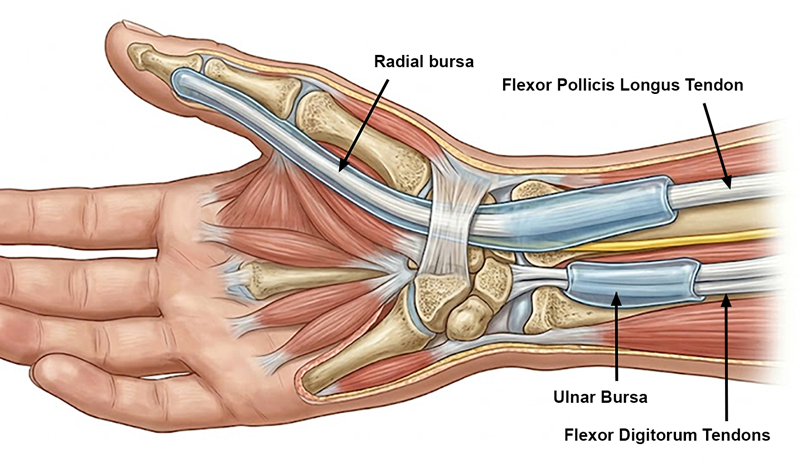
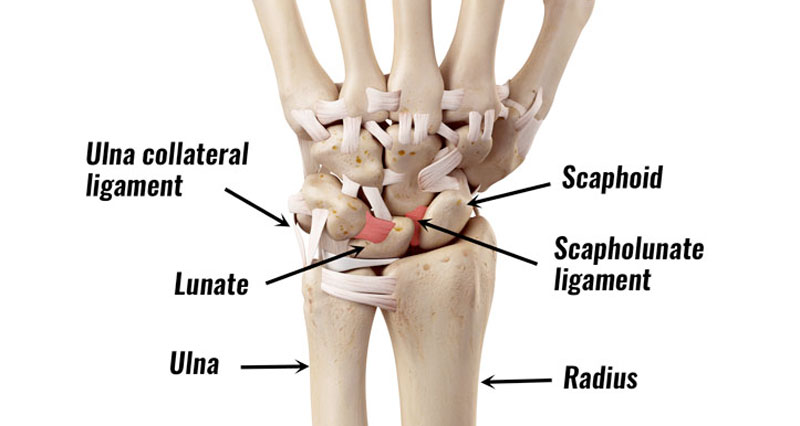
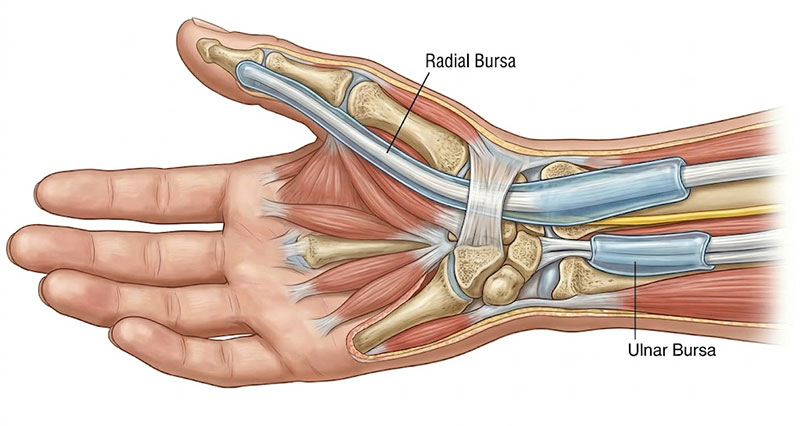
The wrist contains synovial bursae and tendon sheaths that help tendons glide smoothly. The radial bursa is associated with the flexor pollicis longus tendon on the thumb side of the wrist. The ulnar bursa surrounds the flexor tendons to the fingers as they pass through the carpal tunnel.
These structures are mainly on the palm side of the wrist, so a painful lump on the top of the wrist may need a different diagnosis.
Wrist bursitis causes
Wrist bursitis is usually caused by:
- Repeated pressure through the wrist
- Repetitive friction from tendons moving over nearby tissues
- A direct blow or fall onto the wrist
- Repeated weight-bearing on the hands
- Inflammatory conditions, such as rheumatoid arthritis
- Infection, although this is less common
ADVERT


Treatment
Most cases settle with rest, ice, and avoiding pressure on the affected area.:
- Rest from painful or repetitive activities
- Apply ice or cold therapy for 10–15 minutes at a time
- Use a compression bandage if swelling is present
- Avoid leaning or putting body weight through the wrist
- Your doctor may prescribe anti-inflammatory medication, such as ibuprofen, if suitable for you
- Gradually return to activity once pain and swelling improve
Severe or recurrent bursitis may occasionally be aspirated, where a needle is inserted to suck out the fluid.
Recovery time
Mild wrist bursitis may settle within a few days to a couple of weeks if you stop the activity causing it. Recurrent or irritated bursitis may take longer, especially if you keep loading the wrist before it has recovered.
ADVERT