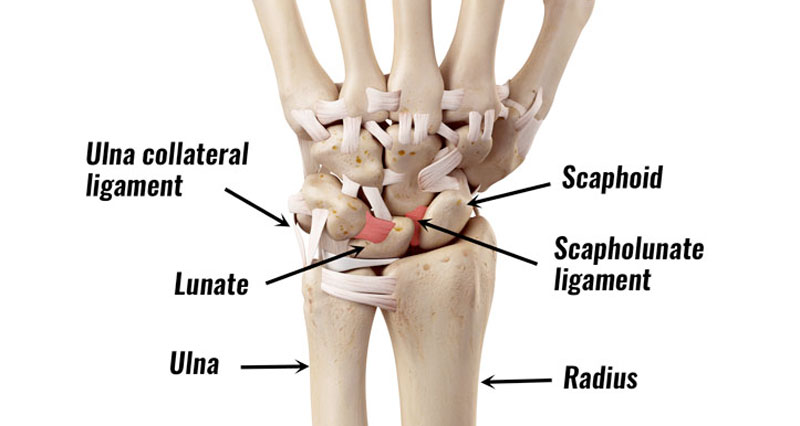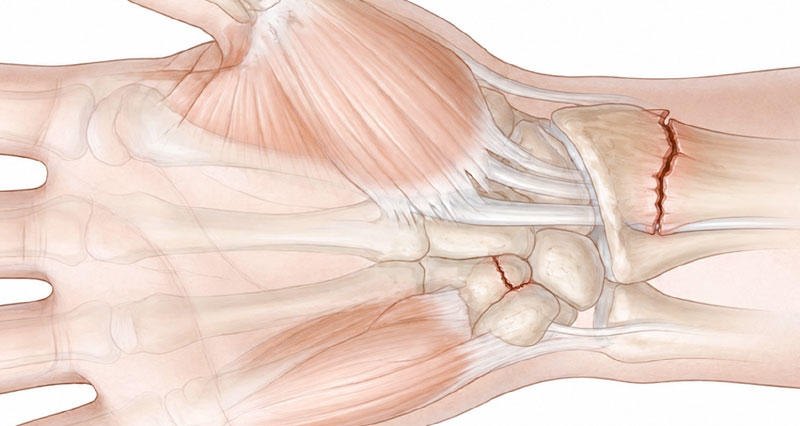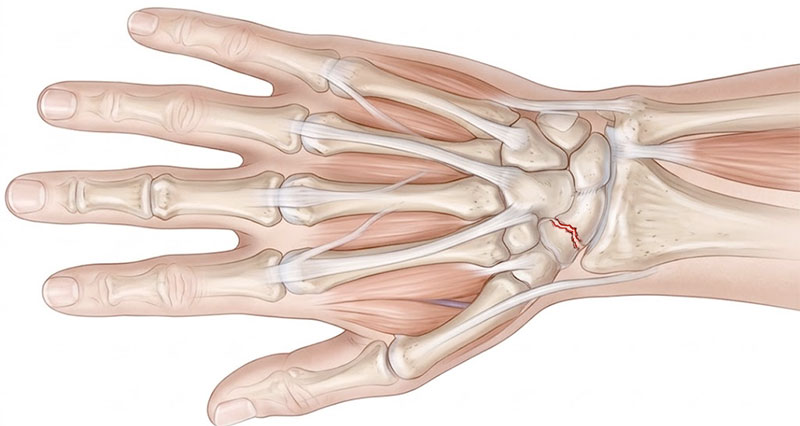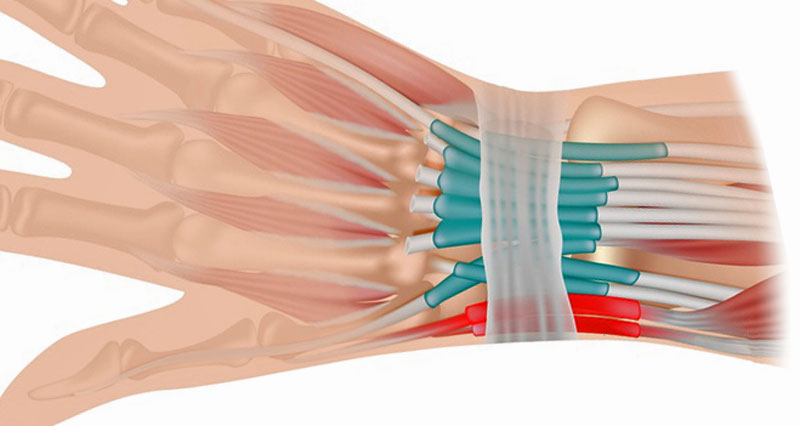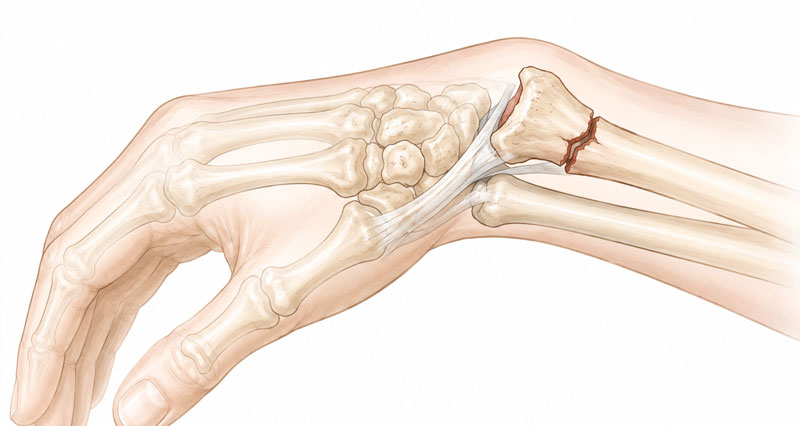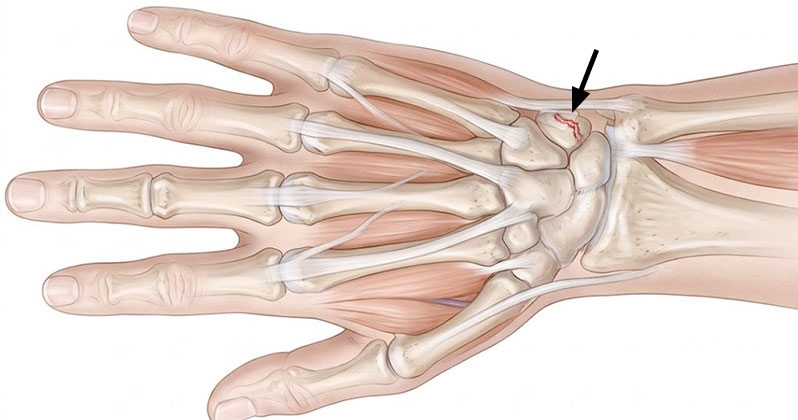
A triquetral fracture is a break of the triquetrum bone, one of the eight small carpal bones in the wrist. It is the second most common carpal bone fracture after a scaphoid fracture. The injury usually occurs after falling onto an outstretched hand and causes pain on the little finger side of the wrist.
On this page:
Symptoms of Triquetral fracture
Triquetral fracture symptoms include:
- Pain on the little finger (ulnar) side of the wrist.
- Rapid swelling around the back of the wrist.
- Tenderness when pressing over the triquetrum bone.
- Pain when gripping or twisting the wrist.
- Reduced wrist movement and grip strength.
- Bruising may develop after the injury.
Symptoms are often worse when bending the wrist backwards or putting weight through the hand.
When to seek medical attention
Seek medical advice if you have:
- Severe wrist pain after a fall or impact.
- Swelling or bruising around the wrist.
- Difficulty gripping or moving the wrist.
- Persistent pain on the little finger side of the wrist.
Early diagnosis is important because untreated wrist fractures can lead to long-term pain, weakness and reduced wrist function.
Diagnosis
A doctor or sports injury professional will examine your wrist and assess the area of tenderness, swelling and movement restriction. They will X-ray your wrist to confirm the fracture and rule out other injuries.
Small fractures can sometimes be difficult to see on standard X-rays. Therefore, if symptoms remain severe despite normal X-ray results, you will need further scans such as a CT scan or MRI.
What is a Triquetrum fracture?
The triquetrum is one of the small carpal bones which make up the wrist joint. It sits on the little finger side of the wrist, just behind the pisiform bone.
Most triquetral fractures happen after a fall onto an outstretched hand, particularly when the wrist is bent backwards and tilted towards the little finger (ulna) side. A direct blow to the back of the wrist can also cause the injury.
There are several types of triquetral fracture, including:
- Dorsal chip fractures – a small fragment breaks from the back of the bone. This is the most common type.
- Body fractures – a larger break through the main part of the bone.
- Volar fractures – less common injuries affecting the front of the bone.
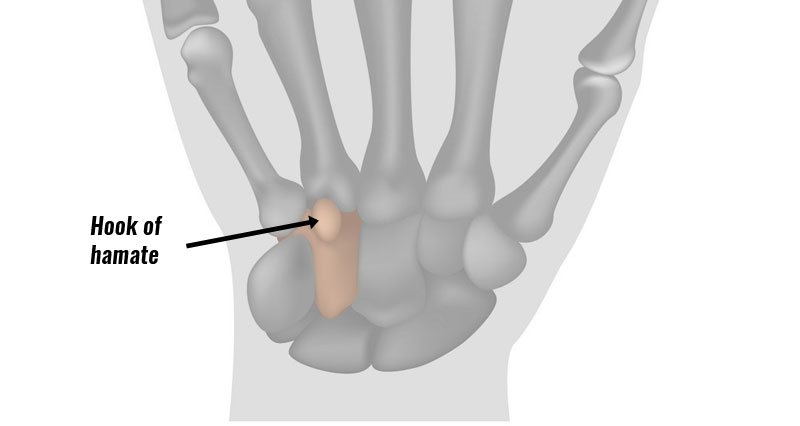
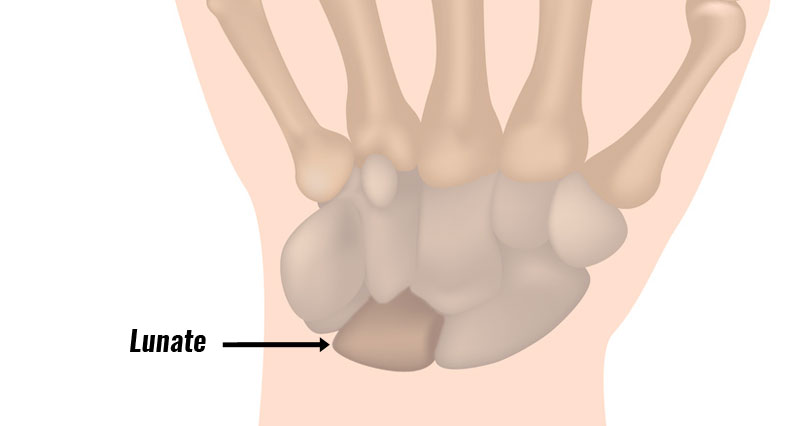
Some triquetral fractures occur on their own, but they can also happen alongside other wrist injuries such as ligament damage, dislocations or fractures of other carpal bones.
Treatment for a Triquetral Fracture
Treatment depends on the type and severity of the fracture. Most uncomplicated triquetral fractures heal well without surgery.
Immobilisation
It is likely you will need to immobilise your wrist in a cast for around 4 to 6 weeks to allow the bone to heal properly. Avoid any heavy lifting, gripping or impact activities. Applying cold therapy around the cast and keeping the wrist elevated during the early stage helps reduce pain and swelling.
Rehabilitation
Once the cast or splint is removed, wrist rehabilitation exercises help restore:
- Wrist mobility
- Grip strength
- Coordination and function
Recovery exercises include gentle range of motion exercises, stretching and progressive strengthening work. However, if you return to sport or heavy activity too early, you may delay healing or increase the risk of ongoing wrist pain.
Surgery
Surgery is uncommon but may be required if:
- The fracture is significantly displaced.
- The wrist is unstable.
- Other fractures or ligament injuries are present.
In these cases, pins or screws may be used to hold the bone in position while it heals.
Recovery time
Most isolated triquetral fractures heal within 6 to 8 weeks. However, stiffness, weakness and mild discomfort may continue for several months, especially after immobilisation.
More complex injuries involving ligament damage or multiple fractures usually take longer to recover from.
Recommended products
We recommend the following products from our commercial partners (Amazon) for helping with recovery from a wrist fracture:
- Wrist support: Provides stability, reduces pain and helps confidence when coming out of the cast. Use for 1–3 weeks, then gradually reduce.
- Therapy putty or hand exerciser: Rebuilds grip strength and targets muscles weakened during immobilisation. One of the most effective rehab tools.
- Hand exerciser/grip strengthener: Allows progressive resistance training and helps with return to sport-specific activity.
- Resistance bands: Used for wrist flexion, extension and radial deviation to restore full strength, not just grip.
- Cold therapy pack & Gel: Useful in the early rehab phase to reduce pain and control inflammation after exercise.
- Heat therapy: Helps reduce stiffness once swelling has settled and is useful before mobility exercises.