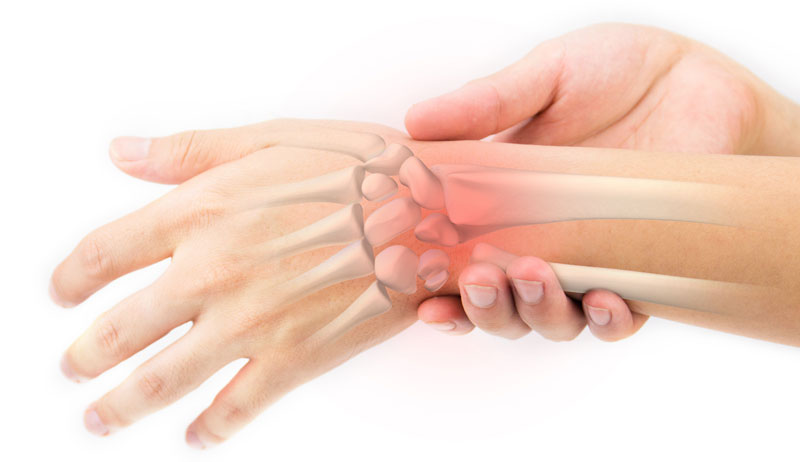
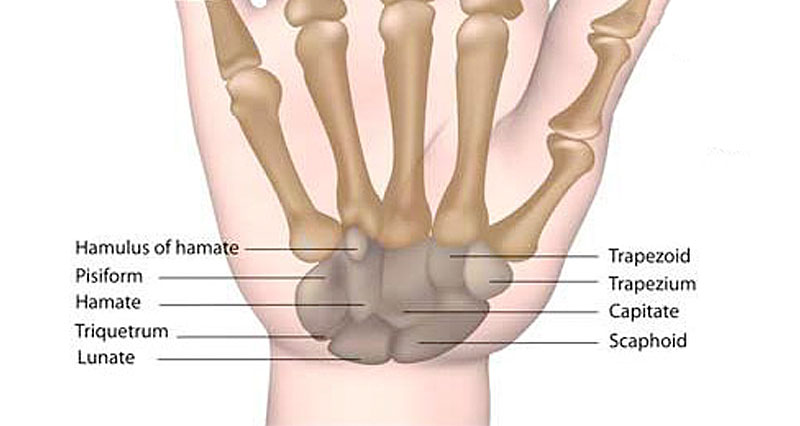
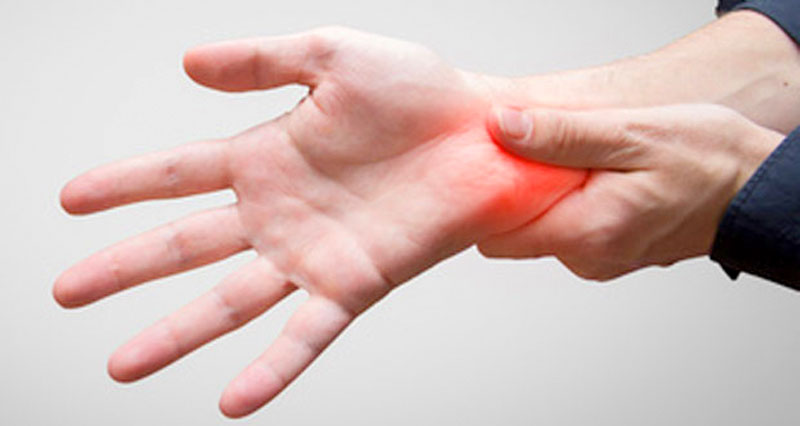
Acute wrist pain comes on suddenly, usually after a fall, impact, or awkward movement. It is commonly caused by sprains, strains, or fractures, and may be accompanied by swelling, bruising, and reduced movement. Identifying the cause early helps guide the right treatment and prevent further injury.
On this page:

Medically reviewed by Dr Chaminda Goonetilleke, 10th June 2026
When should I see a doctor?
Seek medical attention if you have any of the following:
- Severe pain after a fall
- Visible deformity or significant swelling
- Unable to move or use your wrist
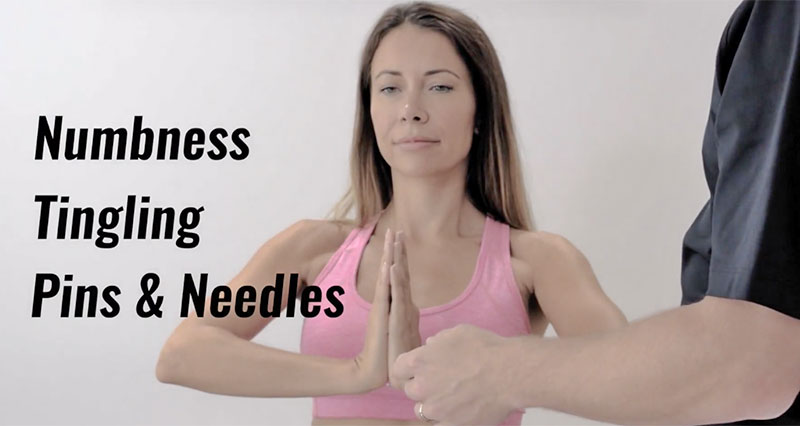
- Numbness, tingling or weakness
- Pain in the thumb side “snuffbox” area
- Symptoms not improving after 1–2 weeks
Wrist sprains & strains
A sprain is a stretch or tear of a ligament which joints bone to bone. A strain is a tear of a tendon which joins muscle to bone. They can occur at the same time.
Wrist sprain
A sprained wrist is an injury to any of the ligaments which connect bone to bone in the wrist. Wrist sprains are usually caused by trauma such as falling onto an outstretched arm.
- Symptoms vary depending on the extent and the location of the sprain.
- Sudden pain in the wrist will be felt at the time of injury.
- In severe sprains, a tearing or popping feeling may be felt.
- A particularly tender spot may be felt where the ligament is damaged.
- Swelling could be visible and bruising might develop in more severe injuries.
More on wrist sprain
TFCC tear
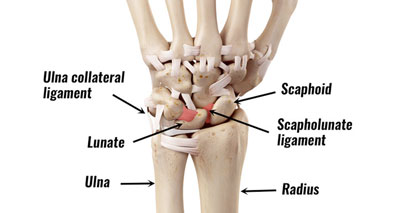
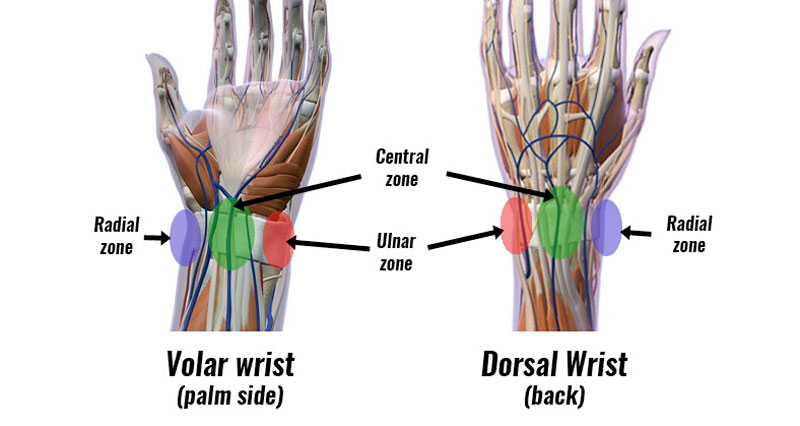
A TFCC tear can be a traumatic (acute) or degenerative/due to overuse (gradual onset) injury of the triangular fibrocartilage complex, found in the wrist. Symptoms include:
- Pain on the little finger side of the wrist, often after a fall, twisting injury, or repetitive loading.
- Pain worsens when gripping, twisting a doorknob, turning a key, or pushing up from a chair.
- Clicking, catching, or a feeling that the wrist is unstable during movement.
- Possible welling, although often minimal.
- Tenderness just beyond the end of the ulna (the forearm bone on the little finger side) compared with the uninjured wrist.
More on TFCC tears
Wrist strain
A wrist strain is a tear or stretch in a muscle or tendon in the wrist. It usually occurs suddenly (acute injury), or can develop over time through repetitive stress and overuse (chronic wrist pain). Symptoms of a wrist strain include:
- Pain in the wrist which may develop gradually or suddenly.
- There may be a specific area which feels tender to touch.
- Swelling may develop, but not always.
- More on Wrist strain
Fractures
Broken wrist symptoms vary slightly depending on the type and grade of the fracture. However, in general, they consist of:
- Severe pain after injury
- Rapid swelling
- Deformity
- Tenderness (especially anatomical snuff box)
- Reduced movement or grip strength
- Tingling or numbness in the hand or fingers (nerve damage)
Distal radius fracture (Colles fracture)
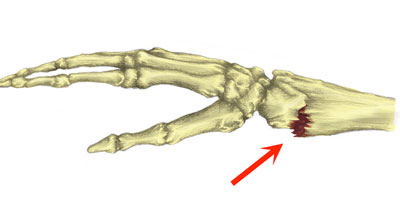
A Colles fracture is a particular type of broken wrist that involves a break of the radius or forearm bone on the thumb side of the wrist. Symptoms which would indicated a fracture consit of:
- Severe pain
- Deformity
- Rapid swelling would indicate a fractured wrist.
- More on wrist fractures
Scaphoid fracture
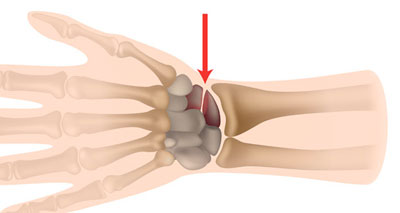
The scaphoid is one of the small group of bones in the wrist called the carpal bones. It is the most common carpal bone to fracture among athletes, often caused by falling onto an outstretched hand. Seek medical advice if you suspect a Scaphoid fracture. Symptoms include:
- Pain on the thumb side of the wrist
- Tenderness in the anatomical snuffbox
- Pain when gripping or squeezing
- Swelling is often mild or absent
- More on Scaphoid fractures
Hook of hamate fracture
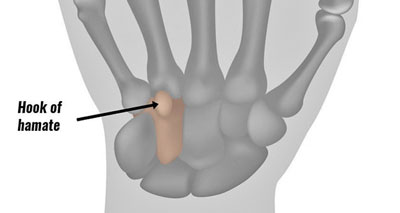
The wrist contains a number of small bones called carpals. The hamate is a carpal bone on the outside (little finger side) of the wrist.
It has a hook-shaped part which protrudes outwards and can under certain circumstances be fractured. With this injury, wrist pain occurs on the side of the little finger and the strength of grip can be reduced.
- More on Hook of hamate fracture
Distal radial epiphysis injury
A distal radial epiphysis injury is an acute injury to the growth plate at the wrist end of the radius (forearm) bone. It mostly affects children and young athletes, particularly gymnasts, between the ages of 6 and 10 years old. Overuse is the most likely cause.
- Symptoms include acute pain in the wrist, especially when the wrist is bent backward with the palm facing down (known as dorsiflexion).
- They are likely to have limited movement in the wrist, which can prevent gymnasts from performing certain movements.
- There may be tenderness and swelling around the end of the bone.
- Other injuries with similar symptoms include ganglion cysts, wrist tendonitis.
- More on Distal radial epiphysis Injury
Distal radioulnar joint instability
The distal radioulnar joint is the joint at the wrist, between the radius and the ulna, the two forearm bones. This injury is usually a subluxation, or a partial dislocation, although fractures of either bone can be involved.
It is often caused by a direct impact like a fall, and medical help is needed immediately to check and treat the wrist injury.
Dislocated wrist
A wrist dislocation is a rare but serious injury involving one or more of the small carpal bones in the wrist becoming displaced. It usually happens after a traumatic fall onto the hand or wrist and causes sudden severe pain with an obvious deformity.
Symptoms may include:
- Severe wrist pain and swelling
- Visible deformity of the wrist
- Difficulty moving the wrist or hand
- Tingling or numbness in the thumb, index and middle fingers if the median nerve is affected
A wrist dislocation requires immediate medical attention because ligaments, nerves and other soft tissues are often badly damaged. If left untreated, permanent loss of wrist function can occur.
Once out of the plaster cast a full rehabilitation program with wrist strengthening exercises should be done to restore the hand and wrist to full normal functioning and help prevent any future injury.
Recommended products
We recommend the following products from our commercial partners (Amazon) for helping with recovery from wrist injuries:
- Wrist support: Provides stability, reduces pain and helps confidence when coming out of the cast. Use for 1–3 weeks, then gradually reduce.
- Therapy putty or hand exerciser: Rebuilds grip strength and targets muscles weakened during immobilisation. One of the most effective rehab tools.
- Hand exerciser/grip strengthener: Allows progressive resistance training and helps with return to sport-specific activity.
- Resistance bands: Used for wrist flexion, extension and radial deviation to restore full strength, not just grip.
- Cold therapy pack & Gel: Useful in the early rehab phase to reduce pain and control inflammation after exercise.
- Heat therapy: Helps reduce stiffness once swelling has settled and is useful before mobility exercises.