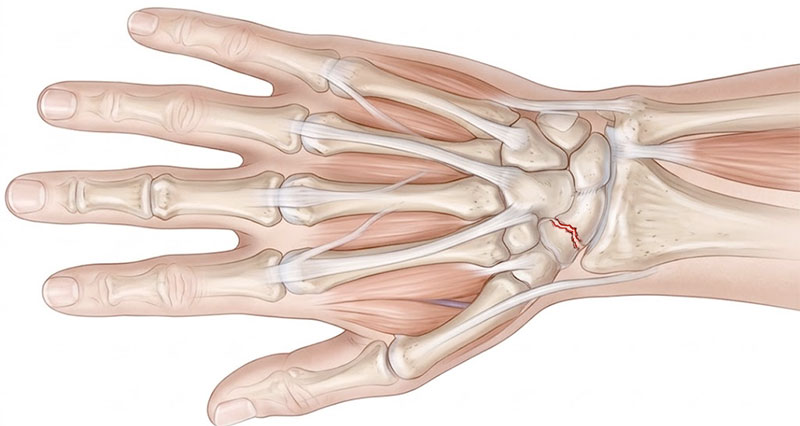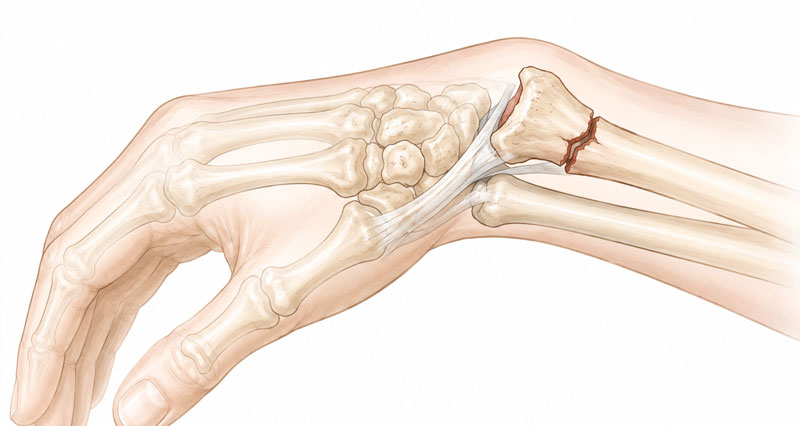
Kienböck disease is a condition where the lunate bone in the wrist loses part of its blood supply causes gradually worsening wrist pain and stiffness. Kienböck disease is most common in adults aged 20 to 40, especially men, but it can also occur in young athletes, especially gymnasts.
On this page:
ADVERT
Symptoms
Symptoms of Kienböck disease include:
- Gradual onset wrist pain
- Pain over the centre or back of the wrist
- Swelling on the back of the wrist
- Tenderness over the lunate bone
- Stiffness or reduced wrist movement
- Weak grip strength
- Pain that worsens with use and improves with rest
In the early stages, symptoms may feel similar to a wrist sprain or overuse injury.
ADVERT
Diagnosis
A doctor may examine your wrist and arrange imaging tests. X-rays may show changes in later stages, however, early Kienböck disease may need an MRI scan to detect changes in the lunate. Early diagnosis can be difficult because a lunate stress reaction or bone bruising looks similar on imaging. This is why persistent wrist pain should be assessed by a wrist or hand specialist.
When to see a doctor
See a doctor or hand specialist if you have wrist pain that:
- Has lasted more than a few weeks
- Is getting worse
- Causes swelling or stiffness
- Reduces grip strength
- Stops you loading the wrist
- Follows a fall or direct injury
Early assessment is important because treatment choices depend heavily on the stage of the condition.
ADVERT
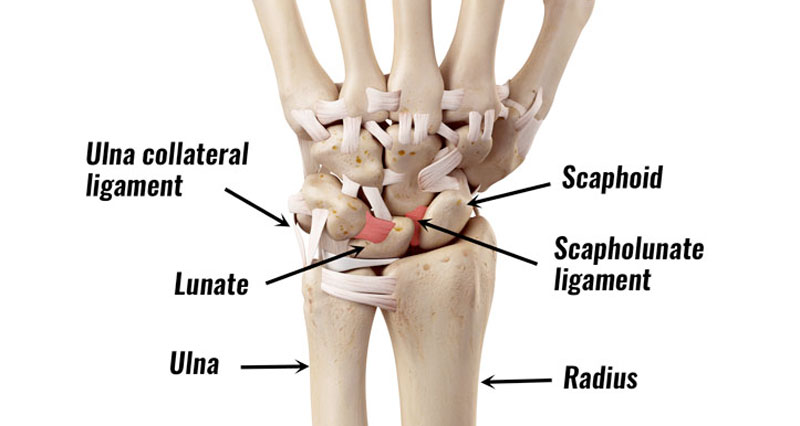
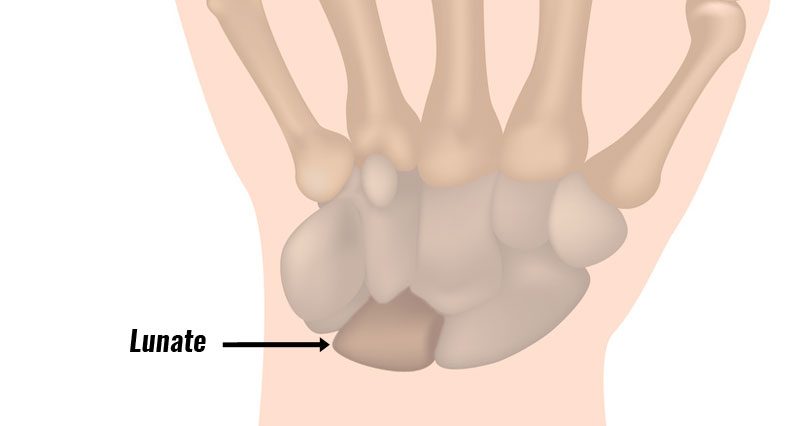
What is the lunate bone?
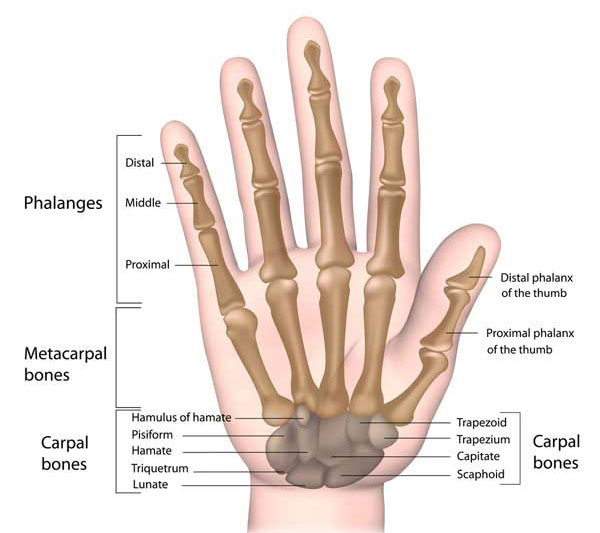
The lunate is one of the eight carpal bones in the wrist. It sits near the centre of the wrist, between the forearm bones and the hand. It helps the wrist move smoothly and plays an important role in grip and weight-bearing through the hand.
What causes Kienbock disease?
The exact cause of Kienbock disease is not always clear. It is thought to involve reduced blood supply to the lunate, possibly combined with repeated wrist loading, previous injury, differences in forearm bone length, or other individual anatomical factors.
Sports that repeatedly load the wrist, such as gymnastics, increase stress on the lunate.
ADVERT
Treatment for Kienbock disease
Treatment depends on the stage of the condition, your symptoms, and whether the lunate has started to collapse. If your injury is a simple stress reaction then active rest is likely to be effective. This means avoiding high-impact exercise on your wrist. You can do other exercises though but avoid loading your wrist.
Non-surgical treatment
Early treatment may include:
- Rest from painful wrist-loading activities
- Immobilisation in a splint or cast
- Anti-inflammatory medication if advised by a doctor
- Activity modification
- Physiotherapy or hand therapy once appropriate
Immobilisation may help pain in early cases, but it does not always stop the condition progressing.
Surgery
Surgery may be recommended if symptoms continue, if the lunate is collapsing, or if wrist function is significantly affected. Surgical options vary depending on the stage of the disease and may include procedures to reduce pressure on the lunate, improve blood supply, or stabilise the wrist.
Recovery time
Recovery time for Kienböck’s disease varies greatly depending on the stage of the condition and the treatment required. Early-stage cases may improve within a few months, while recovery following surgery can take 6 months or longer. Advanced cases may lead to ongoing wrist pain and stiffness.
References & further reading
- Herzberg G, Mercier S, Charbonnier JP et al. Kienböck’s disease in a 14-year-old gymnast: a case report. J Hand Surg Am 2006;31(2):264–8.