Extensor Tendonitis (Foot)
Extensor tendonitis is inflammation of the extensor tendons, which run along the top of the foot. It is an overuse injury common in runners, especially if your shoes do not fit properly or are laced too tightly. Here we explain the symptoms, treatment and exercises to help you recover from Extensor tendinopathy/tendinitis. Also, the full rehab program on our app takes you step by step from injury to full fitness.
Extensor tendonitis symptoms
Symptoms are likely to develop gradually over time, becoming progressively worse and include:
- Pain on the top of the foot.
- It is often described as an aching pain, which increases with exercise, in particular, running.
- Diffuse swelling over the top of your foot.
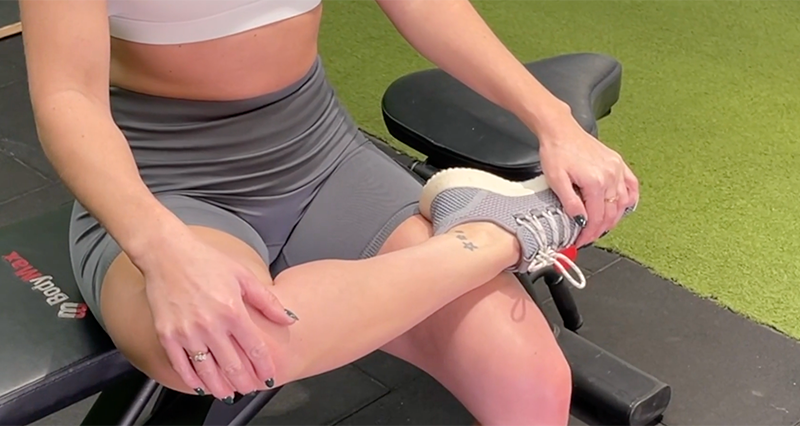
- Curling the toes may trigger pain because this places stress on the tendons by stretching them.
View other causes of pain on top of the foot.
ADVERT


Assessment tests
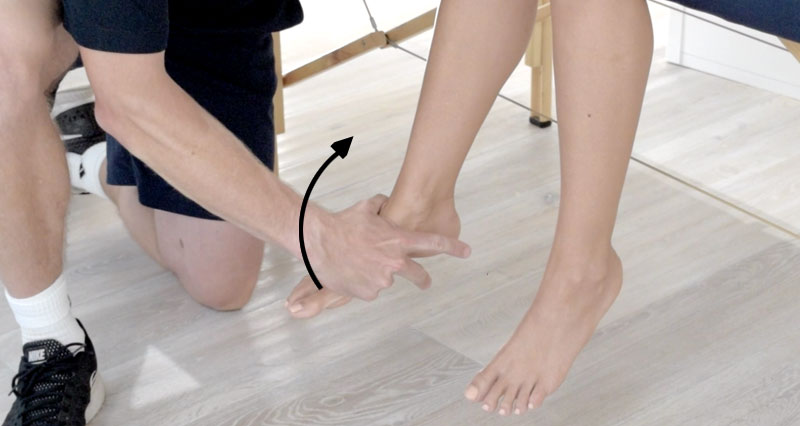
Resisted dorsiflexion tests help diagnose extensor tendonitis. This involves lifting your foot and toes up against resistance. If this is painful then the test is positive, therefore indicating potential extensor tendon injury.
Injuries with similar symptoms:
Tibialis anterior tendonitis is a common form of extensor tendonitis. However, it often causes pain at the front of the ankle rather than across the top of the foot.
What is Extensor tendonitis?
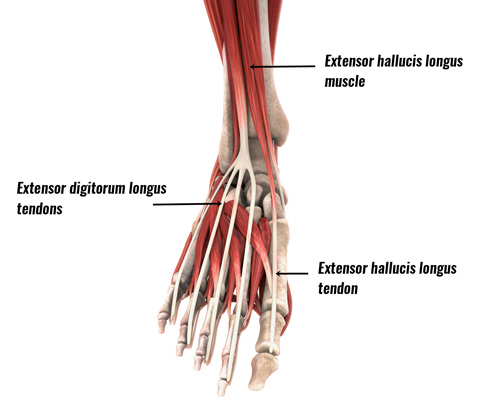
Extensor tendonitis is the ‘inflammation’ of the extensor tendons. The term Extensor tendinopathy is probably a more accurate description of most injuries. This is because it also describes the degeneration of the tendon.
Pain from most long-term, chronic injuries is likely to be degeneration from wear and tear, not tendonitis. Studies have shown that long-term injuries usually do not have inflammatory cells present.
The extensor muscles
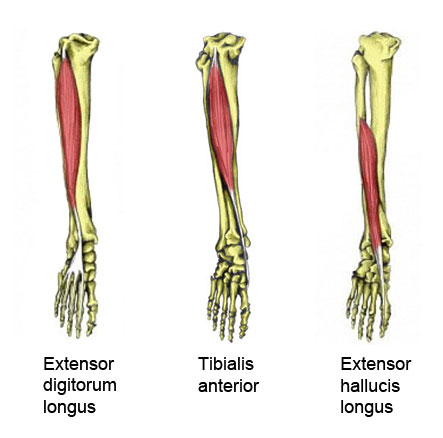
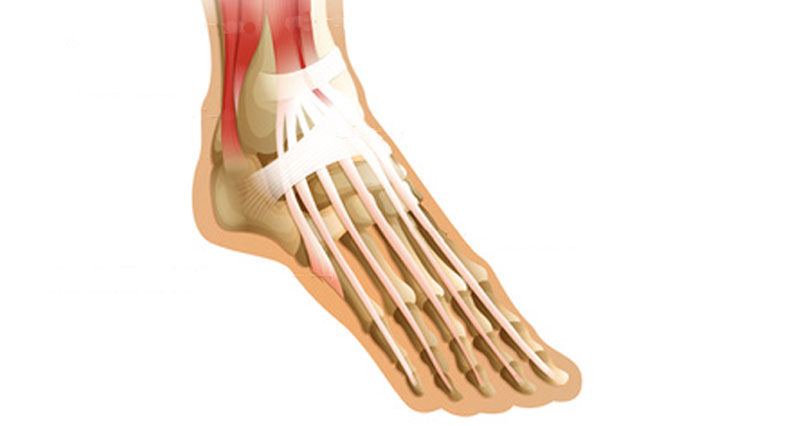
The extensor tendons run along the top of the foot and connect the muscles in the lower leg to the foot bones. When your muscles contract, they cause your foot and toes to move upwards. This movement is known as dorsiflexion.
ADVERT
When you walk the muscles work to lift your foot up, but also work eccentrically as you place your foot down.
An eccentric muscle contraction occurs when your muscle contracts at the same time as it lengthens. This places larger stress on the muscles. The muscles contract eccentrically when running downhill.
- The extensor hallucis longus muscle connects to the big toe/great toe via the tendon (hallucis meaning big toe in latin).
- The extensor digitorum longus connects to the other four toes (digitorum means digits, fingers, or toes in latin).
- Other tendons in the foot which also lift the foot up are the tibialis anterior tendon and the extensor hallucis brevis.
- More on lower leg muscles
Causes of Extensor tendonitis in the foot
Overuse is the direct cause. Repetitive strain causes the tendons to become inflamed and eventually degenerate. However, there are a number of factors that may increase your chances of injury. These include:
Footwear
Wearing badly fitting shoes, especially with the laces tied too tightly. This causes excess pressure on the top of your foot.
- More on Choosing running shoes
Training
A sudden change in training, particularly running uphill. Running on a treadmill means you can run for long periods on an incline.
When you run uphill you have to lift your foot higher than normal, therefore resulting in higher stresses through the extensor muscles and tendons.
Running downhill the muscles work eccentrically which again places stress on the extensor tendons as can running on ice or slippery surfaces.
Extensor tendonitis treatment
Treatment involves reducing initial pain and inflammation along with a program of stretching and strengthening exercises.
Rest
Rest until the pain has gone. Continuing to train when the foot is painful will only make the injury worse and delay the healing.
If your injury becomes chronic or the tendon degenerates then healing will take much longer.
Cold therapy
Apply ice or cold therapy and compression wrap for 10 minutes every hour initially, reducing the frequency as your symptoms improve over the next 48 hours.
Do not apply ice directly to the skin as it may cause ice burns.
Wrap ice in a wet tea towel, or use a cold therapy and compression wrap.
- More on Cold therapy
Heat
Once the initial painful acute stage has passed, applying heat may be more effective. In the early stages when you most likely have acute inflammation, ice will help reduce this.
However, for more chronic injuries where acute inflammatory cells are not likely to be present, heat may be more suitable.
Footwear
Make sure you wear appropriate footwear, in particular, and do not lace your shoes too tightly. Over-tightening the laces put direct pressure on the extensor tendons in the foot. It may help to try a different lacing pattern. Or consider wearing elastic laces which allow your foot to expand.

Replace running shoes after 400 miles of running, or 12 months. After this amount of wear the midsole starts to degrade.
Medication
A doctor may prescribe anti-inflammatory medication such as ibuprofen for Extensor tendonitis. But do not take ibuprofen if you have asthma.
Injections
If it is a long-term problem, a steroid injection may be given although repeated injections to tendons can weaken them. In very rare cases surgery is performed.
See a sports injury professional
A professional therapist will assess your foot and confirm the diagnosis, in particular, ruling out the possibility of a metatarsal stress fracture.
Often pain on passive stretching indicates tendinitis, but pain, when your toes are pulled outwards might indicate a stress fracture.
Extensor tendonitis exercises
As soon as you can walk normally without pain, you can begin rehabilitation exercises. Perform stretching exercises initially, and later, strengthening exercises to strengthen the extensor muscles.
Extensor tendonitis stretches

The extensor muscles can be stretched by kneeling down with the feet pointing backwards. Aim to flatten the ankles towards the floor to stretch the extensor muscles. You should feel a gentle stretch at the front of your ankle.
A more advanced version is to lift the knees upwards increasing the stretch. Hold the stretch for 10 to 15 seconds, relax and repeat once or twice more.
Perform extensor tendonitis stretches at least once a day, but three times a day is recommended.
Strengthening
Because this is often an overuse injury, doing too much too soon may increase the chances of your injury recurring, rather than achieving the opposite result.
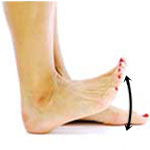
- Strengthening exercises should always be done pain-free and very gently to begin with.
- Toe raises will work the extensor muscles and involve simply lifting the foot up and down repeatedly.
- Avoid overdoing it, especially if you resume normal training.
- Running alone will work the extensor muscles, so overloading them through exercises before a run is not advised.
Rehabilitation
Check out our extensor tendonitis rehabilitation program for a step-by-step guide to recovering.
References & further reading
- Extensor tendonitis research papers – Google Scholar