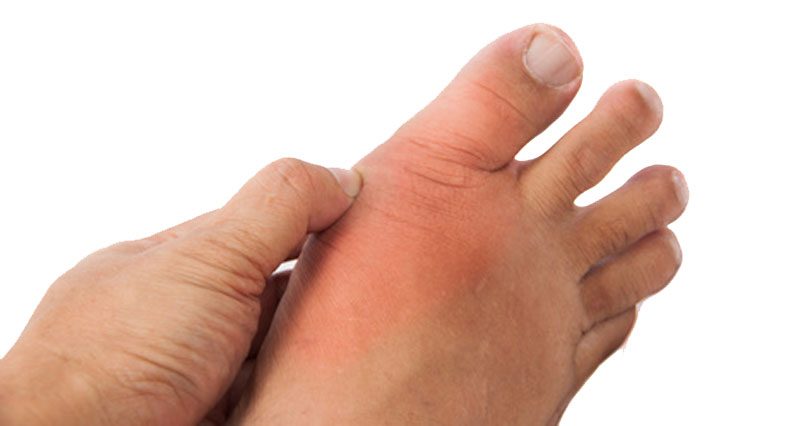
Gout is a form of arthritis. A build-up of uric acid in the body causes Gout. Men between the ages of 40 and 60 are most likely to suffer from it.
Medically reviewed by Dr Chaminda Goonetilleke, 20th Jan. 2022
Gout Symptoms
Symptoms tend to come on very quickly and then last for around a week before easing off. They include:
- Intense pain in the joint, usually affecting the big toe and foot.
- The overlying skin may appear red and shiny and become sensitive to the touch.
- The joint appears swollen and may also feel itchy.
- It is most common in the big toe, but may also be present in the heels, ankles, knees, elbows, wrists or fingers.
Diagnosis
Your G.P. can often give a clinical impression from symptoms that Gout is causing the pain. However, they will do further tests to make a proper diagnosis.
Serum Uric Acid Tests
This is a blood test, often carried out 4-6 weeks after an attack of Gout. This is because your serum uric acid level is not usually elevated when your symptoms are worst. A raised serum uric acid test result is an indicator that you may have this condition, although this is not 100% accurate as people without the condition may sometimes have higher than normal levels.

Synovial fluid
Synovial Fluid is found within moveable joints. Your doctor will extract a sample from a joint and examine it under a microscope. There will almost always be crystals of sodium urate in the sample. This kind of test can also rule out other causes of joint pain.
What is Gout?
Gout is a form of arthritis caused by a build-up of uric acid in the body.
It is more common in men between the ages of 40 and 60 although it does occur in women as well. You are more likely to suffer if anyone in your family does as there is a genetic element involved. Risk factors also include a diet high in some meats, seafood and alcohol, particularly beer.
Certain medications such as aspirin, niacin, diuretics, and chemotherapy may also contribute to the development of the disease.
It is, therefore, more common in those who suffer from high blood pressure, high cholesterol, and cancers as well as diabetes and psoriasis. Problems with the function of the kidneys or high production of uric acid may mean that crystals develop within the joints which cause pain and inflammation.
Treatment for Gout
Symptom relief
Pain is managed by relieving the pain and treating the condition with both medication and lifestyle changes such as following a specific diet. To relieve symptoms, rest with the foot elevated and apply cold therapy to cool the joint.
Non-steroidal anti-inflammatory drugs (NSAIDs) such as Ibuprofen can be taken in the first instance to decrease pain. If these are not effective, then your doctor may prescribe Colchicine, which helps to relieve pain and reduce swelling. It does however often produce side effects such as nausea, vomiting, and abdominal pain. In extreme cases, you may be prescribed corticosteroids, although these are not long-term treatments.
Medications
Medications for frequent attacks of Gout are Urate Lowering Therapies or ULT. The aim of these medications is to reduce the urate levels to below the concentration required for crystals to form. They also help to dissolve existing crystals.
There are different forms of ULT which have different effects and side effects. Allopurinol is one of the most common. Febuxostat is another.
Lifestyle changes
Lifestyle changes should also be implemented to avoid Gout flare-ups of the condition. Eliminating or at least cutting down on the following may be helpful:
- Meats including liver, kidney, turkey, veal, and venison
- Seafood such as anchovies, mackerel, sardines, herrings, mussels, and scallops
- Vegetables including spinach, asparagus, and lentils
- Anything containing yeast extract such as Marmite
- Alcohol – particularly beers and port
Ensure you also drink plenty of water. If you are overweight, losing weight can help to decrease your uric acid levels, as can exercise.