An AC joint separation, or AC joint sprain, is an injury to the ligaments which hold the acromioclavicular joint together at the top of the shoulder. Here we explain the symptoms, causes, and treatment for AC joint sprains.
Symptoms
AC joint sprains are often caused by a fall onto an outstretched arm. Symptoms include:
- Pain on top of the shoulder, at the end of the collarbone
- Widespread pain throughout the shoulder initially, later more localized to the top of the shoulder
- Pain is worse when moving the arm out sideways (abduction) and overhead.
- Visible deformity in more severe cases
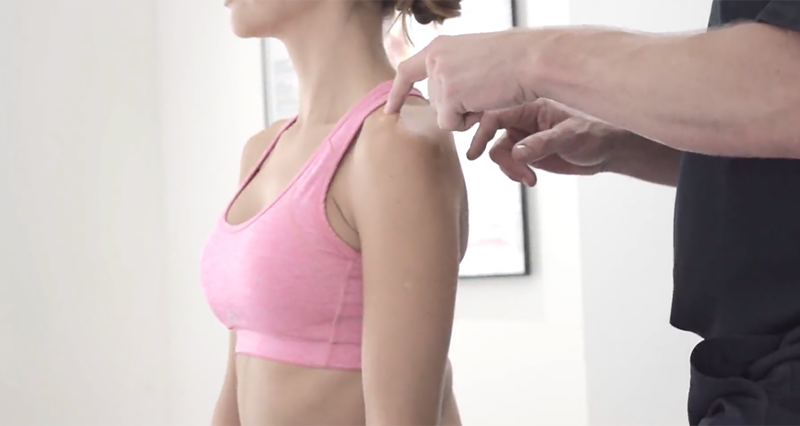
- Tenderness on top of the shoulder
- Swelling over the acromioclavicular joint itself.
Assessment tests
A professional therapist may do a number of special tests to confirm the diagnosis:
The Distraction test (piano key sign) involves the athlete sitting with both arms relaxed down by their sides. The professional therapist or athletic trainer pulls down on the wrists and looks for a ‘hollowing out’ just behind the joint.
Crossover test – the therapist or trainer abducts (moves) the athlete’s arm across the front of the body whilst compressing the joint.
What is an AC joint sprain/separation?
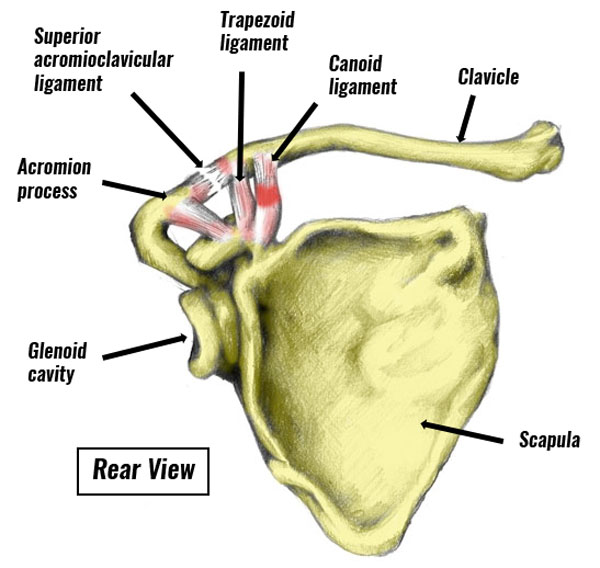
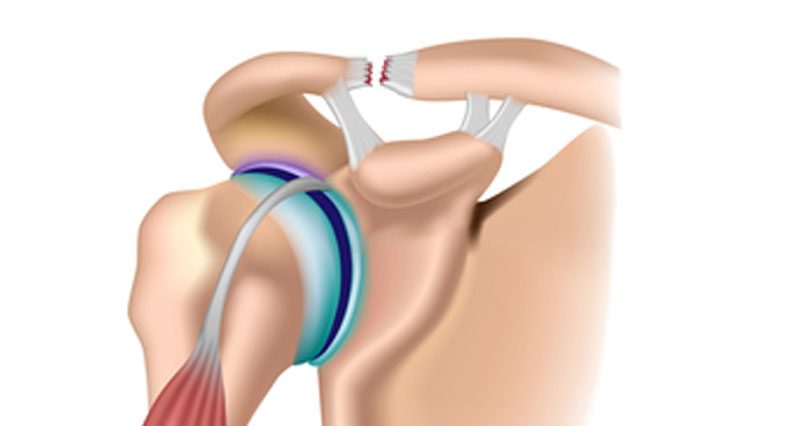
An Acromioclavicular joint sprain is a tear (or stretching) of the ligaments which hold the clavicle bone to the top of the shoulder blade.
Anatomy
The acromioclavicular joint is formed by the outer end of the clavicle (collar bone), and the acromion process of the scapular (shoulder blade). The main ligament that joins the two bones is called the acromioclavicular ligament. A minor AC joint sprain involves stretching of this ligament only.
A more severe injury results in the acromioclavicular ligament rupturing completely, as well as the coracoacromial and coracoclavicular ligaments. If this happens then the clavicle bone protrudes upwards. As a result, the injured shoulder looks deformed.
Causes
Falling onto an outstretched arm is the usual cause. As you land, forces transmit up your arm to the shoulder joint.
How bad is my AC joint sprain?
We grade AC joint injuries from 1-6 using the Rockwood scale. This classifies injuries in relation to the extent of ligament damage and the space between the acromion and clavicle.
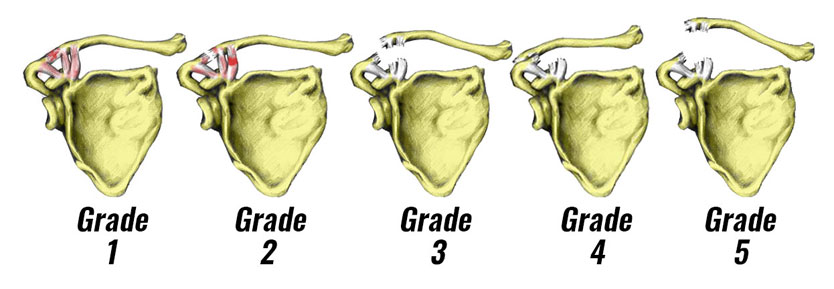
Grade 1
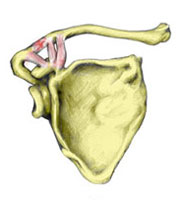
This is a simple sprain with minor ligament damage and not bone separation.
Grade 2 AC joint sprain
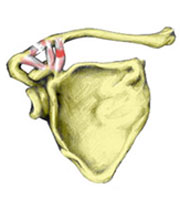
Grade 2 involves rupture of the AC ligament or acromioclavicular ligament.
Grade 3 AC joint sprain
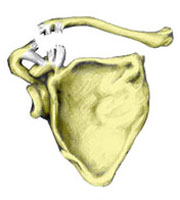
Grade 3 rupture of both AC and CC or coracoclavicular ligaments which often results in an upward displacement of the clavicle bone.
Grade 4 AC joint sprain
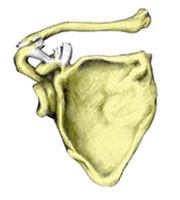
Grade 4 involves posterior displacement or displacement backwards.
Grade 5
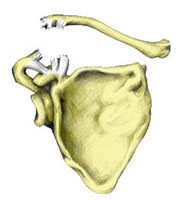
Grade 5 superior displacement, to a greater degree than grade 3, with an increase in coracoclavicular space by 3-5 times the norm. A step deformity may be apparent with grade 3, 4 & 5 injuries.
Grade 6
Grade 6 is a full rupture of both AC and CC ligaments with the clavicle displacing inferiorly or downwards.
Treatment for ac joint sprains
Immediate first aid for any AC joint injury is to apply the PRICE principles of rest, ice, compression and elevation.
You may suffer long-term deformity if you do not treat a bad AC joint injury properly. This manifests as a permanent lump on top of your shoulder.
Cold therapy
Apply ice or cold therapy and compression wrap as soon as possible to reduce pain and swelling. Apply cold for 10 minutes every hour initially. Reduce to 3 to 4 times a day as your symptoms improve.
Rest
Wear a sling to immobilize the shoulder and ease pain by taking the weight of the arm.
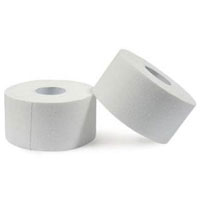
Taping
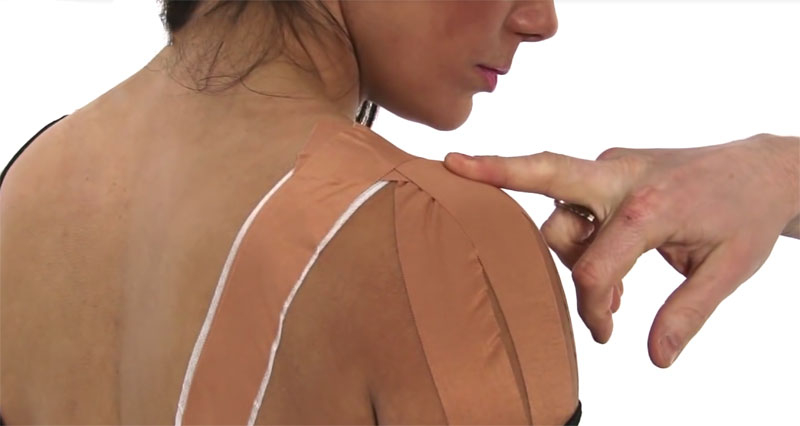
Taping supports the joint, keeping it stable whilst it is healing and preventing deformity. This is particularly important if you have suffered a more severe injury where the clavicle bone displaces.
Shoulder supports
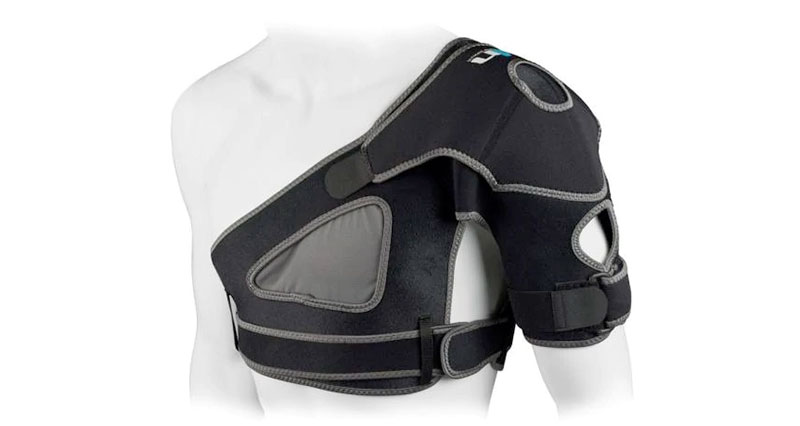
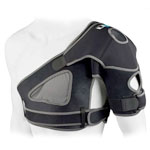
A good quality shoulder support/brace which allows you to apply downwards pressure to the AC joint may also help.
Sports massage
Apply cross-friction massage to the injured ligaments after the acute phase. This helps soften scar tissue.
Medication
A doctor may prescribe anti-inflammatory medication such as ibuprofen to reduce pain and inflammation.
Electrotherapy
In severe cases, your physio may use ultrasound or TENS for pain relief.
Exercises
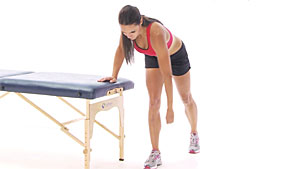
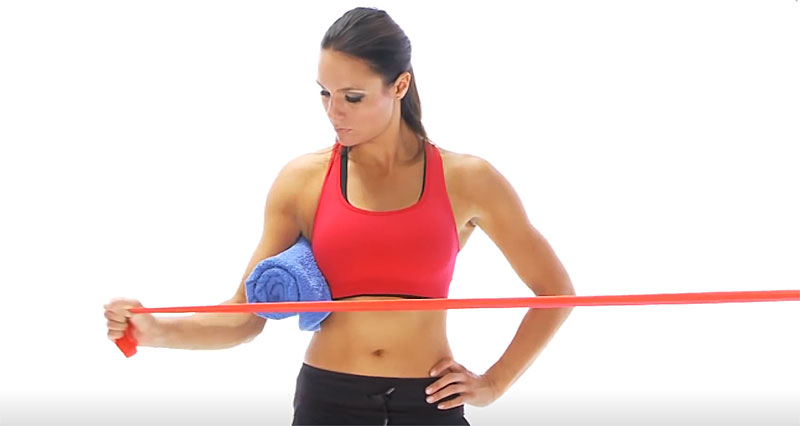
As pain allows, progress shoulder exercises are specifically recommended for AC joint sprain rehabilitation. Initially, the aim is to restore normal mobility and ‘scapular rhythm’.
The scapula and humerus (upper arm bone) should move together with the correct timing. In the injured athlete this rhythm is often lost.
As your shoulder heals, more advanced stretching and strengthening exercises are done. Strengthening begins with static or isometric exercises and progresses to dynamic, functional and sports-specific exercises.
- More on AC joint sprain exercises
Do I need surgery?
- A grade 1, 2 or 3 injury is usually treated conservatively without surgery.
- Grade 4, 5 and 6 injuries and grade 3 sprains which do not respond to treatment usually require surgery
If this injury is neglected and allowed to heal out of place this could increase the wear and tear on your joint causing you problems in the future.