Ischiogluteal or proximal hamstring tendonitis and bursitis have similar symptoms consisting of pain just below the buttocks at the top of the thigh. They may also occur at the same time.
Medically reviewed by Dr Chaminda Goonetilleke, 10th Feb. 2022.
Ischiogluteal bursitis
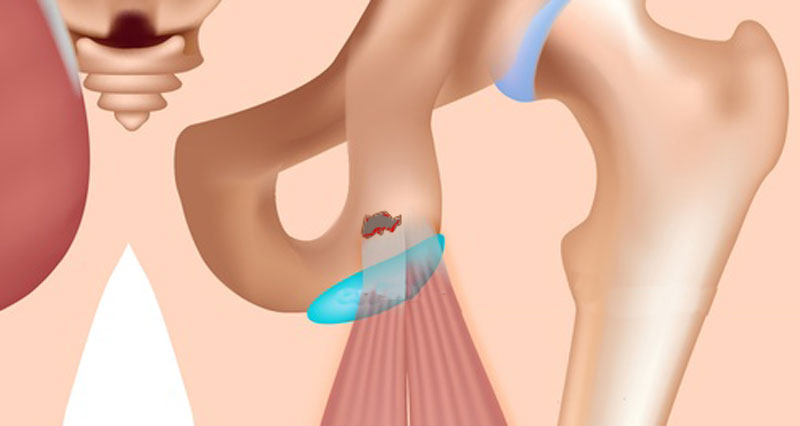
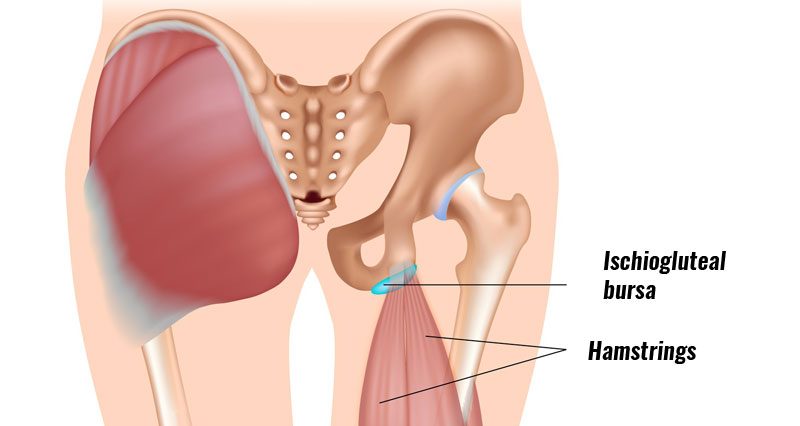
Ischiogluteal bursitis is inflammation of the bursa which lies between the hamstring tendon and the bone. The bursa reduces friction between the tendon and the bone. Ischiogluteal bursitis occurs on its own, or in conjunction with hamstring tendinitis.
Symptoms
The symptoms of ischiogluteal bursitis are almost identical to hamstring tendon inflammation. They usually occur gradually over time and include:
- Pain and tenderness at the ischial tuberosity
- Pain stretching the hamstring muscles
Prolonged sitting, especially on hard surfaces aggravates symptoms, as does sprint training.
Bursitis may be painful when stretching the hamstring muscles, but not when contracting them against resistance.
It is not usually possible to palpate or feel the bursa but an MRI scan or Ultrasound scan confirms the diagnosis.
Treatment of Ischiogluteal Bursitis
Rest. Apply ice or cold therapy to reduce pain and inflammation.
See a doctor or physiotherapist if symptoms persist.
When pain allows begin hamstring exercises (as pain may have caused weakness through muscle inhibition).
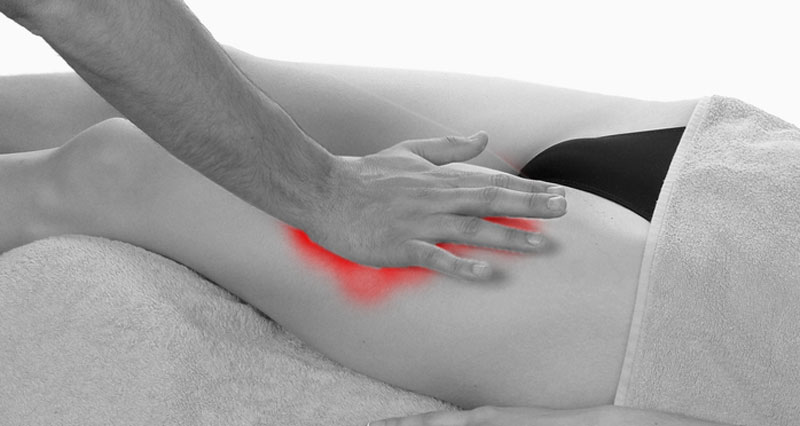
A doctor or physiotherapist can differentiate between hamstring tendinitis and ischiogluteal bursitis. This may involve analysing the effectiveness of treatment such as deep tissue massage.
Bursitis will not respond to massage and may become worse following treatment. Inject a corticosteroid and local anaesthetic into a fluid-filled bursa.
Hamstring origin tendonitis (tendinopathy)
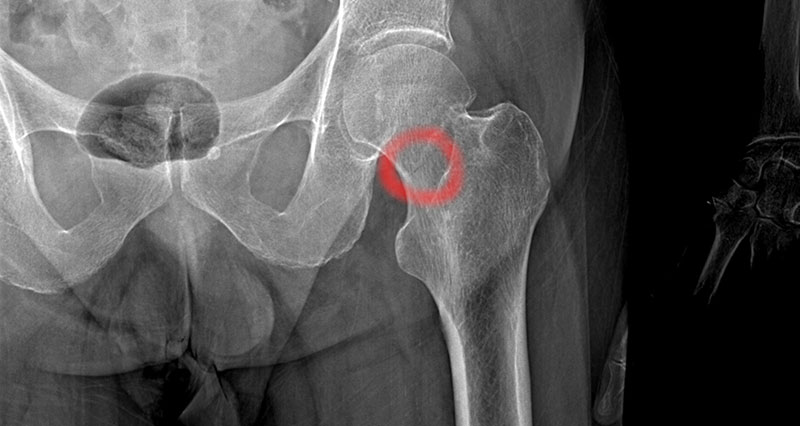
Hamstring tendinitis is inflammation of the hamstring tendon as it attaches to the ischial tuberosity at the top of the back of the thigh. Tendonitis or tendinopathy may be from overuse or a tendon tear which hasn’t properly healed.
Symptoms of hamstring origin tendonitis
Symptoms include:
- Pain and tenderness at the ischial tuberosity just under the buttocks
- Gradual onset buttock or thigh pain following a sprinting session
- Pain stretching the hamstring muscles
- Symptoms are worse with exercise, particularly repetitive exercises like long-distance running
An MRI confirms the diagnosis.
Causes & anatomy
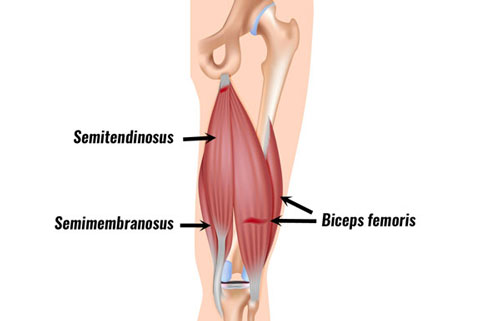
Hamstring tendinitis is inflammation of the hamstring tendon as it attaches to the ischial tuberosity at the top of the back of the thigh. It can follow a tear of the hamstring tendon which is poorly treated or more often is an overuse injury. The term tendinopathy probably describes the condition more accurately as tendonitis infers there is an acute inflammation of the tendon, which is not always the case, especially in long-term chronic injuries.
There are three hamstring muscles, the semimembranosus, semitendinosus and biceps femoris muscle.
Treatment
Reduce inflammation through rest, ice or cold therapy. Once pain and inflammation have gone develop a stretching and strengthening program. For chronic hamstring tendon injuries, there is likely to be muscle tightness and weakness which can be treated through massage, stretching and strengthening.
A doctor or physiotherapist may recommend NSAIDs or nonsteroidal anti-inflammatory drugs to reduce pain and inflammation as well as use electrotherapy such as ultrasound. They may apply deep tissue sports massage techniques once the acute stage has passed. This is thought to be the most effective form of treatment for this condition. However, if ischiogluteal bursitis is a problem then massage will not help. A full rehabilitation program of stretching and strengthening exercises is important to avoid future injury.
If conservative treatment methods fail to be effective then ultrasound-guided corticosteroid injections with a local anaesthetic may be effective in the short term but on their own not likely to be effective long term. Shockwave therapy is also a treatment option if conservative methods fail.
Occasionally fibrous adhesions may develop on the tendon in chronic cases. These fibrous adhesions can irritate the sciatic nerve as it passes above the Ischial tuberosity and then down past the biceps femoris muscle. These adhesions may not respond to deep friction massage and stretching. This condition is known as hamstring syndrome and may require surgery.
References & further reading
- Google Scholar – Ischiogluteal bursitis